



















Poland Poland’s Retail Park Market Drives Growth in Portfolio Transactions
Investment & finance
Retail accounted for 34 pct of Poland’s total commercial real estate investment volume in the first half of 2026, making it one of the key drivers of the market’s recovery. Investment activity reached its highest first-half level since 2018, with 20 transactions completed during the period.
The five largest deals, including the landmark sale of a 70 pct stake in Posnania shopping centre, accounted for 73 pct of total retail investment volume. All were completed by investors from Central and Eastern Europe (CEE).
Portfolio transactions are also gaining momentum. In the first half of 2026, Auchan and Ceetrus sold a portfolio of eight shopping centres to Adventum Group. Star Capital Finance and Generali acquired six Vendo Park properties in a transaction brokered by Avison Young. Meanwhile, Ares Management and Slate completed the acquisition of the final nine assets, concluding their purchase of a portfolio comprising 36 Vendo Park properties.
These deals highlight the appeal of retail parks to investors seeking diversified portfolios. Acquiring multiple properties in a single transaction enables investors to establish a market presence more quickly, benefit from economies of scale and streamline asset management. For sellers, portfolio deals can simplify the disposal process and help unlock additional value.
Scale is crucial in today’s retail park investment market. Portfolio transactions allow investors to gain exposure to the market quickly and benefit from operational efficiencies, while sellers can generate additional value through a streamlined asset disposal process. The combination of scale, diversification and efficiency continues to underpin strong demand for retail park portfolios in Poland and across the CEE region.
Bartłomiej Krzyżak, co-head of the investment department at Avison Young
Portfolio acquisitions are also making the sector increasingly attractive to international core investors seeking stable assets and opportunities to deploy capital efficiently.
Legal due diligence: managing complexity at scale
Legal due diligence for a property portfolio differs significantly from the review of a single asset. A portfolio may comprise dozens or even hundreds of properties, thousands of lease agreements, numerous administrative decisions and extensive legal histories for individual assets.
Conducting a full review of every property to the same level of detail as a single-asset transaction may be impractical within the available timeframe and budget. Buyers and sellers therefore typically adopt a risk-based approach, focusing on issues with the greatest legal and economic significance.
In practice, this means pragmatically limiting the scope of the review. Full due diligence of every asset to the level of detail required in a single-asset transaction would often be unfeasible within the transaction’s timeframe and budget. Parties therefore generally adopt a risk-based approach, focusing on issues of greatest economic and legal importance.
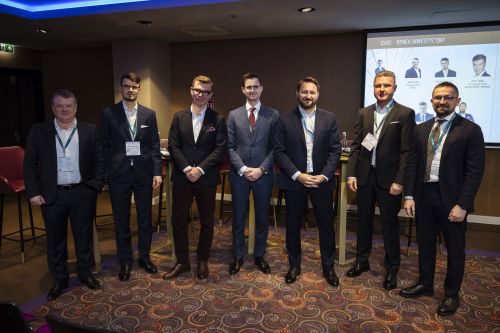
Dominik Rafałko, partner in the real estate team at CMS
Lease agreements, which typically account for the largest share of the documentation, require particular attention. Their review may be limited to leases exceeding a specified rental threshold, such as agreements generating more than 5 pct of a property’s income. Alternatively, buyers may examine a representative sample of leases at each location or focus on key provisions, including break options, rent indexation mechanisms and restrictions on the assignment of contractual rights and obligations.
The agreed scope of due diligence should be clearly documented, particularly regarding the seller’s representations and warranties, disclosures made available to the buyer and mechanisms protecting the purchaser, including Warranty and Indemnity (W&I) and title insurance.
Structuring transactions across multiple assets
Portfolio deals often use a two-tier documentation structure. At the first level, a framework agreement governs the overall transaction, including the allocation of the purchase price across individual assets, conditions precedent, interdependencies between properties, completion schedules and the consequences of a failure to complete the acquisition of one or more assets.
At the second level, individual sale and purchase agreements are executed for each property, usually based on a common template adapted to the characteristics of the specific asset. This approach allows the parties to negotiate a single set of general terms rather than separately negotiating dozens of agreements.
The relationship between the framework agreement and the individual sale agreements must be carefully defined, particularly regarding the hierarchy of provisions in the event of inconsistencies and the consequences if some assets cannot be transferred.
An alternative is to structure the transaction entirely through separate sale agreements. However, this requires clear links between the contracts, especially concerning cross-default provisions and the consequences of terminating individual agreements. These arrangements can significantly affect negotiations and the feasibility of completing the transaction as a whole.
The appropriate structure depends on the number of assets, their interdependencies, the transaction timetable and the parties’ requirements for flexibility and legal certainty.
W&I and title insurance as risk management tools
Warranty and Indemnity (W&I) insurance and title insurance play an important role in managing risk in portfolio transactions. They can protect buyers against breaches of the seller’s representations and warranties or certain defects in property title, transferring covered risks to the insurer.
To secure the broadest possible protection, buyers should assess available insurance products and insurers’ requirements at an early stage, ideally while defining the scope of legal due diligence. This is particularly important in portfolio deals, where the scale of the transaction often necessitates a more limited review.
Insurers may impose minimum due diligence requirements before agreeing to cover specific risks. Engaging with them early helps prevent situations in which buyers discover only after the legal review has been completed that certain risks are uninsurable because the investigation was insufficient.
Early consultation also allows the parties to align the representations and warranties in the transaction documents with the policy requirements, identify potential exclusions and address coverage gaps during negotiations.
Insurance does not replace thorough legal due diligence but complements the wider risk management process. Its effectiveness depends on consistency between the scope of the review, the transaction documentation and the terms of the insurance policy.
Coordination is key to successful portfolio deals
Growing investor interest in Poland’s retail park sector is creating opportunities for increasingly large portfolio transactions. Their success, however, depends not only on the attractiveness of the assets but also on effective coordination between legal due diligence, transaction negotiations and risk management.
A well-structured process helps control costs and timelines while improving predictability for all parties. Agreeing on the scope of due diligence early, establishing an appropriate contractual framework and addressing insurance requirements from the outset can reduce risk and improve transaction efficiency, even for large and complex property portfolios.






































Who will win and who will lose with changes to the land market
Who will win and who will lose with changes to the land market
Walter Herz
The biggest change to the land market in years is on the horizon. The spatial planning reform will mean that plots previously considered attractive may lose value, while land with ...
Sales up, supply down
Sales up, supply down
JLL Polska
In the first quarter of 2026, the Polish housing market recorded a significant increase in sales. A total of 12,900 apartments were sold across the country's seven largest cities ( ...
Rent isn't everything. The real costs of leasing warehouse space
Rent isn't everything. The real costs of leasing warehouse space
Newmark Polska
Choosing a new warehouse takes much more than simply comparing rental rates across a few or even a dozen centres. With rising energy costs and varying technical standards, the actu ...