
















Who will win and who will lose with changes to the land market

You are reading this content because it is covered by the free limit. Buy full access!

The biggest change to the land market in years is on the horizon. The spatial planning reform will mean that plots previously considered attractive may lose value, while land with clearly defined designated uses will gain a competitive advantage. The success of an investment project will now depend not only on the location and price of the land, but above all on the predictability of the planning process and access to infrastructure and utilities.

The investment land market is entering a phase of clear selection, in which sites with predictable development potential are gaining an advantage.

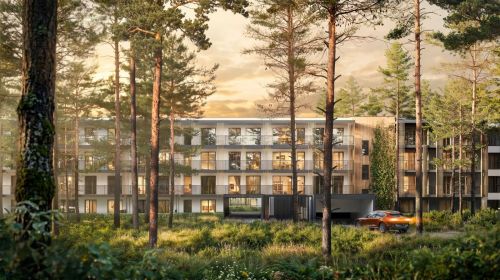
Residential Land – Selection, Not a Sell-Off

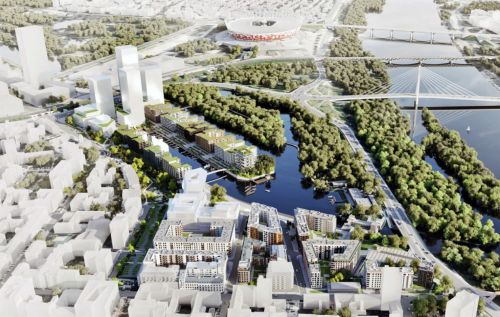
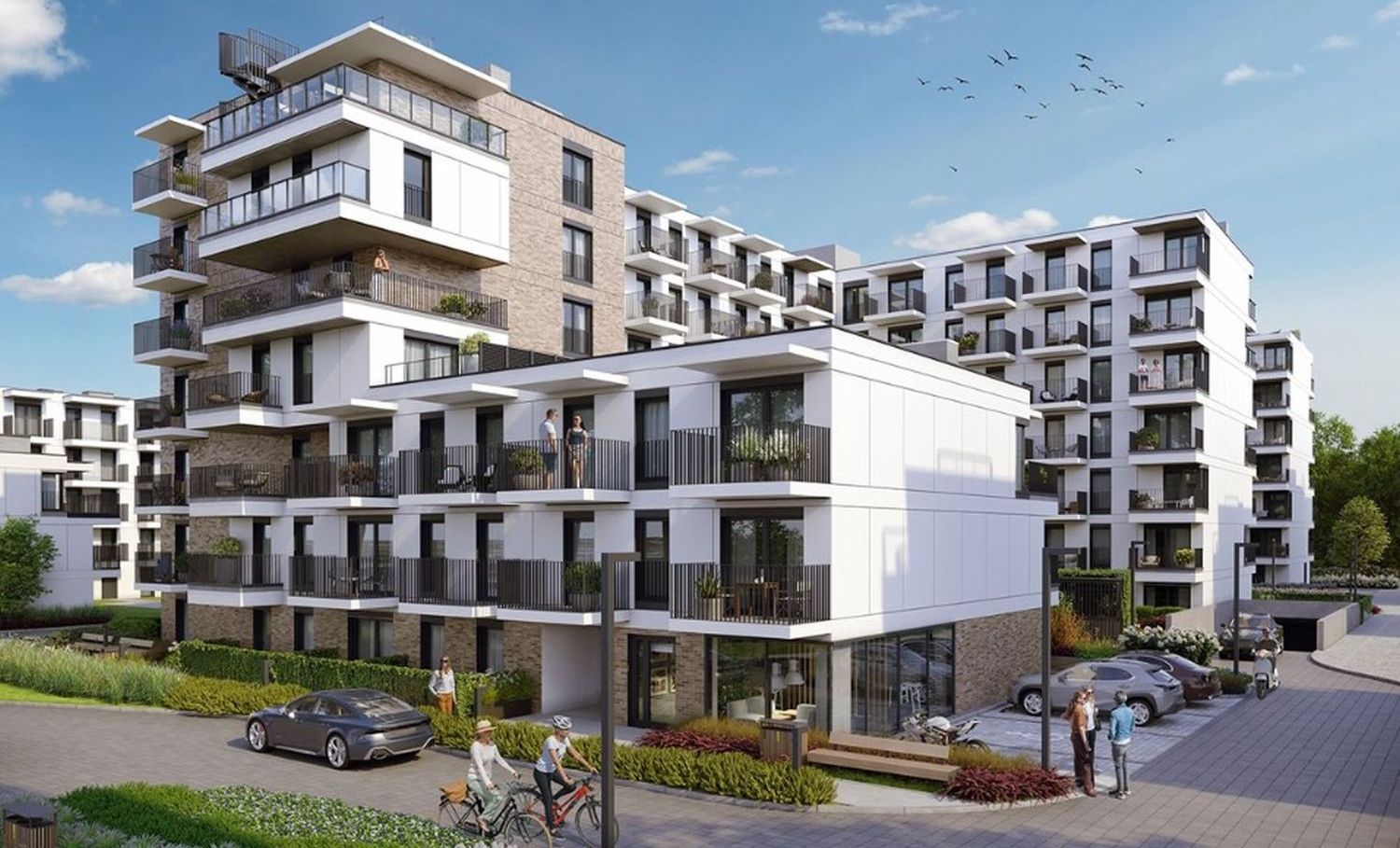
The residential land market is at a turning point. With the introduction of new comprehensive municipal plans approaching, investors and developers are assessing which properties will retain their investment potential and which may lose it. The planning reform will affect both land valuations and the availability of sites for new developments.

Plots covered by local zoning plans or holding zoning and development conditions decisions are currently attracting the strongest interest, while land with an uncertain future planning status is proving difficult to sell. Once the new comprehensive plans are adopted, some municipalities may see an increase in the supply of land that previously had limited potential for residential development but is being granted such potential under the draft plans.

However, a comprehensive municipal plan alone—particularly at the draft stage—does not yet determine a property's final designated use. Such land should not be regarded as planning-ready, and there are no grounds for valuing it at the same level as plots with an established and clearly regulated planning status. The ultimate development potential of a property will only be determined through zoning and development conditions decisions (WZ), local zoning plans, or integrated investment plans. It will also depend on the costs of accompanying infrastructure investments, which in many municipalities have yet to be clearly defined.

After years of dynamic price growth in the residential land market, activity began to slow down in the second half of last year. Smaller developers started selling off parts of their project portfolios due to the market slowdown and uncertainty surrounding the planning reform. Nevertheless, land prices in Poland’s largest cities continued to rise. In 2025, residential land prices in Warsaw, Wroclaw and Poznan increased by over 10 per cent, while growth in Cracow and Gdansk was somewhat more moderate. Record valuations were achieved by sites designated for multi-family residential developments in Warsaw, Cracow and the Tri-City area. In the most prestigious locations in the capital, transaction prices exceeded several thousand zlotys per square meter of usable residential floor area (PUM), with land acquisition costs accounting for as much as one-quarter of the final apartment price.

We are not seeing a sell-off of residential development sites, but rather increasing polarisation within the market segment. Land in attractive locations with a predictable planning pathway continues to gain value, while properties with an uncertain planning status are being discounted more heavily. Significant changes may occur once the new comprehensive plans come into force. At the same time, the largest cities are facing a shortage of attractive development sites, while available land is becoming increasingly expensive and more challenging in terms of regulatory, environmental and infrastructure requirements. If the planning reform reduces the number of sites suitable for multi-family residential projects, it will support further price growth over the longer term. Plots with development permits already in place may become a scarce asset.

At the same time, the conversion of office, retail and other commercial properties into residential developments remains a significant market trend. In recent years, a substantial share of land acquired for residential projects has been sourced through such conversion processes.

Investment Process Security Takes Priority

The planning reform has not halted transaction activity, but it has changed its nature. Investors are focusing on land assets that offer a high degree of certainty and predictability throughout the development process. The land market is currently experiencing a particularly interesting period, in which weaker market conditions have not translated into price declines, highlighting the remarkable resilience of land assets.

Following a price correction in 2023–2024, the investment land market has stabilised, with prices remaining largely resistant to economic cycles. This resilience is driven, among other factors, by the limited supply of sites with a clear and regulated planning status. At the same time, uncertainty regarding the future designated use of some properties has led owners to temporarily withdraw them from the market.

The comprehensive municipal plans will bring order to the investment land market, but they will not significantly increase its supply. They will more clearly identify areas where development is possible. Investors will have a clear understanding of what parameters they can obtain through zoning and development conditions decisions (WZ), which has previously often come as a surprise.

Market transparency is also expected to improve thanks to the Urban Planning Register. The system will include, among other things, planning documents, administrative decisions, public consultation reports, and rulings of supervisory authorities. Following its implementation, a new digital service is planned—the e-extract of the comprehensive municipal plan (e-Wyrys POG)—which will allow users to obtain extracts and maps from municipal comprehensive plans online.

Retail Sector Dominated by Retail Parks

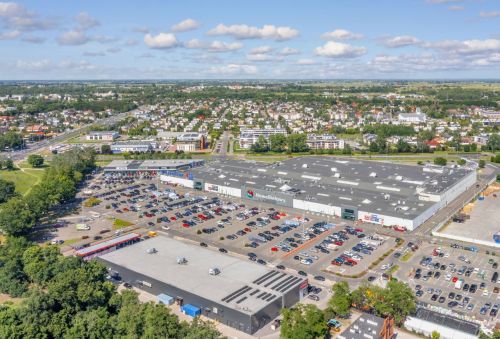
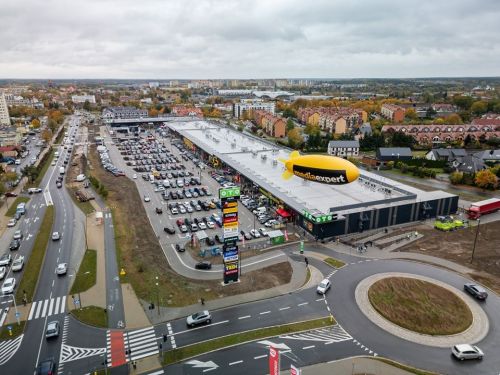
The retail land market is driven by the expansion of retail parks and convenience centres. The strongest demand is currently focused on plots of 1–2 hectares in smaller cities, with good visibility and direct access to national and regional roads. Investors have been actively seeking such sites in recent months in towns with populations of several tens of thousands.

New retail space supply in Poland is now generated almost exclusively within this segment, reaching nearly 500 thousand sqm annually. At the same time, there is virtually no demand for land intended for large shopping centres, which just a few years ago accounted for a similar annual volume of new retail space.

Land prices remain stable, although competition for attractive locations is high. In the centres of Poland’s largest cities, land costs can reach as much as PLN 5,000 per sqm of gla. On the outskirts of the Warsaw metropolitan area, prices range from PLN 1,500 to 2,000 per sqm of gla, while in regional cities they stand at PLN 800–1,800. In towns with fewer than 100 thousand residents that are not part of major metropolitan areas, prices can be up to half as high.

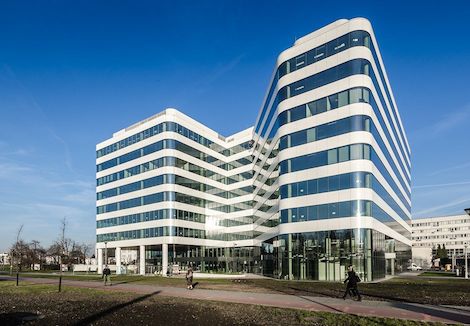
Office Activity Limited to Central Warsaw

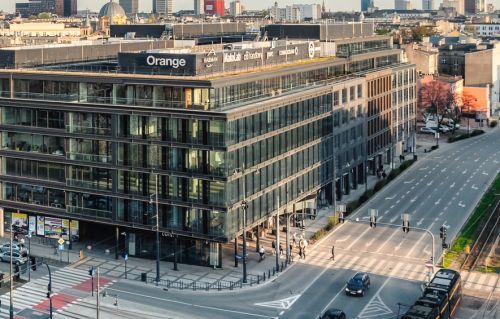
The office segment remains the weakest link in the investment land market. Currently, around 420 thousand sqm of modern office space is under construction in Poland, of which approximately 200 thousand sqm is located in Warsaw. By comparison, just a few years ago, as much as 1.8 mln sqm of office space was being delivered nationwide.

Changes in the labour market, rising financing costs, and higher construction expenses are influencing developers’ decisions regarding the securing of land for new office projects. High vacancy rates in regional markets are effectively limiting interest in land acquisitions. The exception is central Warsaw, where strong demand for prime office space persists amid very limited supply, supporting the continued development of new projects.

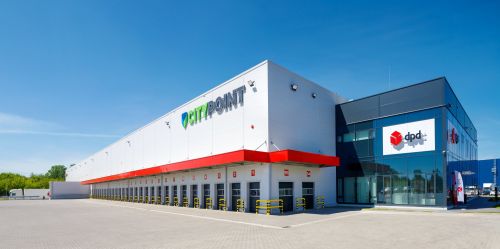
Warehousing – Limited New Supply Amid Rising Occupier Activity

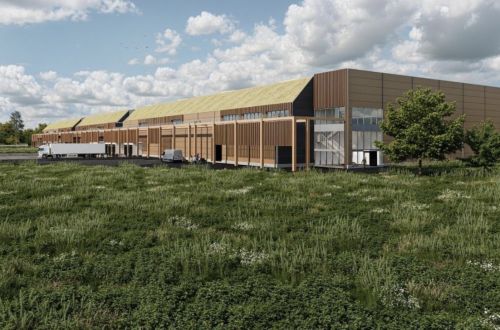
After several years of dynamic growth, the logistics land market has entered a phase of stabilisation. Lower development activity is driven by more cautious lending from banks, a reduction in speculative projects, and the alignment of supply with current demand levels.

Despite the decline in new supply, land prices remain stable or are increasing. Growing interest in new warehouse and industrial developments is supporting land valuations, particularly across Poland’s so-called “Big Six” logistics hubs.

The rising nearshoring trend is also boosting demand for land for Build-to-Own manufacturing projects, especially in western and southern Poland. At the same time, investors are facing increasingly lengthy environmental permitting processes, which take on average around 12 months, and up to 18 months when a full environmental impact report is required. Access to electricity is also becoming an increasingly significant challenge.

Infrastructure as a New Source of Value

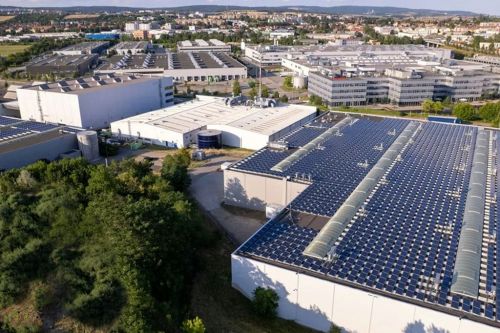
In the commercial land market, access to infrastructure is becoming as important as location. The availability of electricity and telecommunications infrastructure is gaining particular significance, driven by the rapid growth of data centres, energy storage facilities, and projects related to artificial intelligence.

Energy storage investments are also gaining importance. Such installations require smaller land plots but must be located close to energy infrastructure, ideally in the immediate vicinity of main power supply points (grid substations).

The Polish data center market currently has a capacity of 200–300 MW and could double in size within the next few years. Around 80 per cent of the market is concentrated in the Warsaw metropolitan area, which will remain the leading hub, although energy constraints are prompting investors to also analyze regional locations. Land with high available power capacity and secured grid connection conditions is gaining the highest value.

Poland already accounts for more than one-third of data centre capacity in Central and Eastern Europe and has the potential to become an alternative to European hubs such as Frankfurt, Dublin, and Amsterdam. However, continued development depends on investment in energy infrastructure and improvements in administrative procedures.

Land as an Investment Process – Not Just an Asset

The investment land market is entering a new phase in which property value is determined not only by location, but above all by the predictability of the investment process. Planning issues, access to infrastructure, the efficiency of administrative procedures, and alignment with the municipality’s development strategy are becoming key factors. Investors are increasingly pricing not the land itself, but the ability to efficiently deliver a project and the associated risk. It is precisely the capacity to complete a project within the assumed time frame and budget that is becoming one of the main drivers of land asset value

The planning reform is accelerating the professionalisation of the market. Traditional evaluation criteria such as purchase price, development potential, or expected rate of return remain important, but are no longer sufficient. Today, land analysis must also take into account the stability of the regulatory environment, the timeline of administrative procedures, access to utilities and grid capacity, transport infrastructure, as well as potential environmental and social risks. In practice, this means moving away from an assessment based solely on property parameters towards a comprehensive feasibility analysis of an investment. We are currently delivering several projects based on this analytical model, including in Warsaw and Gdansk. One of them, involving the transformation of an industrial site into residential use, is already nearing completion.

Categories

Your order
Your data
Number of access accounts
Each account provides independent access on one device. You will be able to create additional access accounts in the account settings.
Invoicing data
Order summary
Net price
Access accounts #
Net order
VAT (%)
Gross order
Payment security is ensured

Don`t miss out the current edition