



















Rent isn't everything. The real costs of leasing warehouse space

You are reading this content because it is covered by the free limit. Buy full access!

Choosing a new warehouse takes much more than simply comparing rental rates across a few or even a dozen centres. With rising energy costs and varying technical standards, the actual cost of leasing far exceeds the amount charged per square metre. Another key aspect to consider is location, which has a significant impact on operating costs and logistics.

With the logistics sector in particular currently facing strong cost pressures, rent remains an important factor. In practice, however, base rent is just a starting point – only when considered alongside operating costs, location, technical standards and business growth plans can it reveal which offer is actually the most cost-effective.

Poland’s warehouse market has surpassed 36.5 million square metres of modern space, with nearly two million square metres expected to be delivered in 2026. With stock rising by six to seven per cent annually, tenants have plenty of options: from older, more affordable facilities to newer, more expensive but energy-efficient parks. Differences in building standards and construction are becoming increasingly pronounced, leading to differences in total occupancy costs.

Rent is only the first line of an Excel spreadsheet

Low rent attracts like a magnet, but it does not always reflect the true cost of leasing.

A comparison based solely on base rent leads to oversimplified conclusions and, consequently, poor decisions. When focusing only on base rent, tenants may dismiss locations that – after a full analysis – could prove to be the best fit for their operations and the most cost-effective. From the outset, we insist on adopting a multi-faceted approach to creating a shortlist – considering not only base rent, but also all the components of operating costs, as well as technical standards and location. In practice, options initially rejected by clients due to higher rents often turn out to be the most rational choice after a comprehensive review of these factors. At t the start of the leasing process Newmark Polska advisors present all options to tenants, preparing detailed cash flow projections for initially selected locations – that is, cost forecasts for the entire lease term. Such documents take into account not only rent and rent indexation, but also service charges, financial incentives, tenant improvement allowances and additional fees for parking spaces or on-site advertising, where applicable.

We also analyse the availability of renewable energy sources, including photovoltaics, and assess the possibility of monitoring utility consumption through metering and verify utility consumption by tenants with a similar profile and warehouse footprint in the same facility. Only such a comprehensive, all-in analysis can reliably show which location truly meets business needs and is cost-optimal over the entire lease term.

Analysis reveals the true cost

There is much more to leasing than just rent – there are also service charges, utility bills, indexation and lease security, typically in the form of a deposit or bank guarantee, all of which are borne by tenants.

Service charges may vary significantly even between zones within the same city. Importantly, they include property tax, but a temporary exemption from this tax in the first year does not eliminate this expense in subsequent years. It is also crucial to consider technical adaptations and actual operational needs. In manufacturing, you need to think not only about current requirements, but also about what may be needed in a few years’ time. Changes in fire safety requirements and the types of stored materials may significantly increase adaptation costs.

Warehouse location often affects the overall feasibility of a project. Relocating a facility may increase employee turnover and labour costs, directly impacting operating costs. To get a complete picture, additional expenses should also be considered, such as parking and IT infrastructure, including network layout in line with the client’s internal requirements.

The numbers hidden in the second column

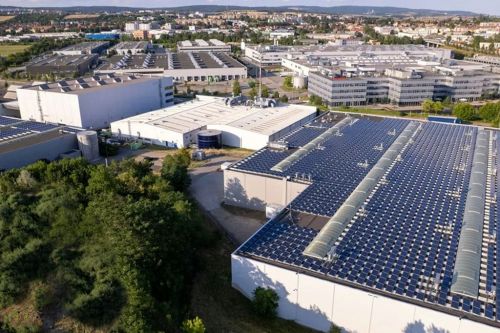
Operating costs are increasingly determining whether a warehouse is cost-effective. Due to rising energy prices, energy efficiency is no longer treated as an add-on. In warmer years, warehouses and offices require more intensive cooling, particularly when handling temperature-sensitive products. Photovoltaic installations allow costs to be partially stabilised and in some cases PV-generated energy can meet the demand for air conditioning across entire office areas. As a result, tenants are increasingly willing to accept higher rents in exchange for predictable and competitive utility charges.

Differences between older and new-build facilities are also becoming more pronounced. Modern facilities featuring building management systems (BMS) optimise energy consumption and help detect potential failures more quickly, and this is only the beginning of technological change. Current market standards include the Digital Addressable Lighting Interface (DALI), a smart lighting control system based on motion and daylight sensors that reduces electricity waste, while submetering enables continuous monitoring of electricity consumption. These features are complemented by improved, thicker insulation, which reduces heat loss and improves cooling. Many of these solutions in older warehouses require upgrades, pushing total occupancy costs up.

A warehouse tailored to your operations

Facility specifications should be driven by actual business needs rather than the maximum capabilities of a building. Not all companies will fully utilise warehouses with a 12-metre clear height, which were in high demand just a few years ago. In practice, 10 metres is optimal for many tenants and aligns with regulatory requirements, allowing them to avoid paying for unused space or additional adaptations.

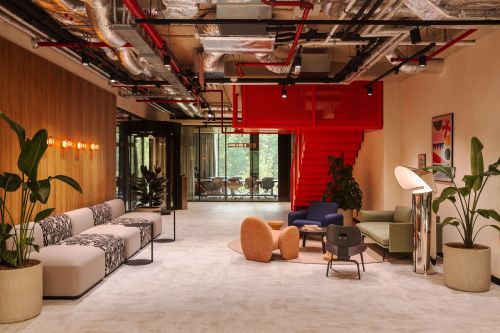
Key factors determining the operational efficiency of a facility include the column grid, floor load capacity, dock availability, fire safety specifications and readiness for automation,” says Katarzyna Adamska. “Office space within warehouse parks is also gaining importance. For many tenants, a warehouse is no longer just an operational base, but also a workplace for employees and an element of employer branding. This has led to rising expectations regarding office fit-out standards and workplace comfort within warehouse facilities – many companies are willing to pay a premium for space tailored to their processes and ambitions. ESG requirements are also becoming relevant – new facilities are increasingly meeting the environmental reporting standards required by multinational corporations, while older industrial parks are gradually being upgraded.

Negotiations are a game shaping the entire contract

The final cost of leasing is determined at the negotiation table. The project’s bottom line is influenced, among other things, by clauses on rent-free periods and fit-out contributions. The obligation to restore space to its original condition must also be taken into account – owners define the scope of such works in different ways, which may significantly affect the final bill.

The types and forms of incentives vary by region, vacancy levels and developer activity – rent-free periods are more common in older buildings, while tenants in new facilities can expect financial contributions. Companies also pay attention to the flexibility of lease provisions, lease duration and early termination options.

Leasing warehouse space today is a strategic decision that requires comparing several scenarios, such as remaining in the current location, relocating or consolidating operations within a single facility. This is both an operational and financial project. What matters is not only the base rent, but the total cost of the contract and the flexibility it provides. A well-crafted strategy, combined with an early start to negotiations, can significantly increase negotiating leverage and help secure a solution that remains commercially viable throughout the lease term.

Categories

Your order
Your data
Number of access accounts
Each account provides independent access on one device. You will be able to create additional access accounts in the account settings.
Invoicing data
Order summary
Net price
Access accounts #
Net order
VAT (%)
Gross order
Payment security is ensured

Don`t miss out the current edition