














Poland Strong Warsaw hotel growth
Hotels
With stable capitalisation rates for Warsaw's prime hotels and growing investor activity in the region, the outlook for the capital market remains positive.
Warsaw among the region's growth leaders
According to the Marketbeat CEE-6 Hospitality H2 2025 report, the CEE-6 region recorded an 8.9 pct year-on-year RevPAR increase in 2025, supported by a 4.6 pct increase in ADR and a 2.7 percentage point increase in occupancy. At the city level, Bucharest and Warsaw achieved the strongest RevPAR growth in 2025, while Prague and Budapest maintained their leadership in terms of absolute RevPAR growth.
This is a crucial signal for the Warsaw market. The fact that Warsaw is at the forefront of the region in terms of RevPAR growth, while supply is also growing, confirms its role as one of the most important hotel markets in Central and Eastern Europe. The capital is demonstrating today that growth is not simply the result of a post-pandemic rebound, but rather the result of solid demand fundamentals and the growing maturity of the hotel market, which is reflected in both operating results and sustained investor interest.
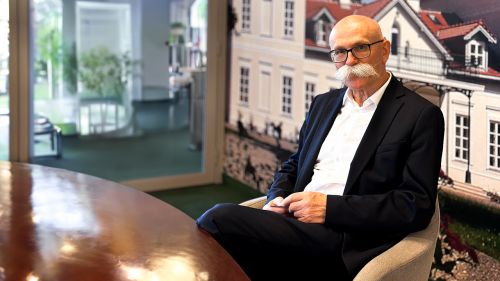
Maciej Prończuk, senior consultant, hospitality & alternatives CEE & SEE at Cushman & Wakefield
Warsaw leads new supply in CEE-6
In the second half of 2025, approximately 14 hotels and serviced apartments, offering a total of approximately 1,100 rooms and apartments, opened in the capital cities of the CEE-6 countries. According to Cushman & Wakefield, the total supply of rooms in the region increased by 2.7 pct year-on-year, with the largest contributions coming from Warsaw (+5.5 pct), Budapest (+2.8 pct), and Prague (+2.2 pct). This trend is expected to continue in 2026, with Warsaw expected to remain a leader in further growth.
Warsaw stands out both for the scale of new supply and the quality of projects coming to market. This demonstrates that the capital remains an important benchmark for the development of the region's hotel sector, attracting interest from developers and investors pursuing new projects.
Maciej Prończuk
The hotel investment market in the region has accelerated significantly.
Investment in the CEE region's hotel markets saw a strong recovery in 2025. Transaction volume increased by 170 pct year-on-year, reaching EUR 1.16 bln. According to Cushman & Wakefield's database, 44 hotels with 6,974 rooms were sold across the region, with an average room rate of EUR 167,200. Hotels in the Upper Upscale and Upscale segments accounted for a staggering 63 pct of the investment volume.
Against this backdrop, Poland accounted for EUR 135 mln in transactions in 2025, comprising 12 hotels and 1,652 rooms. In the second half of 2025 alone, the volume of hotel investment transactions in Poland reached EUR 54 mln, a decrease compared to the very active second half of the previous year.
Selected major transactions completed in Poland during this period included the sale of Four Points by Sheraton Warsaw Mokotów, the transaction involving a portfolio of two Noli Studios aparthotel properties, and the sale of a portfolio of two B&B hotels.
Yields Stable
In 2025, Prague, Budapest, and Bucharest saw moderate yield compression for prime hotel assets. In Warsaw, as in Bratislava and Sofia, yields remained relatively stable, although slight compression was observed for prime properties in the most attractive locations. According to Cushman & Wakefield, lower inflation, improved access to financing, and capital inflows could support further yield compression in 2026.
While Warsaw remains a key hotel market in Poland, in 2025 it was clear that transaction activity was no longer limited to the capital. This signals that the market is developing more sustainably, and investors are also looking more closely at regional locations.
Maciej Prończuk
Selectivity Remains High
Further support for the hotel market in Poland, including Warsaw, comes from improving investor sentiment at the European level. According to the latest Cushman & Wakefield European Hotel Investor Compass report, 86 pct of surveyed investors plan to allocate the same or more capital to the hotel sector in 2026 than in the previous year. At the same time, the market is becoming increasingly selective, with increasing requirements for asset quality, predictable operating results, and standards in ESG.
It's worth noting that, according to a Cushman & Wakefield study, investors expect an average price premium of approximately 4.3 pct for hotels that meet the highest sustainability criteria. This means that owners and investors are increasingly prioritising not only location and brand, but also the technical quality of the building, operational efficiency, and long-term asset resilience.
Another element that investors believe will transform the hotel market in the near future is artificial intelligence (AI). According to 81 pct of surveyed investors, AI will have a significant impact on the hotel industry by 2030 or even earlier. According to investors, the implementation of AI-based solutions will have the greatest positive impact on limited-service hotels.

Sales up, supply down
JLL Polska
In the first quarter of 2026, the Polish housing market recorded a significant increase in sales. A total of 12,900 apartments were sold across the country's seven largest cities ( ...
Rent isn't everything. The real costs of leasing warehouse space
Newmark Polska
Choosing a new warehouse takes much more than simply comparing rental rates across a few or even a dozen centres. With rising energy costs and varying technical standards, the actu ...
A good foundation from which to grow
CBRE
Poland's role and the strength of its economy are increasingly visible in the European commercial real estate market. We have strengthened our leading position in Central and Easte ...