


















Poland Too few laboratories
Warehouse & industrial
The Polish life sciences industry is at a crossroads. On the one hand, it is gaining momentum and enjoying growing interest from developers, innovators, real estate companies, and public organisations. On the other hand, persistent structural problems continue to limit its scale, efficiency, and international competitiveness.
Between 2004 and 2024, investment in research and development in Poland increased from less than 1 pct of GDP (approximately EUR 1.14 bln) to 1.41 pct of GDP (approximately EUR 11.96 bln). However, this is still below the EU-27 average and places Poland only 15th in the EU rankings, lagging behind mature, innovation-driven economies. In 2024, Sweden invested approximately 3.6 pct of GDP, Belgium 3.4 pct, Austria 3.3 pct, Germany approximately 3.1 pct, and the Netherlands 2.3 pct. Over the past 20 years, the increase in R&D spending in Poland has been among the highest in the European Union. During this period, investment in research and development in Poland increased by 0.86 percentage points of GDP, ranking the country alongside Belgium (+1.5 percentage points), Austria (+1.1 percentage points), and Greece (+1.0 percentage points). This is partly due to this, two of the three main life sciences segments in Poland (pharmaceuticals, biotechnology, medical devices) are among the European leaders.
Pharmaceuticals
The Polish pharmaceutical industry is the largest in Central and Eastern Europe and ranks fifth in value in the EU. In 2024, its value reached approximately PLN 55.9 bln (approximately EUR 12.9 bln). Approximately 400 pharmaceutical companies operate in Poland, employing over 82,000 people. The market is dominated by manufacturers of generic drugs and dietary supplements, but the number of entities investing in innovative medicines is growing. Polish pharmaceutical companies are also increasing their exports, reaching EUR 6.84 bln in 2024, a 10.7 pct increase year-on-year.
Medical Equipment
Poland is among the top ten global exporters of medical equipment, with manufacturers specialising in areas including diagnostic equipment, orthopedics, dental equipment, sterilizers, and implants. In 2024, Polish exports of medical devices reached approximately EUR 5.88 bln.
Biotechnology
Despite some setbacks and stagnation in 2022-24, the biotechnology sector in Poland has returned to growth. In 2024, operational and development expenditures reached PLN 3.29 bln. The activities of domestic biotechnology companies are diversified, encompassing medical biotechnology (biologics, gene therapies, diagnostics), industrial biotechnology (enzymes, biomaterials), and bioinformatics. Many of these entities operate as CROs (Contract Research Organizations), providing services and results to international pharmaceutical and biotechnology partners.
Low supply of laboratories hinders industry development
The development of Polish biotechnology companies and the intensification of research activities are hampered by structural deficiencies – there are too few modern laboratories available for rent in Poland. At the beginning of 2026, the total commercial laboratory space in Poland amounted to only approximately 52,300 sqm, supplemented by 74,000 sqm of adjacent office space.
The scale of unmet demand is clear: Selvita, one of the leading Polish biotechnology companies, exhausted all available laboratory resources in Kraków and Poznań in 2020 and was forced to build its own R&D centre. However, the vast majority of companies in the industry seeking to expand their operations cannot afford to build their own R&D facilities. In Warsaw, larger biotechnology incubators are still in the planning stages. So far, startups have most often subleased space at research institutes or used small academic laboratories.
A study conducted by JLL in collaboration with BioForum and CRIDO shows that the shortage of laboratories is already a tangible barrier to growth. Sixty-five percent of biotechnology companies surveyed plan to expand their space in the coming years, and 47 pct indicate difficulties finding suitable laboratories for rent. At the same time, 55 pct of respondents estimate that limited access to laboratory space hinders their company's growth – to a large or very large extent. The reason is simple: the existing supply is almost entirely occupied, and new space cannot keep up with the sector's growth rate. There is also a qualitative dimension – too few facilities offer true technical flexibility, meaning the ability to quickly reconfigure space between chemical and biological research or expand within the same building. This is not a marginal problem – it is one of the main factors today determining whether a company can grow in Poland or seeks space abroad.
Jan Jakub Zombirt, head of research, JLL
The scale of unmet demand is also visible in the Central Statistical Office (GUS) data for 2024. Approximately 66.5% of biotechnology companies focused exclusively on research and development, not conducting in-house production, meaning that all require access to well-equipped laboratories. At the same time, 95.8% of the sector's expenditure was financed from internal funds, suggesting that a significant portion of these resources is allocated to providing infrastructure (equipment and space rentals). The growth in laboratory employment (the number of employees in biotechnology research and development departments increased by 43% year-over-year in 2024) also indicates increasing occupancy of existing properties.
Build or Renovate?
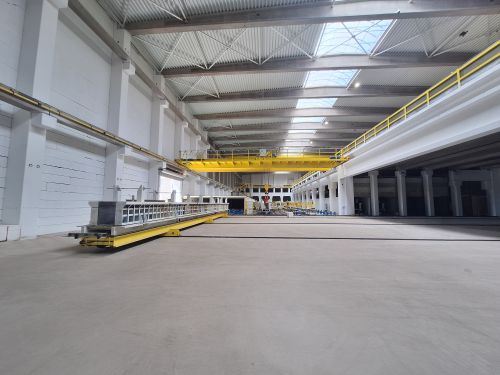
In major life sciences centres, available laboratory space is currently almost fully utilised. Biotechnology companies often have to wait for vacant space. Alternatively, they may have to adapt suboptimal premises, such as retail spaces, hospitals, or old in-house laboratories. Commercial real estate developers are beginning to recognise this niche and are exploring new commercial laboratory projects, although for now on a relatively small scale. In cities with the most mature life sciences ecosystems, where supply and demand dynamics indicate a clear need for new laboratory space, it is worth considering allocating some space for flexible laboratory space when planning office buildings or mixed-use projects. However, it is crucial that the launch of such a project is preceded by thorough market research and securing lease agreements for at least 60 pct of the planned space. Another option worth considering is the conversion of vacant office or warehouse buildings into laboratories, whose spatial parameters can meet the requirements of tenants from the life sciences industry. The success of such transformations depends on several elements: the ability to implement the necessary structural and technical specifications, particularly ceiling heights, the availability of ventilation and plumbing shafts, as well as the connection capacity and the appropriate configuration of the office and laboratory space. Another important aspect is the building's location in an adequately accessible area – 88 pct of respondents indicated that convenient access to the laboratory is an important or very important factor for them.
Dorota Gruchała, Head of Kraków Office, JLL
A Systemic Approach Is Needed
The report points to another significant obstacle to the development of the life sciences real estate sector – low government involvement and a coherent development strategy. Because most tenants of such facilities are SMEs and startups, developers are hesitant to launch new projects for fear of finding buyers. Public capital could provide a sufficient guarantee of security for investment funds if it were to become involved. "Poland has solid foundations for building a competitive life sciences ecosystem – a strong scientific base, a growing biotechnology sector, and an increasingly improved regulatory environment. Demand is real and documented."
What is lacking is coordinated action on the infrastructure, capital, and public policy fronts. Accelerating the development of laboratories in academic centres – Warsaw, Kraków, and Wrocław – through public and private investment should be a priority, particularly in well-connected locations. The next step is to implement investment-grade projects using pre-lease strategies and partially financed with public funds, which should attract institutional capital. We also advocate for the swift launch of a Breakthrough Technology Development Fund, professionally managed and tolerant of calculated risk. Only such a coherent, systemic approach can unleash the fully untapped potential of the Polish life sciences sector.
Jan Jakub Zombirt

Sales up, supply down
JLL Polska
In the first quarter of 2026, the Polish housing market recorded a significant increase in sales. A total of 12,900 apartments were sold across the country's seven largest cities ( ...
Rent isn't everything. The real costs of leasing warehouse space
Newmark Polska
Choosing a new warehouse takes much more than simply comparing rental rates across a few or even a dozen centres. With rising energy costs and varying technical standards, the actu ...
A good foundation from which to grow
CBRE
Poland's role and the strength of its economy are increasingly visible in the European commercial real estate market. We have strengthened our leading position in Central and Easte ...