






Poland Investment given the green light
Events
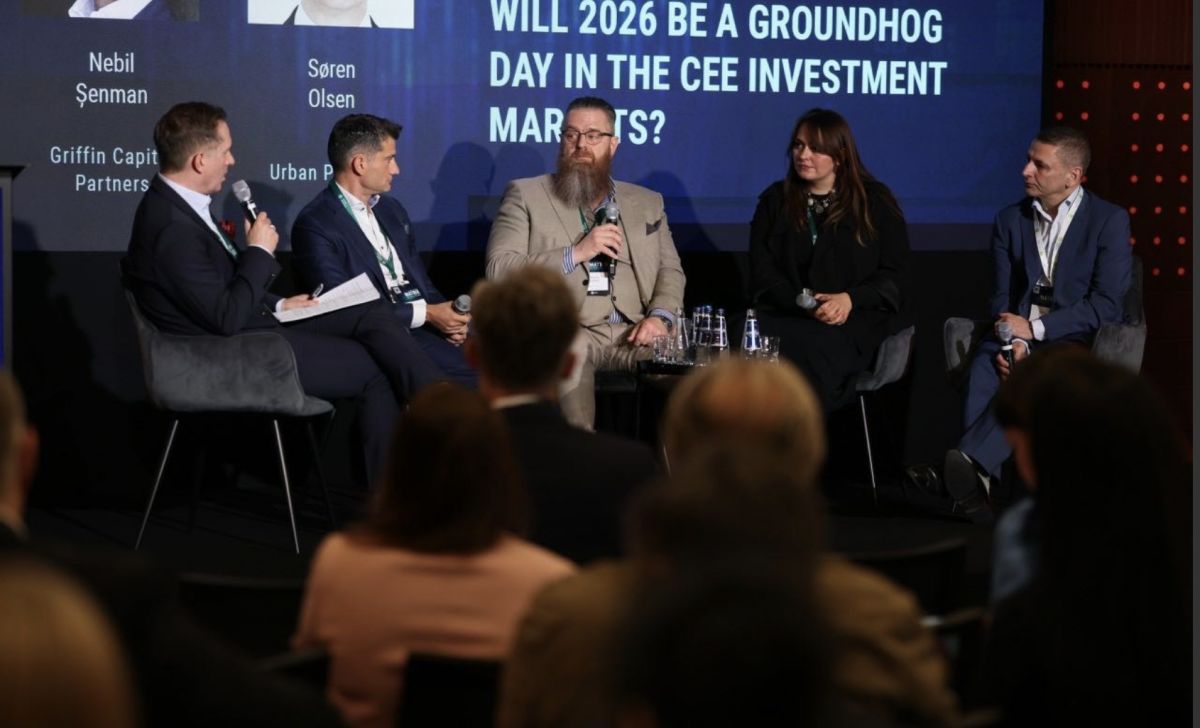
Those taking part in the panel titled 'Will 2026 be a Groundhog Day in CEE investment markets' pointed out that Poland has strong fundamentals, rising valuations, and domestic capital that is growing in importance, but the return of institutional investors will be selective and dependent on the quality of specific assets, exit liquidity, and the global geopolitical environment.
Will 2026 be another repeat of the expected rebound for the CEE investment market, only to be halted by another crisis? This question became the starting point for one of the key debates during the ULI Poland Conference 2026. According to the panellists, the market is not returning to the simple, predictable cycle seen before 2022. Valuations have been adjusted, some of the pressure associated with the denominator effect has eased, and domestic capital has begun to play a greater stabilising role. At the same time, investor decisions remain strongly influenced by the global situation: interest rates, inflation, geopolitical tensions, energy prices, and the willingness of investment committees to take on new commitments.
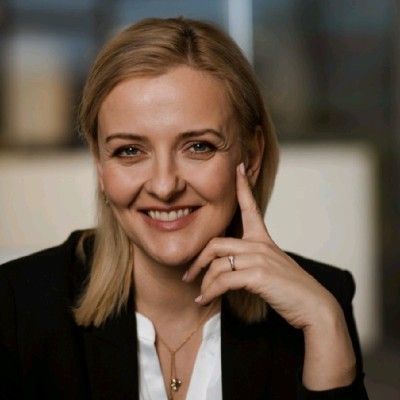
Real estate valuations have already been adjusted and have not returned to pre-2022 levels. The increasing importance of domestic capital provides markets like Poland and the Czech Republic with greater stability. This doesn't mean there are no challenges, but this cycle may be different from previous ones.
Magdalena Uler-Kłeczek, CIO and member of the 7R management board
One of the panel's strongest conclusions was the distinction between the assessment of Poland and the assessment of global risk. The caution of core institutional capital is not due to weakening Polish fundamentals, but rather to the broader macroeconomic and geopolitical backdrop. Investors have returned to analysis, and some are re-engaging in bidding processes, but some decisions are still being postponed or require additional review.
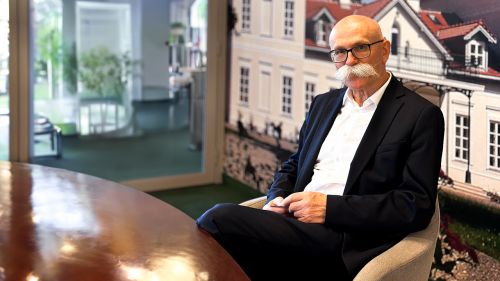
Poland's fundamentals are strong. The problem isn't Poland as a single market, but rather a global environment in which investors must assess financing conditions, inflation, interest rates, and geopolitical risk.Looking long-term, since Poland's accession to the European Union, the trend has been one of upwards.
Thomas Kächele, director, head of Germany & CEE, M&G Real Estate
According to the panellists, the first wave of increased activity may come primarily from value-add and opportunistic investors. Growing interest in Poland is evident, particularly in the living sector, PRS, private student housing, selected retail products, and top-tier logistics projects. However, the panellists emphasised that interest alone doesn't necessarily mean closed deals, and investors will carefully evaluate the possibility of exiting the investment, the quality of tenants, the sustainability of income, and the potential for rent growth. The return of core capital is particularly important. As the panellists pointed out, core capital is often the natural buyer of stabilised assets and the foundation of value-add funds' business assumptions. If core capital returns more slowly, market liquidity will remain limited, and investors will analyse the exit path even more carefully.
The panellists pointed out that the capital structure itself is also changing. Current sources of real estate financing in Europe, including some traditional pension capital, will no longer operate in the same way as in previous cycles. The real estate market will have to compete more effectively for funds with other asset classes, particularly infrastructure.
The perception of Poland was also an important theme. According to the panellists, Poland has a strong investment history: economic growth, improving market transparency, adjusted valuations, stable rental fundamentals, and relatively good resilience. Despite this, markets perceived as more obvious, such as Spain, continue to prevail in the global investment debate.
Few markets are currently in the green on the European investment agenda. Poland is one of them. It has a history of growth, a correction in valuations, and a rental market that has not been devastated by the last cycle. The problem is that this story needs to be better told to global capital.
Simon Durkin, CEO, ULI Europe
The discussion also revealed that the next phase of investment activity will be more sector-specific and much more selective. In logistics, supply constraints, the quality of land banks, and micro-locations where rent growth is possible may be increasingly important. In the residential sector, investors are examining both PRSs and private student housing, where demand is supported by the growing number of English-language programs and the shortage of quality accommodation. Trade has returned to investment discussions, but this is primarily driven by specific formats and assets offering attractive current income. Offices, on the other hand, remain a focus, but with much greater selectivity and a focus on prime locations and assets.
Everyone agreed – Poland has no problem with the fundamentals. The key is translating them into a sufficiently clear, international investment language.
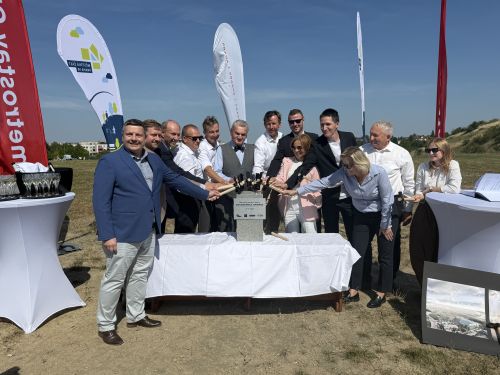
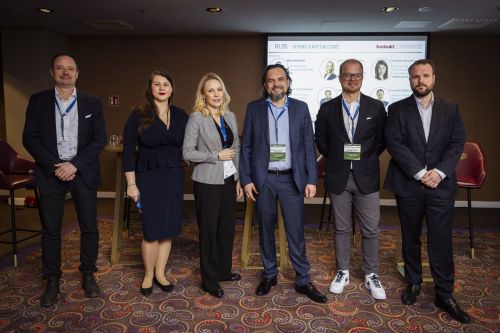
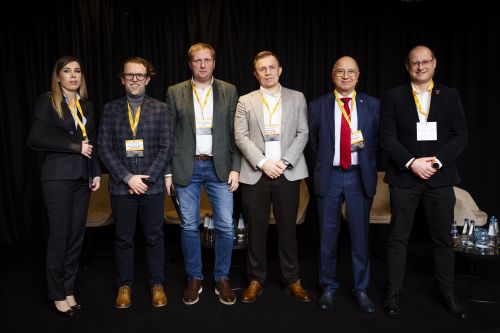
ULI Poland Conference 2026: Matrix of Real Estate brought together real estate market leaders, investors, developers, representatives of the financial sector, government, advisors, and urban experts. This year's event was dedicated to interconnected trends that are transforming the market: geopolitics, capital, energy, technology, demographics, urban resilience, and new development models. The panel "Will 2026 be a Groundhog Day in the CEE investment markets?" was moderated by Søren Rodian Olsen, managing director of Logicenters Poland at Urban Partners and member of the ULI Poland Executive Committee. The discussion was attended by Simon Durkin, CEO, ULI Europe, Thomas Kächele, director, head of Germany & CEE, M&G Real Estate, Magdalena Uler-Kłeczek, CIO and board member of 7R, and Nebil Șenman, co-owner & managing partner, Griffin Capital Partners.

Sales up, supply down
JLL Polska
In the first quarter of 2026, the Polish housing market recorded a significant increase in sales. A total of 12,900 apartments were sold across the country's seven largest cities ( ...
Rent isn't everything. The real costs of leasing warehouse space
Newmark Polska
Choosing a new warehouse takes much more than simply comparing rental rates across a few or even a dozen centres. With rising energy costs and varying technical standards, the actu ...
A good foundation from which to grow
CBRE
Poland's role and the strength of its economy are increasingly visible in the European commercial real estate market. We have strengthened our leading position in Central and Easte ...