














CEE region CEE commercial real estate market sees strong rebound
Investment & finance
According to the latest CEE Investment Perspective report by JLL and iO Partners, the first six months of 2026 marked the strongest first half for the CEE investment market since the pandemic.
Poland and the Czech Republic remain the region’s largest markets, but investor activity has clearly expanded into smaller countries as well. With the exception of Serbia, almost every market analysed recorded a transaction worth at least EUR 50 mln in the first half of the year.
The most important change is not the increase in volume itself, but the return of genuine liquidity. Transactions exceeding EUR 100 mln were completed across all major commercial real estate sectors, while large deals were no longer limited to the two largest markets in the region.
Dmytro Havrylenko, head of capital markets Poland at JLL
Large deals beyond Warsaw and Prague
The first half of the year brought several transactions that could set new benchmarks for smaller CEE markets.
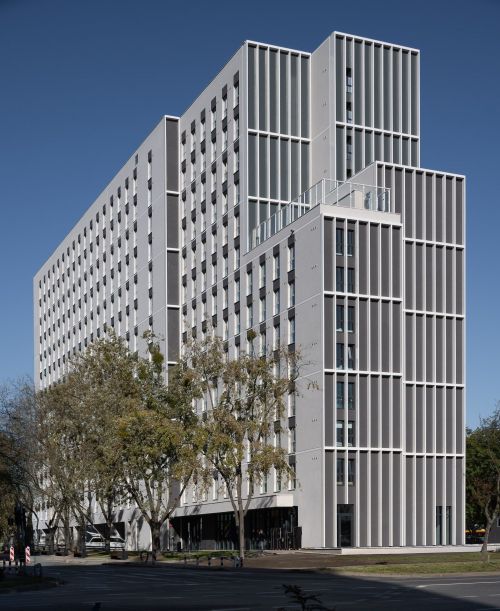
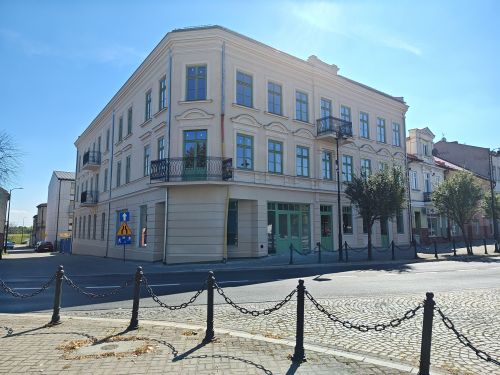
In Slovakia, the sale of The Mill office building in Bratislava was the country’s largest single office transaction since Q2 2023. Notably, three of the four office deals were completed in regional cities.
In Romania, the largest office transaction was the acquisition of the @Expo complex in Bucharest for approximately EUR 52 mln. The deal also marked the entry of a new investor, Equora Capital, into the local market.
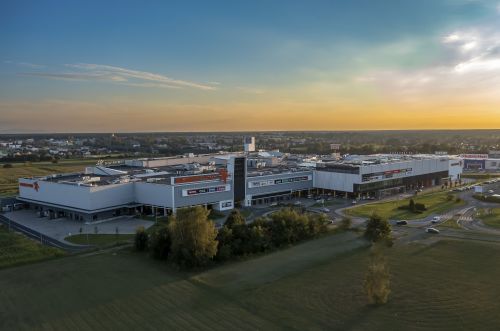
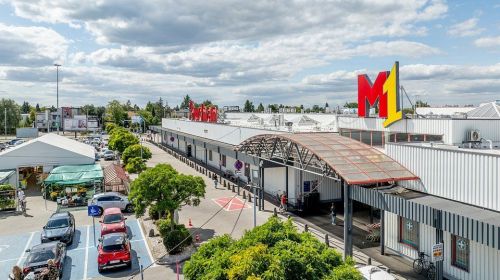
In Hungary, Árkád Szeged shopping centre was sold for approximately EUR 115 mln. It was the largest single retail transaction in the country since 2018. In the Czech Republic, Israel-based AFI acquired the Port7 office complex in Prague for more than EUR 110 mln.
Serbia remained an exception to the regional trend. However, the report’s authors see the weaker activity as more of a cyclical effect than a sign of lasting market weakness.
Investors return to retail and logistics
Capital in CEE is no longer concentrated in a single asset class. Large transactions were recorded simultaneously across the office, logistics, retail and living sectors.
In Poland, each of the major market segments recorded transactions exceeding EUR 100 mln. The retail sector has staged a particularly strong recovery, with the value of retail transactions in the first half of the year surpassing the total recorded throughout 2025.
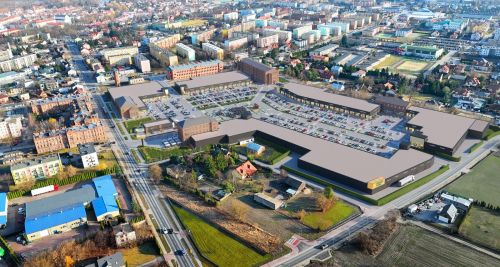
Investors are showing interest not only in retail parks but also in shopping centres once again. Sale-and-leaseback transactions are also becoming increasingly important, allowing property owners to unlock capital tied up in real estate while retaining the ability to continue using their properties.
In Hungary, the retail sector recorded its highest level of activity since 2022.
At the same time, low transaction volumes do not necessarily indicate a lack of demand. In the Czech Republic, limited activity in the logistics market was primarily the result of a shortage of attractive assets available for sale.
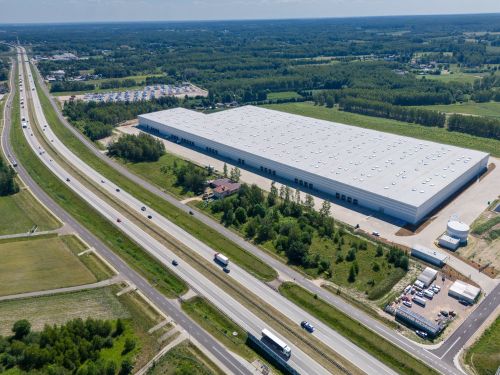
In Poland, investors are particularly interested in warehouses secured by long-term leases. Most transactions involved assets with lease agreements of at least 10 years, while multi-tenant properties with shorter leases are being assessed more cautiously.
CEE capital increasingly invests within the region
One of the most important trends is the growing activity of regional capital. CEE-based investors, particularly those from the Czech Republic and Hungary, remained the most active buyers. Activity among Polish private investors also increased.
Local capital accounted for 79 pct of investment volume in Hungary and 74 pct in the Czech Republic. Regional investors are also increasingly looking beyond their home markets, as illustrated by the activity of Czech investors in Romania and Slovakia.
It is becoming increasingly difficult to view CEE as a collection of separate investment markets. Regional capital has become one of the most important sources of liquidity and is increasingly moving freely between individual countries.
Andrei Vacaru, head of capital markets CEE at iO Partners.
More strategies, greater selectivity
The return of large transactions does not signal a return to a single investment model. Investors are looking for both stable assets and properties offering potential for repositioning, conversion or active asset management.
In Poland, demand encompasses both prime, ESG-compliant office buildings in central Warsaw and well-let properties outside the city centre, as well as regional assets with value-add potential.
This diversity could be one of the strongest signs that the current recovery is sustainable. Investors are now prepared to deploy capital across a broader range of sectors, locations and risk profiles than they were just a few months ago.
Strong potential for the second half of the year
The outlook for the second half of 2026 remains positive. Several large transactions were announced at the beginning of Q3 and were therefore not included in the first-half figures.
In Poland, transactions announced in the first half of July could lift this year’s investment volume from approximately EUR 3 bln after six months to close to EUR 4 bln. A strong pipeline is also visible in smaller markets. In Slovakia alone, transactions worth around EUR 300 mln are currently being processed in the industrial and logistics sector.
If the announced transactions are completed, 2026 could become one of the strongest years for the CEE investment market in recent years. More important than the final volume, however, is the signal coming from the first half of the year: large-scale capital has returned to the region, and investors are once again willing to pursue opportunities across different countries, sectors and risk profiles.

Who will win and who will lose with changes to the land market
Walter Herz
The biggest change to the land market in years is on the horizon. The spatial planning reform will mean that plots previously considered attractive may lose value, while land with ...
Sales up, supply down
JLL Polska
In the first quarter of 2026, the Polish housing market recorded a significant increase in sales. A total of 12,900 apartments were sold across the country's seven largest cities ( ...
Rent isn't everything. The real costs of leasing warehouse space
Newmark Polska
Choosing a new warehouse takes much more than simply comparing rental rates across a few or even a dozen centres. With rising energy costs and varying technical standards, the actu ...