







Poland Prime space comes harder to find
Office & mixed-use development
Warsaw has been facing a shortage of new office supply since 2023. Only around 28,000 sqm of modern office space is due to be delivered in 2026, one of the lowest annual totals on record for the capital. There is little sign of a significant increase in development activity in the near term. High construction costs, more expensive financing and cautious investors are keeping the pipeline limited.
Demand, meanwhile, remains strong. Office take-up reached 420,000 sqm in the first half of 2026, up 38 pct year on year. Large lease deals are returning to the market, while companies are increasingly using their offices to support business growth, collaboration and company culture.
Warsaw’s office market is entering a very different phase from the one we saw immediately after the pandemic. The issue today is not a lack of demand, but the shrinking availability of modern space in the best locations. In the city centre, in particular, the choice of large, high-quality units is disappearing quickly. This is gradually shifting the balance in lease negotiations and means occupiers planning a relocation need to start much earlier than they did a few years ago.
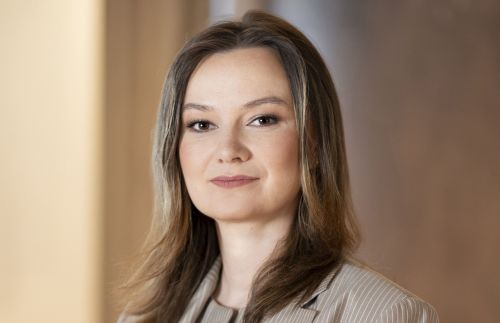
Sara Romanowska, senior advisor, office agency, Axi Immo
Vacancy keeps falling
At the end of the first half of 2026, Warsaw’s overall vacancy rate stood at 8.5 pct, down 2.3 percentage points from a year earlier. The decline has been particularly sharp in central locations, where vacancy has fallen to 4.8 pct.
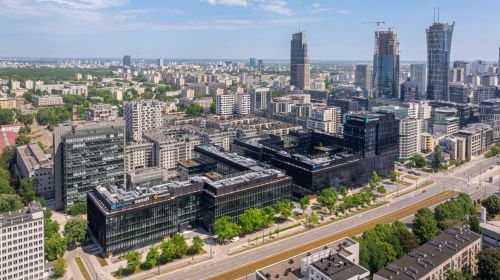
The situation is even tighter around Rondo Daszyńskiego, one of Warsaw’s main business districts. Vacancy there stands at just 3.6 pct. For occupiers looking for larger offices, that leaves much less room to choose from and makes early planning increasingly important.
Falling vacancy is not only a result of strong leasing activity. Older, less competitive buildings are also being taken out of the office market. Owners are increasingly refurbishing properties that no longer meet current technical or environmental standards, while some are converting them to other uses, most commonly residential. This is further reducing the amount of office space available to occupiers.
Falling vacancy does not mean every building is becoming more attractive. The market is becoming increasingly polarised. Occupiers are focusing on modern, well-located and energy-efficient projects, while older buildings have to compete through refurbishment, higher standards or more flexible lease terms. In some cases, owners are also changing the use of their properties, which is further reducing the amount of office space available.
Sara Romanowska, senior advisor, office agency, Axi Immo
Rents rise as incentives ease
Tighter availability is strengthening landlords’ position and is starting to show in rents. Asking rents in central Warsaw currently range from EUR 15 to EUR 28 per sqm per month, while prime schemes command EUR 25–32 per sqm per month.
At the same time, landlords are gradually scaling back incentive packages for occupiers. Just a few years ago, such incentives were a standard part of lease negotiations.
The changing market is also forcing occupiers to start their property searches earlier. This is particularly important for companies planning a move into the city centre or looking for larger office units. Waiting too long can leave them with few suitable options.
2027 could bring record-low new supply
Vacancy is expected to fall further as limited new development continues to meet relatively strong demand for modern office space.
Around 130,000 sqm of office space was under construction at the end of the first half of 2026, with more than 90 pct of that space in central locations. New deliveries in 2027 could be the lowest in many years, while a more noticeable recovery in development activity is not expected until 2028.
This is likely to put further pressure on availability, particularly in modern Class A buildings. In the most sought-after locations, there may be very little choice for occupiers looking for larger offices. Finding the right space could therefore become a bigger challenge than negotiating the rent.
Lower vacancy could also push rents higher, particularly in buildings offering high-quality space, environmental certification and strong locations. At the same time, refurbishing older buildings will become more important as the gap between newer and older stock widens.
Trend spreads to regional markets
Falling vacancy in central locations is not limited to Warsaw. A similar trend is becoming increasingly visible in regional cities such as Krakow.
Developers across Poland are holding back on new office projects because of high construction costs, more expensive financing and a more cautious approach from investors. As a result, the supply of modern office space in regional markets is also growing much more slowly than it did a few years ago.
Demand remains steady, supported by business services, IT, shared service and competence centres, as well as companies operating hybrid working models. Occupiers are increasingly looking for high-quality space, energy-efficient buildings, environmental certifications and good transport links. This is helping the best projects lease up faster and reducing the choice of prime space outside Warsaw as well.
Warsaw remains the clearest example of the trend. Availability of modern space in the city centre is tightening faster than in regional markets. The capital is therefore seeing the effects of limited new development first, through falling vacancy and rising rents, while landlords gain greater leverage in negotiations. If development remains subdued, similar trends could become more pronounced in other major Polish cities.
Occupiers need to plan relocations earlier
Warsaw’s office market is going through a period of steadily falling vacancy. Limited new supply, strong occupier demand and the gradual withdrawal of older buildings are all reducing the amount of space available.
That trend is likely to continue in the coming quarters, putting further pressure on rents and making competition for the best offices more intense. With relatively few new projects in the pipeline, finding suitable high-quality space is likely to become an increasingly important part of occupiers’ decisions, both in Warsaw and in Poland’s other major office markets.
Over the next two years, one of the most important factors for occupiers may be the availability of suitable space rather than the rent itself. Companies looking for large, modern offices in the best locations will need to plan further ahead. With so few new projects in the pipeline, having a clear leasing strategy and starting the process early will become increasingly important.
Sara Romanowska, senior advisor, office agency, Axi Immo

Who will win and who will lose with changes to the land market
Walter Herz
The biggest change to the land market in years is on the horizon. The spatial planning reform will mean that plots previously considered attractive may lose value, while land with ...
Sales up, supply down
JLL Polska
In the first quarter of 2026, the Polish housing market recorded a significant increase in sales. A total of 12,900 apartments were sold across the country's seven largest cities ( ...
Rent isn't everything. The real costs of leasing warehouse space
Newmark Polska
Choosing a new warehouse takes much more than simply comparing rental rates across a few or even a dozen centres. With rising energy costs and varying technical standards, the actu ...