Bucharest’s office market is showing signs of renewed activity. Net leasing demand reached more than 93,000 sqm in the first nine months of 2026, up 6 pct from the same period last year, according to Crosspoint Real Estate, the International Associate of Savills in Romania.
Total office leasing activity stood at 140,388 sqm, down 14 pct year-on-year. New leases accounted for 67 pct of the total, renewals for 32 pct and subleases for 1 pct.
Companies are still watching costs closely, but the reasons behind their office decisions are changing. Collaboration, employee experience and the ability to attract and retain staff are becoming increasingly important alongside the amount of space they need.
While companies remain focused on cost efficiency, we are seeing office-related decisions increasingly influenced by factors such as team collaboration, employee experience and the ability to attract and retain talent. The office continues to play an important role in the growth strategies of many organisations, and this is reflected in the level of new demand we are seeing across the market.
Mădălina Marinescu, head of office agency at Crosspoint Real Estate
New entrants and relocations keep demand moving
New companies entering Bucharest accounted for 42 pct of leased space, while 22 pct came from expansions and 36 pct from relocations.
Pre-leasing is also returning to the market. It accounted for 20 pct of net demand in the first nine months, as companies began taking space in new developments after a long period of limited office construction.
Floreasca-Barbu Văcărescu was the most popular office submarket, accounting for 33 pct of demand. Centre-West followed with 25 pct and the CBD with 13 pct.
Technology companies accounted for the largest share of leasing activity, at 34 pct. Energy and industrial companies made up 26 pct, followed by financial services at 9 pct.
Smaller offices, but location still matters
The average leased office area fell below 1,000 sqm in the first nine months of 2026, compared with 1,364 sqm a year earlier.
The decline reflects the continued use of hybrid working arrangements, particularly among large occupiers, as well as workforce changes in some sectors. Companies are taking a closer look at how much space they actually need and are cutting back where they can.
But they are not giving up on good locations.
Around 72 pct of office transactions in 2026 involved buildings within 500 metres of a metro station, underlining the importance of easy access to public transport.
Companies are becoming more precise in assessing their space requirements, but they are not compromising on location or building quality. Easy access to public transportation, modern technical specifications and employee-focused amenities remain essential criteria in the decision-making process.
Mădălina Marinescu, head of office agency at Crosspoint Real Estate
The deal involving Rohde & Schwarz Topex is a good example. The company renewed its lease for around 8,000 sqm and took another 2,000 sqm at myhive IRIDE | nineteen, bringing its total footprint to around 10,000 sqm. Crosspoint Real Estate brokered the deal.
The transaction shows that companies planning to grow are still willing to commit to office space when the building and location fit their needs.
New supply is coming
The third quarter brought the first major addition to Bucharest’s office stock in 18 months, with the completion of One Technology District, a more than 20,000 sqm development built for Infineon Technologies.
No other major projects are expected to be completed before the end of 2026. The development pipeline is stronger for 2027 and 2028, with nine projects due to deliver close to 200,000 sqm of new office space.
Until then, vacancy is expected to remain below 10 pct, particularly in modern buildings in well-connected locations.
The focus is shifting from space to value
The trends in Bucharest are broadly in line with Savills’ Global Occupier Strategy 2026, which surveyed business leaders and corporate occupiers worldwide.
Nearly two-thirds of respondents see the workplace either as a competitive advantage or as an important part of company culture. Businesses spend an average of 8.4 pct of revenue and 12.5 pct of operating expenditure on workplace-related costs.
Yet many companies still struggle to measure the value they get from their offices. Almost all respondents believe the workplace helps collaboration and business performance, but fewer than half say they can measure those benefits effectively.
Both the Savills report findings and what we are observing in Romania point in the same direction. The discussion is no longer exclusively about how many square metres a company occupies, but about the value that space creates for the organisation. This is one of the reasons why high-quality, well-connected office buildings continue to attract strong occupier interest, even in a more cautious economic environment.
Mădălina Marinescu, head of office agency at Crosspoint Real Estate



















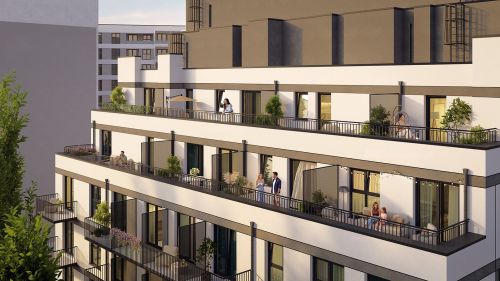























Who will win and who will lose with changes to the land market
Who will win and who will lose with changes to the land market
Walter Herz
The biggest change to the land market in years is on the horizon. The spatial planning reform will mean that plots previously considered attractive may lose value, while land with ...
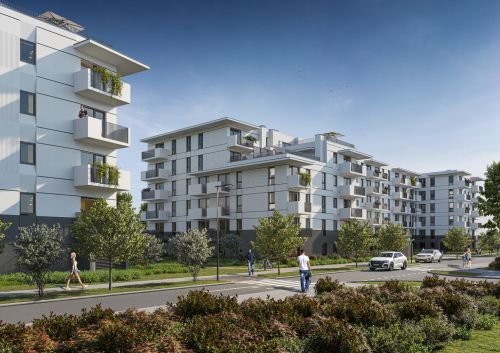
Sales up, supply down
Sales up, supply down
JLL Polska
In the first quarter of 2026, the Polish housing market recorded a significant increase in sales. A total of 12,900 apartments were sold across the country's seven largest cities ( ...
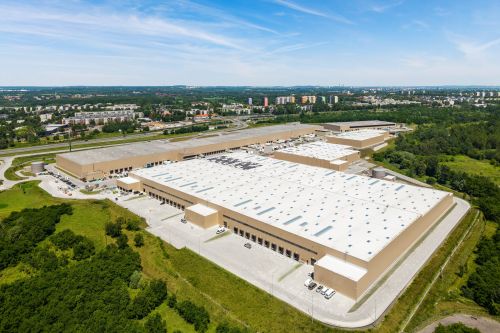
Rent isn't everything. The real costs of leasing warehouse space
Rent isn't everything. The real costs of leasing warehouse space
Newmark Polska
Choosing a new warehouse takes much more than simply comparing rental rates across a few or even a dozen centres. With rising energy costs and varying technical standards, the actu ...