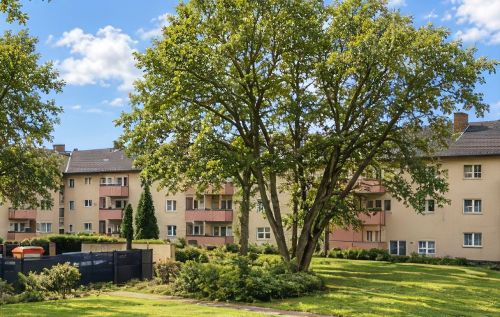


























Poland Apartments remain a top investment
Residential
The Otodom report shows that three quarters of respondents prefer to own an apartment because it gives them a sense of security. At the same time, 56 pct expect apartment prices to rise in the near future – up 6 percentage points on a year earlier. A study by Otodom and Growth Business Review, meanwhile, found that for 63 pct of buyers, the belief that it was a “now or never” moment was what prompted them to complete a purchase.
Property has been a safe haven in Poland for years. Buyers see property as both a way of protecting their wealth and an opportunity to generate rental income or pass assets on to the next generation.
Paweł Jarząbek, market research and analysis manager at Otodom
Not every investor, however, wants to buy an apartment, manage a rental property or tie up a substantial amount of capital in real estate. One alternative is mortgage-covered bonds – debt securities issued by mortgage banks and secured primarily by receivables from mortgage loans.
Investing on the financing side
An example of the growing availability of this instrument to individual investors is the third retail issue of mortgage-covered bonds by PKO Bank Hipoteczny. Subscriptions opened on September 1, 2026. The bank plans to raise between PLN 500 mln and PLN 1 bln from investors. Each bond has a nominal value of PLN 1,000. For the first three months, the interest rate is 4 pct per annum. It will then be set at the NBP reference rate plus 0.25 percentage points. Interest will be paid every three months, while the bonds are due to be redeemed on September 25, 2030. Subscriptions will remain open until September 18, 2026, or until the issue is fully subscribed.
PKO Bank Hipoteczny says the proceeds will be used to provide mortgage loans. Investors therefore do not directly finance the purchase of a particular apartment. Instead, they become creditors of the bank, which uses the funds in its lending business.
When you buy an apartment, you own the property and can earn rental income from it, while your return also depends on how property prices change. A mortgage-covered bond is different: you don’t own an apartment. You are lending money to a mortgage bank and investing on the financing side of the property market.
Dr Maciej Kietliński, economic expert at Otodom
A mortgage-covered bond is therefore an investment in bank debt rather than in a specific property. The investor receives the interest set out in the issue terms and gets the nominal value back when the bond matures. They do not, however, benefit directly from rising apartment prices or rental income.
Not a Polish REIT
Mortgage-covered bonds may be compared with REITs because both provide indirect exposure to the property market without requiring investors to buy a property themselves. Beyond that, however, the two instruments are fundamentally different.
When you buy shares in a REIT that owns property, you become an indirect co-owner of the company and its portfolio. When you buy a mortgage-covered bond, you are lending money to a mortgage bank. A mortgage-covered bond is therefore neither an “apartment on paper” nor a Polish equivalent of a REIT.
Maciej Kietliński
With a mortgage-covered bond, therefore, the key issue is not ownership of property but the quality of the bank’s obligations and the security backing them.
Security is not the same as a guarantee
Mortgage-covered bonds benefit from a special statutory security framework. The total value of the assets backing an issue must be at least 105 pct of the nominal value of the bonds outstanding. Mortgage-secured receivables must account for at least 85 pct of this amount. The bank also maintains a dedicated collateral register, while regulations provide for additional mechanisms to monitor whether its obligations are adequately covered.
This does not mean, however, that the instrument is risk-free. A mortgage-covered bond is not a bank deposit covered by the Bank Guarantee Fund, nor is it a Polish Treasury bond.
Having security behind an investment is not the same as having no risk. If an investor wants to sell a bond before it matures, its price will depend on market conditions and could be either higher or lower than the price they paid.
Maciej Kietliński
PKO Bank Hipoteczny intends to seek admission of the current series to trading on the Catalyst market. Any sale before maturity will therefore depend on market conditions and on finding a buyer. For investors, this means that the security backing the bond does not guarantee that they will be able to recover their capital at the original purchase price whenever they choose to sell.
Individual investors are already buying
Previous issues show that mortgage-covered bonds have attracted interest from individual investors. PKO Bank Hipoteczny conducted its first retail issue in October 2025. A total of 5,762 people submitted subscriptions, with the total value of bonds allocated exceeding PLN 1.155 bln.
The second offering was launched in April 2026. The bank initially planned an issue worth PLN 500 mln, but subscriptions exceeded that amount on the first day. The issue was eventually increased to PLN 1 bln. Investors submitted subscriptions worth more than PLN 1.338 bln, while the number of subscribers reached 4,793.
According to PKO Bank Hipoteczny, more than 10,500 retail investors subscribed to mortgage-covered bonds in the first two offerings combined. In 2026, mBank Hipoteczny also offered a retail series, worth just under PLN 106 mln.
According to the latest list published by the Polish Financial Supervision Authority (KNF), five mortgage banks currently operate in Poland: ING Bank Hipoteczny, mBank Hipoteczny, Millennium Bank Hipoteczny, Pekao Bank Hipoteczny and PKO Bank Hipoteczny.
Property from a different perspective
The growing availability of mortgage-covered bonds to individual investors shows that exposure to the housing market does not necessarily require buying a particular property. An apartment gives investors direct ownership of an asset and the opportunity to earn rental income. A mortgage-covered bond, by contrast, is an investment in mortgage lending and is primarily exposed to the bank’s credit risk and prevailing market conditions.
Traditional buy-to-let property and mortgage-covered bonds serve different investor needs. Mortgage-covered bonds may appeal to people who want exposure to a debt instrument linked to housing-market financing without having to buy or manage a property themselves.
Paweł Jarząbek
As Kietliński points out, mortgage-covered bonds offer a different way of looking at the housing market.
Someone buys an apartment with a mortgage, the bank provides the financing, and the bank then needs funding to support its long-term mortgage portfolio. Mortgage-covered bonds bought by investors can provide one such source of funding. But buying one does not make you a property investor in the same sense as owning a rental apartment. You are on the financing side of the market.
Maciej Kietliński
For investors, the distinction is fundamental: rather than buying an apartment, they can provide funding to a bank that lends to homebuyers. This gives them a different type of exposure to the housing market – with different return potential, but also a different risk profile.

Who will win and who will lose with changes to the land market
Walter Herz
The biggest change to the land market in years is on the horizon. The spatial planning reform will mean that plots previously considered attractive may lose value, while land with ...
Sales up, supply down
JLL Polska
In the first quarter of 2026, the Polish housing market recorded a significant increase in sales. A total of 12,900 apartments were sold across the country's seven largest cities ( ...
Rent isn't everything. The real costs of leasing warehouse space
Newmark Polska
Choosing a new warehouse takes much more than simply comparing rental rates across a few or even a dozen centres. With rising energy costs and varying technical standards, the actu ...