













Poland The growing pains of PRS
Residential
From January to the end of October 2025, the supply of PRS apartments increased by over 4,800 units, reaching around 25,100. This marks a 24 pct rise compared to the start of the year. By the end of 2027, total supply, including projects currently under construction and those planned (with known completion dates), could increase to over 36,000 apartments.
The PRS market is still at a very early stage of development compared to the private rental market. The scale of institutional renting remains small compared to the number of individuals officially declaring rental income, as confirmed by administrative data. Additionally, the fragmentation of this segment and the limited availability of large apartment packages for purchase are hindering the growth that institutional investors expect.
Strong Demand and the Growing Role of Renting as a Conscious Choice
Changing social attitudes towards renting, increased mobility, migration to large cities, and limited availability of mortgage loans are factors that have driven the sector's growth in recent years. At the same time, tenants’ expectations regarding the quality of services, transparency, and stability of contracts provided by institutional operators are rising.
Poland is entering a stage where institutional rental is becoming a legitimate and rational alternative to home ownership, especially in the largest cities. High market transparency and the professionalisation of rental services are attracting both tenants and investors.
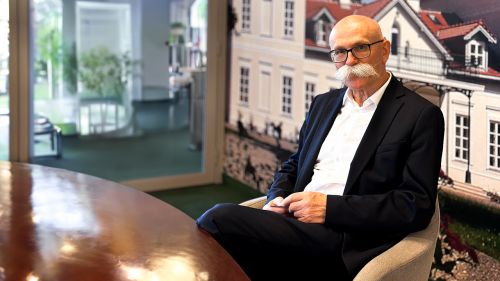
Jacek Kałużny, head of operational capital markets at Savills.
According to data from the Ministry of Finance cited in the report, in 2024, over 1.07 mln taxpayers declared income from private rentals, reflecting the rental market's scale but also its fragmentation. This figure does not account for the grey market in rentals. Meanwhile, the PRS segment has nearly grown tenfold since 2018, although it still constitutes only a small part of the overall rental market, at just 2 pct. Today's tenants are more informed and pay attention to standards, predictability, and transparency, as the nature of mobility shifts—renting is increasingly seen as a choice rather than a necessity, influenced by new lifestyle models, job mobility, and changing family structures.
Leading Cities: Warsaw, Kraków, and Tri-City
Most investors are focusing their projects in the seven largest metropolitan areas, with an average project size of around 200 apartments. The fastest-growing markets between January and October 2025 were: Kraków (1,742 new units), Warsaw (1,484), Poznań (416), and Wrocław (369). The Tri-City area doubled its supply due to the completion of three new projects. Łódź remains the only major market without any changes.
The availability of land for projects, urbanisation, and strong migration flows are ensuring that the largest cities will remain crucial for the development of the PRS sector. Data from 2025 indicates stable demand, with new projects quickly attracting tenants.
Wioleta Wojtczak, head of research at Savills.
Expanding PRS beyond the largest cities and their centres is challenging because a key criterion for tenants is access to good public transport. Construction costs in city centres and the suburbs are similar, limiting the ability to differentiate rents to compensate for a worse location.
Stable Rents in Most Cities
According to Savills, rents in the PRS sector have remained resilient to price changes. In the first nine months of 2025, Gdańsk saw a 3 pct increase, while Warsaw, Wrocław, Łódź, and Poznań rose by about 1.5 pct. A decline of over 6 pct was noted in Katowice, while Kraków maintained rental levels found at the end of 2024.
Rents in PRS projects remain stable and strongly dependent on the standard and location of the development. Studio apartments in institutionally managed buildings usually cost between PLN 2,500 to PLN 3,000 per month, whereas one-bedroom flats range from PLN 2,000 to over PLN 4,000, with the highest rates observed in premium projects and central locations in the largest cities.
High-quality service and predictable rental help keep PRS rents stable. This format addresses genuine tenant needs, such as stability, security, and quality.
Wioleta Wojtczak
Resi4Rent remains the market leader, with a portfolio of approximately 6,200 apartments. Next come Vantage Rent, with 3,287 units, and LifeSpot, managed by Ares and Griffin Capital Partners, with 2,450 apartments. The three largest investors control a combined 48 pct of the entire PRS stock in Poland. The state-owned Rental Housing Fund is right behind them, with just under 2,500 rental apartments.
The potential for rent growth may be lower in the coming years, due in part to falling interest rates and the increasingly high standard of apartments rented on the private market. The increasing professionalisation of private landlords is impacting the competitiveness of both segments. Predictable rents and stable lease terms remain key advantages of PRS for tenants.
Expert Panel – Key Findings
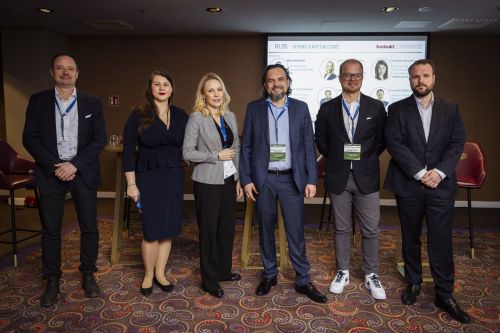
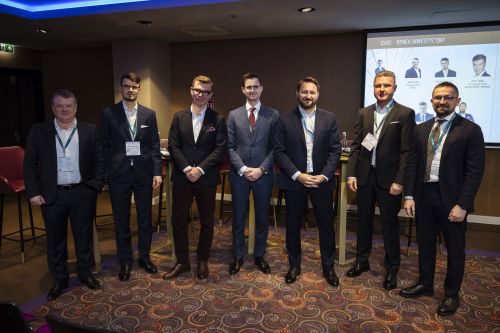
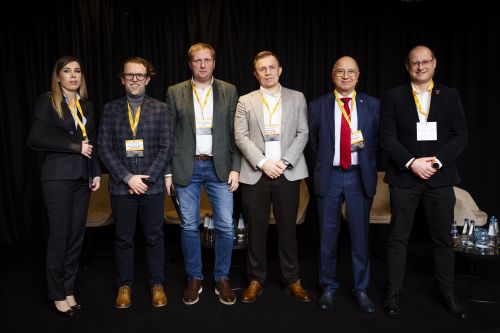
During the report launch, a panel discussion led by Jacek Kałużny was held. The participants included Anna Baran (G City Europe), Marek Obuchowicz (Griffin Capital Partners), Dariusz Pawlukowicz (Vantage Development & Robyg), Edyta Stelmach (Nrep), and Anna Pleskowicz (Crido).
The panel highlighted structural barriers limiting the pace of PRS development in Poland. Land availability and lengthy administrative procedures were also called out. The panel stated that introducing a dedicated "building for rent" category in construction law would be beneficial, provided it was properly defined and addressed the real challenges faced when designing PRS buildings. It was also noted that the lack of clear tax regulations leads to investor uncertainty that impacts project profitability. The panel agreed that the market is currently in its infancy, and some of the challenges are also being faced by the entire real estate market, including inflation in construction costs and lengthy administrative proceedings.
Potential, but Still Low Liquidity
Although the Polish living sector, which includes PRS and PBSA, still has low liquidity and a limited number of transactions – in the first three quarters of 2025, investment reached EUR 86.5 mln, primarily in forward contracts – the market's attractiveness remains high. The report emphasises that investors are increasingly following the Polish market. Its attractive rates and the growing scale of itsprojects are laying the foundation for increased transaction activity. The largest barrier for investors remains the limited number of ready-made portfolios available for purchase. Building a portfolio from scratch currently requires an investment horizon of up to 10 years, due in part to time-consuming permitting procedures. Rising financing costs and high land prices require significantly more plots to be considered and as a result more offers must be made.
Clear and Dedicated Regulations Needed
The report highlights that the lack of precise regulations for the PRS sector, combined with divergent interpretations by tax authorities, continues to generate significant investment uncertainty.
In the absence of specific regulations, the PRS sector requires a detailed tax and legal analysis at the investment design stage – both to select the business model and to adapt it to local conditions. Importantly, tax consequences accompany investors throughout the project's lifecycle.
Anna Pleskowicz, partner at Crido.
Crido points out that the ambiguity of tax regulations means that some projects may prove unprofitable at the financial analysis stage. They point out that even minor differences in VAT or property tax interpretations can determine whether a given project will ultimately be developed. Experience also shows that tax risks may become apparent at the investment exit stage, particularly as a result of VAT and multi-year tax adjustments upon the sale of a property. Additionally, the report highlights emerging new risks, such as attempts to apply higher property tax rates to vacant properties and inconsistent approaches to centres such as student housing.

The quiet revolution in Małopolska
Axi Immo
Developers across the region are increasingly favouring heat pumps and photovoltaic systems over traditional gas boilers in warehouse construction. This shift marks a growing commi ...
Modular construction becomes more prominent
Spectis
After a temporary slowdown, the modular construction market in Poland continues to expand in 2025. Although the sector faces challenges such as high material costs and investment f ...
EXPO REAL 2025: From survival mode to selective recovery
Axi Immo
This year’s EXPO REAL in Munich marked a noticeable shift in tone across industry conversations. Following a period of uncertainty and postponed investment decisions, the com ...