









Poland Retail investment picks up
Retail & leisure
More important than the headline volume is what investors are actually buying. After several years of strong demand for retail parks, large shopping centres are attracting investors again. Portfolio transactions continue to feature prominently, while sale-and-leaseback deals are also becoming more common.
Investors are increasingly focusing on location, tenant quality, lease lengths and the potential to generate stable revenues, rather than on the property format itself.
Retail parks face new competition
Retail parks remain one of the most popular investment products, but the first half of the year showed that investors are once again willing to commit capital to larger and more complex assets.
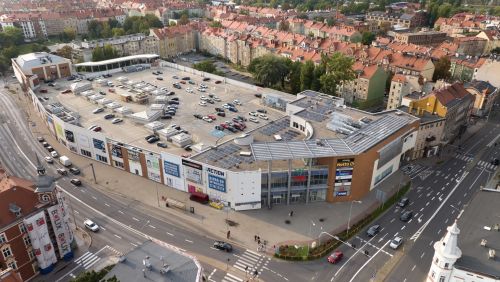
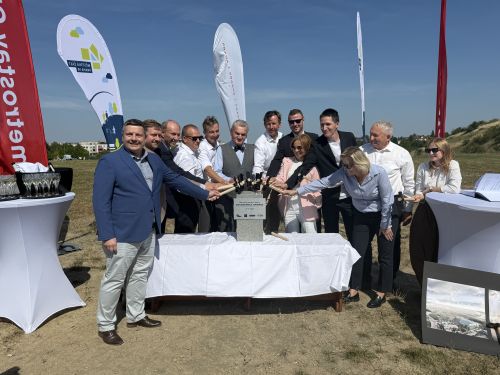
Posnania is the clearest example. Czech investor Trigea acquired a majority stake in the shopping centre in the largest transaction in Poland’s retail sector since 2024.
Portfolio deals also featured prominently. Generali Real Estate and Star Capital Finance acquired six Vendo Parks, while Ares Real Estate and Slate Asset Management acquired additional assets from TREI, while BIG and MCore were also active buyers.
Retail parks are therefore not losing their appeal. They now face competition for capital from a wider range of assets.
The market, which has been dominated by retail parks in recent years, has now become the most diverse investment segment in Poland. Retail parks remain very popular, but large shopping centres are once again being acquired alongside them, portfolio transactions are gaining ground and sale-and-leaseback deals are becoming increasingly important.
Agnieszka Kołat, head of retail investment at JLL
Sale-and-leaseback moves beyond niche
Another clear trend is the growing importance of sale-and-leaseback transactions, which allow owners to unlock capital tied up in their assets while giving buyers access to properties with an operating business and a defined lease term.
The largest such deal in the first half was Adventum’s acquisition of Shopper Park Plus. The fund acquired eight retail properties from Auchan Poland and Ceetrus for around EUR 190 mln. Auchan remained the properties’ anchor tenant under new 15-year leases.
For Auchan, the deal released capital tied up in its property portfolio. For the investor, it provided access to assets with a long-term tenant and a defined rental revenue stream.
Sale-and-leaseback is no longer a solution used only in individual cases. For retail operators, it could become a way of financing further growth, while for investors it provides access to assets with a long-term tenant.
Agnieszka Kołat
Who is buying?
The largest individual deals in the first half of the year were carried out by investors from the Czech Republic and Hungary. International funds and specialist asset managers are increasingly joining forces on portfolio acquisitions.
Generali Real Estate’s deal with Star Capital Finance and Ares Real Estate’s deal with Slate Asset Management followed this pattern. Trigea’s and Adventum’s acquisitions, meanwhile, point to growing activity from Central European capital.
Investors from Israel, the UK, Germany and South Africa are also active in the market, while private Polish investors are playing a growing role.
Investors are looking for different risk and return profiles, from stable assets with long leases to portfolios where value can be enhanced through active management.
Quality will be key in the second half
The retail sector is expected to remain active in the second half of 2026, although the recovery will not benefit all properties equally.
The attractiveness of an individual property depends primarily on its location, tenant strength, local competition, lease lengths and resilience to changing consumer behaviour. It also depends on whether the owner can add value through refurbishment, changes to the tenant mix or active management.
Investors are looking beyond the retail format itself. What matters is the quality of the business behind the property and its ability to deliver the expected returns. That is why prime shopping centres and convenience portfolios are attracting interest alongside retail parks.
Agnieszka Kołat, head of retail investment at JLL
The first half of 2026 suggests that Poland’s retail investment market has entered a broader recovery. Retail parks remain an important part of the market, but investors are once again considering shopping centres, portfolios and sale-and-leaseback deals.
For sellers, the wider pool of potential buyers creates more opportunities to unlock value. For investors, it means more choice — but also a greater need to look beyond the format and focus on the fundamentals of each property.

Who will win and who will lose with changes to the land market
Walter Herz
The biggest change to the land market in years is on the horizon. The spatial planning reform will mean that plots previously considered attractive may lose value, while land with ...
Sales up, supply down
JLL Polska
In the first quarter of 2026, the Polish housing market recorded a significant increase in sales. A total of 12,900 apartments were sold across the country's seven largest cities ( ...
Rent isn't everything. The real costs of leasing warehouse space
Newmark Polska
Choosing a new warehouse takes much more than simply comparing rental rates across a few or even a dozen centres. With rising energy costs and varying technical standards, the actu ...