














Poland Real Estate market remains stable
Investment & finance
Waiting for core capital to return
After four challenging years and a slowdown in the investment market in 2023, results from 2024 pointed to a return to some stability – and that trend carried on throughout 2025. That said, overall transaction volumes in Poland last year were still lower than in 2024, mainly because there were fewer deals involving big institutional investors.
Liquidity across the market stayed solid, with 151 transactions completed – almost the same as the year before. Total investment volume reached EUR 4.5 bln, with more than 40% of that wrapped up in the final quarter of the year. Unlike 2024, when the ten biggest deals accounted for nearly half of all investment volume, 2025 was much more about lots of smaller, less headline-grabbing transactions. That said, several major deals kicked off in 2025 are due to complete in early 2026.
Offices were the standout sector in 2025, taking a 39 pct share of total volume, largely driven by Warsaw deals. The logistics sector also held up well, thanks to a handful of portfolio transactions and some eye-catching sale-and-leaseback deals. In retail, the sale of the 25-strong Vendo Park portfolio underlined just how strong demand still is for retail parks and convenience formats. On top of that, there were five hotel transactions and nine residential deals. Notably, Polish capital made its presence felt much more strongly in the commercial property investment market last year.
Key figures:
-
EUR 4.5 bln (-13% YoY) – total investment volume in 2025
-
151 transactions in 2025 vs 154 in 2024
-
Polish capital accounted for 18 pct of total volume in 2025, up from 9 pct in 2024
-
Several major deals launched in 2025 are set to complete in 2026
Offices draw in domestic capital
Back in 2023, investors were increasingly focused on older, value-add and opportunistic office buildings. In 2024 and 2025, however, activity picked up around core and core-plus assets – especially in Warsaw. This reflects a shift in pricing, with asking prices moving closer to actual deal values and current market conditions. Even so, older buildings with potential for repurposing, refurbishment or owner-occupation remain popular, and these tend to attract domestic investors in particular.
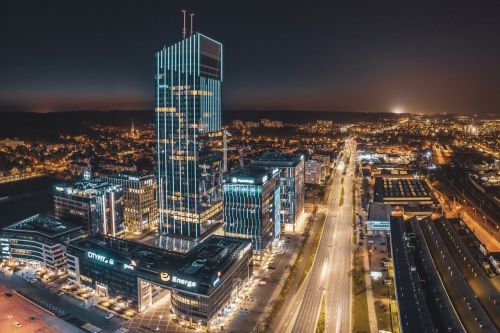
The biggest office deals of 2025 (each worth more than €100m) included Mennica Polska’s acquisition of a 50 pct stake in Mennica Legacy Tower, the sale of Wola Center to Trigea Real Estate Fund, and the buy-back of a 49 pct stake in the CPI portfolio. That last one was the single largest office deal by volume, accounting for more than a quarter of the sector’s total. Other notable office assets that changed hands included Senator, Vibe and Wronia 31 in Warsaw, High Five I & II in Kraków, and Centrum Południe 3 in Wrocław.
Looking ahead, office market activity is expected to stay strong this year, both for older assets and potentially for top-tier office buildings.
Office sector at a glance:
-
EUR 1.8 bln (+7% YoY) total office investment in 2025
-
30 of 51 transactions took place in Warsaw
-
The five largest deals made up 50 pct of the sector’s volume
-
Polish capital accounted for 30 pct of volume and half of all transactions
Domestic investors, responsible for 30 pct of office volume and 50 pct of deals, continue to play a key role in the sector, with growing interest in smaller office formats. This shows just how much more active Polish investors have become in commercial real estate, particularly in value-add and opportunistic assets.
Marcin Purgal, senior investment director at Avison Young.
Logistics – steady and resilient
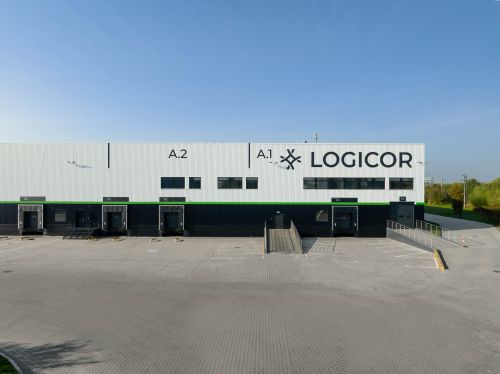
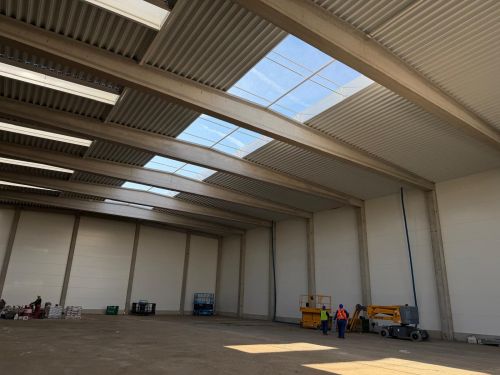
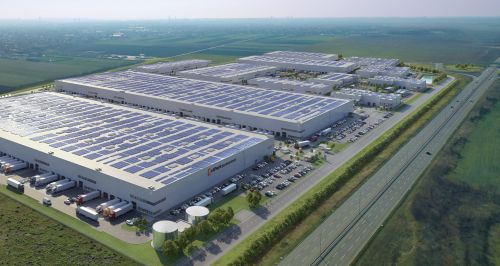
The logistics sector, which emerged as the strongest performer during the tough conditions of 2023, remained stable throughout 2024 and 2025. Last year saw ongoing demand for sale-and-leaseback deals, alongside growing investor interest in smaller industrial hubs, which accounted for almost 40 pct of the sector’s total investment volume in 2025.
Logistics investment reached around EUR 1.5 bln last year. There were only a handful of big-ticket deals, with just two transactions topping EUR 100 mln. The standout was a landmark sale-and-leaseback involving two assets owned by Polish manufacturer Eko-Okna, sold to Realty Income – the largest transaction of its kind ever seen across the entire CEE region.
Logistics sector in numbers:
-
EUR 1.5 bln (+10% YoY) invested in 2025
-
8 portfolio deals out of 34 total transactions
-
The largest sale-and-leaseback transaction ever completed in CEE
With plenty of deals currently in progress, Poland’s logistics investment market is well placed to hit record levels in 2026. Narrowing price gaps between buyers and sellers should help fuel growth, largely driven by incoming foreign capital. Sale-and-leaseback deals are expected to remain popular, while a repricing of older logistics stock could also boost activity on the secondary market.
Bartłomiej Krzyżak, senior investment director at Avison Young.
Retail – retail park portfolios in focus
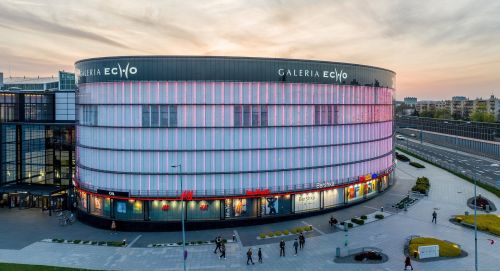
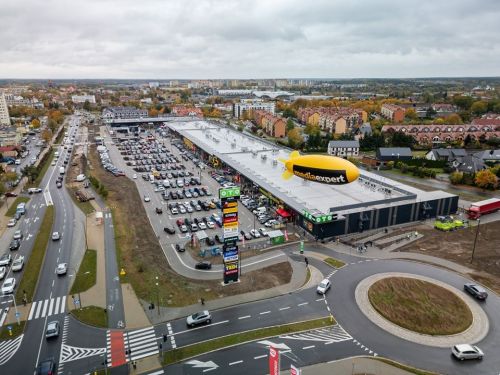
Retail property accounted for just under 20% of total investment volume in 2025, down sharply from 32% in 2024. After last year’s strong focus on regional shopping centres – including prime assets – 2025 was all about retail parks. The retail park market is maturing, and an ongoing consolidation trend is now translating into long-anticipated portfolio deals.
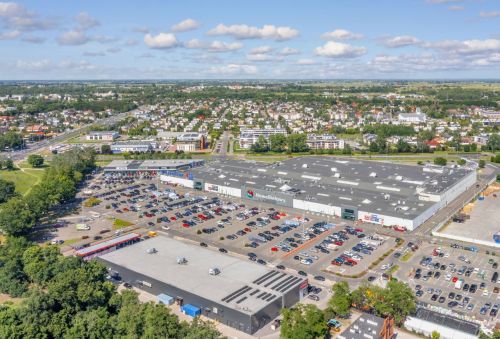
The retail sector closed 2025 with a total transaction volume of €859m, nearly 50% down year on year due to the changing mix of assets. Unlike 2024, there were no prime shopping centre deals at all. Instead, 70% of transactions involved retail parks and convenience assets, including two large portfolio deals: My Park acquired 10 A Centrum properties, while Trei Real Estate sold 25 retail parks to Ares Management Corporation and Slate Asset Management.
Another notable deal was Summus Capital’s acquisition of Galeria Libero in Katowice, one of only two retail transactions last year valued at more than EUR 100 mln. In 2026, further retail park and convenience deals are expected, though dominant, well-anchored shopping centres in strong city locations should also start drawing investor interest again.
Retail sector snapshot:
-
EUR 859 mln (-48 pct YoY) invested in 2025
-
36 of 52 transactions involved retail parks or convenience assets
-
Two retail park portfolios sold
Redevelopment-focused transactions were popular throughout 2025, including projects such as Arkady Wrocławskie, CH Glinki and Galeria Lubelska, all advised on by Avison Young. Poland’s retail investment market offers a wide range of opportunities, from established shopping centres and redevelopment projects to retail parks and high-street units on the ground floors of residential or office buildings.
Artur Czuba, investment director at Avison Young.
PRS – a landmark deal in the making
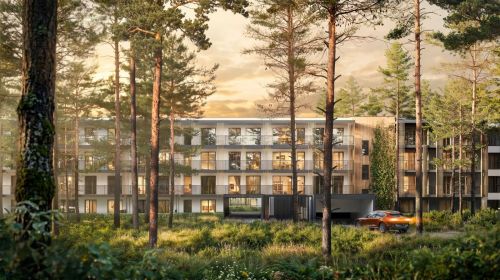
In 2025, total investment in Poland’s residential sector reached EUR 223 mln, with EUR 150 mln invested in three PRS (private rented sector) schemes in Warsaw. AFI Europe completed two of those deals, while Xior Student Housing acquired one asset from Syrena RE. The remaining transactions were carried out by NREP and involved three co-living assets in Gdańsk.
Meanwhile, a truly game-changing PRS deal is still underway. Vantage Development has announced plans to acquire 18 PRS assets from Resi4Rent. The strong fundamentals of Poland’s residential market are attracting growing interest from both domestic and international investors, including PHN, Ronson Development and Skanska.
So far, Poland’s PRS market – still in its early stages – has been dominated by primary market deals, with assets bought directly from developers. Secondary market transactions only really appeared in 2022, following the sale of Catella’s Warsaw and Kraków assets and its exit from Poland. We’re now seeing the next phase of growth, marked by Vantage Development’s acquisition of 18 Resi4Rent assets, representing more than 20 pct of all operational PRS units in the country.
Patryk Błach, senior investment consultant at Avison Young
What’s coming in 2026?
Poland remains an attractive destination for investors, backed by solid economic growth and strong market fundamentals. The big institutional players are still on the sidelines for now, but expected interest rate cuts in both euros and zloty, along with the potential easing of the conflict in Ukraine, should help bring more foreign capital back into the market.
Avison Young expects further growth in investment activity, particularly focused on small and mid-sized assets. Polish investors are likely to remain key players in 2026, with the capital and appetite to invest across all sectors – especially in higher-yielding assets or those with strong value-growth potential.
Investor activity from Central and Eastern Europe is also expected to stay intense, especially from the Czech Republic, Hungary and the Baltic states, alongside Western European players such as France and Belgium, who are already actively scouting for new opportunities. Early 2026 is shaping up to be busy, with many deals launched in 2025 set to complete in the first months of the year.
High levels of activity are forecast to continue in the office sector, both for older buildings and potentially for top-quality assets. In retail, growth will likely be driven by retail parks and smaller shopping centres, while the logistics sector – already a strong performer – could push on to even better results.

Strong warehouse sector whilst capital cautious and offices yet to rebound
Newmark Polska
Poland’s commercial real estate market enters 2026 in good health and with solid growth potential. Warehouses remain one of the strongest sectors in Europe, while constrained ...
The end of greenwashing as flex grows in strength
Walter Herz
The office sector is entering a period of deeper qualitative and financial scrutiny. Decisions regarding new projects, refurbishments, or leasing are now supported by more thorough ...
The quiet revolution in Małopolska
Axi Immo
Developers across the region are increasingly favouring heat pumps and photovoltaic systems over traditional gas boilers in warehouse construction. This shift marks a growing commi ...