





















CEE region CEE ready for the rebound
Investment & finance
The rebound is supported by improving macroeconomic conditions and growing activity from domestic and regional investors, positioning CEE as one of Europe’s most resilient investment regions.
Poland leads regional economic growth
Macroeconomic performance across CEE remains uneven, but growth is expected to accelerate across the region towards 2027. Poland continues to lead both regionally and within Europe, with GDP growth projected at 3.4pct in 2025 and rising to 3.7pct in 2026, significantly above the EU average of above 1,4-1,5pct.
The Czech Republic is forecast to maintain stable expansion at 2.6pct in 2025 and 2.9pct in 2026–2027, while Hungary is expected to rebound from 0.4pct growth in 2025 to 2.3pct in 2026. Romania is projected to grow by 0.7pct in 2025 and 1.1pct in 2026, before accelerating to 2.1pct in 2027, while Slovakia’s economy is expected to slow from 0.8pct in 2025 to 0.6pct in 2026, followed by a recovery to 2.3pct in 2027.
Economic growth and improved financing conditions are translating into increased investment activity. Poland stands out thanks to strong GDP growth and a resilient occupier market.
Record investment growth driven by regional capital
The 2025 recovery was led primarily by domestic and regional investors. Domestic capital accounted for 86 pct of total investment volume in the Czech Republic, 37pct in Romania, 18 pct in Poland, a record level, and 12 pct in Slovakia.
Czech funds emerged as the dominant regional capital source, deploying EUR 3.8 bln domestically, nearly EUR 1.1 bln in Poland, and more than EUR 430 mln in Slovakia, making them the largest source of investment capital in Poland during 2025.
In 2025, 48 pct of investment volume in Poland originated from CEE capital, the highest share ever recorded on our market. We also observed a notable rise in domestic activity, with Polish investors increasing their share to 18 pct, up from 9 pct a year earlier. The scale of only Czech capital deployment, nearly EUR 1.1 bln invested in Poland alone, clearly illustrates that regional investors are now shaping liquidity across CEE markets. Cross-border capital flows within the region have become a structural feature rather than a cyclical trend.
Krzysztof Cipiur, managing director, head of capital markets at Knight Frank Poland
Czech Republic and Slovakia drive market rebound
Investment growth varied significantly across markets. The Czech Republic recorded transaction volumes of EUR 4.39 bln, representing a 137 pct year-on-year increase, while Slovakia achieved 138 pct annual growth, surpassing EUR 900 mln in investment volume.
Poland saw a moderate correction after a strong prior year, with volumes declining by 12 pct to EUR 4.5 bln, while Romania experienced a 27 pct decrease, reaching EUR 540 mln.
Large-ticket transactions returned to the market, including the acquisition of Prague’s Palladium mixed-use scheme for over EUR 700 mln, the largest single-asset transaction in CEE in 2025, alongside the EUR 253 mln sale-and-leaseback of Eko Okna’s logistics assets in Poland.
Offices regain dominance as investor strategy shifts
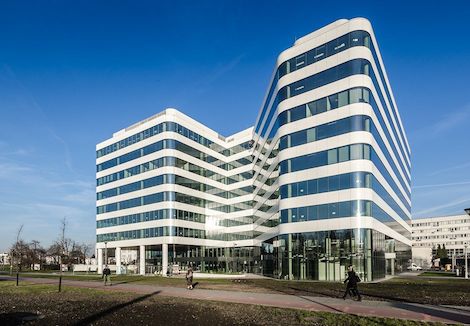
The office sector reclaimed its position as the largest investment segment, accounting for 32pct of total CEE investment volume. Offices represented nearly 50 pct of transactions in Hungary, 39 pct in Poland, and 36 pct in Romania.
Investor focus is gradually shifting toward core and core+ assets, supported by rental growth expectations and limited development pipelines across regional office markets.
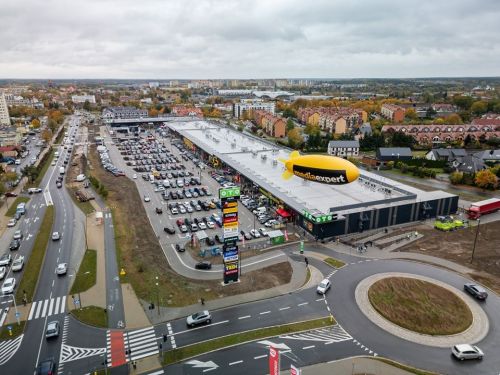
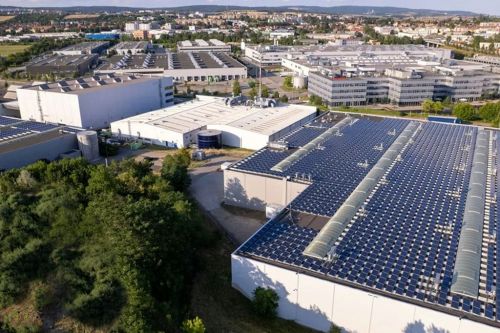
Industrial and logistics assets remained the market’s structural backbone, attracting EUR 2.8 bln in investment volume in 2025, while retail accounted for EUR 1.9 bln, or 17pct of total activity, driven primarily by retail park transactions.
Czech market remains pricing benchmark
Prime yields in the Czech Republic remained the lowest in the region, compressing to 5.0pct for office and industrial assets and 5.75pct for shopping centres, reflecting strong liquidity and intense investor competition.
Across other CEE markets, prime yields stabilised within ranges of: 6.0pct–7.25pct for offices, 6.0pct–7.5pct for industrial assets, 6.25pct–7.25pct for shopping centres.
In the CEE context, the Czech Republic effectively acts as a liquidity anchor. The depth of domestic capital and predictable pricing dynamics provide stability for the wider region, especially at times when international capital is more selective
Josef Karas, head of investment at Knight Frank Czech Republic
Outlook 2026: stabilisation and renewed international interest
Investor sentiment across CEE is expected to remain positive in 2026. Poland is forecast to see strengthening activity supported by office recovery and stable industrial demand, alongside expanding domestic capital, which tripled year-on-year.
Hungary’s investment market is expected to stabilise with selective investor re-entry focused on prime ESG-compliant assets.
Enhanced pricing transparency and more compelling yield premiums are anticipated to progressively restore investor confidence in Hungary, with capital flows likely to concentrate on prime office and logistics assets.
Erika Loska, National Director at Knight Frank Hungary.
Romania may benefit from the potential return of a 380,000 sq m industrial portfolio to the market, which could significantly increase transaction volumes.
Romania is forecast to see a rebound in investment activity following a weaker year. Large-scale logistics opportunities could materially change Romania’s investment dynamics in 2026 and strengthen its industrial positioning within CEE.
Horatiu Florescu Papakonstantinou, chairman & CEO at Knight Frank CSEE
In Slovakia, volumes may decline following a record year, primarily due to limited product availability rather than weaker demand.
Rental growth to drive value increases
Prime yields across CEE are expected to remain broadly stable throughout 2026, with capital value growth increasingly driven by rental increases rather than further yield compression. Strong occupational markets in Warsaw, combined with limited new supply, are expected to support rental growth in prime office assets.
Charles Taylor, CEO at Knight Frank Poland.
With regional GDP growth projected to significantly exceed the EU average by 2027, CEE markets are positioned to remain among Europe’s most attractive investment destinations.

A good foundation from which to grow
CBRE
Poland's role and the strength of its economy are increasingly visible in the European commercial real estate market. We have strengthened our leading position in Central and Easte ...
Zero-emission, zero-backup? The resilience gap in modern building standards
Independent Expert
As commercial buildings move rapidly toward full electrification, modern standards optimise for efficiency and emissions – but largely assume uninterrupted power supply. In C ...
Strong warehouse sector whilst capital cautious and offices yet to rebound
Newmark Polska
Poland’s commercial real estate market enters 2026 in good health and with solid growth potential. Warehouses remain one of the strongest sectors in Europe, while constrained ...