



















WORLD Institutional capital returns
Investment & finance
This shift comes at a time when private capital remains clearly dominant. Private investors, including ultra-wealthy individuals and family offices, remain the largest buyers of commercial real estate globally for the fourth consecutive year. They will invest USD 464 bln in 2025, compared to USD 347 bln invested by institutional capital.
Knight Frank’s data shows that investment decisions are increasingly based on market fundamentals rather than current headlines or short-term sentiment. Despite the current geopolitical tensions and regulatory uncertainty, only 15 pct of survey respondents, representing USD 1.4 tln in assets, cite national politics as a key factor influencing their investments. Just 5 pct cite regulations and taxes.
Private capital’s advantages are becoming more and more visible
Speed, flexible funding structures, and a greater risk tolerance allow private investors to enter into transactions earlier in the market cycle and maintain assets through market volatility. This provides a growing advantage over more limited and less flexible institutional investors.
Office market recovery driven by tenant demand
The office market is adapting to the new reality of work. Knight Frank’s ‘(Y)OUR SPACE’ study, covering nearly 300 tenants and over 60 mln sqm of space globally, shows a stabilisation of the hybrid work model, while the importance of in-office work is growing, particularly among companies in the financial and professional services sectors.
Tenant activity confirms this trend in most major markets. Global cities are recording their highest office leasing levels since the pandemic as companies expand their occupancies, compete for prime locations amid limited supply, and optimise their real estate portfolios. Rents are once again rising in key locations, and with it, investor interest in the office segment is growing. The narrative of a permanent office market crisis is increasingly at odds with the data.
Retail market recovery highlights undervalued sectors
The retail property segment is regaining investment appeal thanks to a limited supply of new projects. In Australia, the sector achieved a total return of 9.2 pct in 2025 (the best result since 2017), supported by years of subdued development activity and rising tenant turnover. However, the revaluation is broader than a single market. Where the supply of new developments was limited, rental income stability is improving, and investor sentiment is clearly improving. Opportunities are emerging in sectors where capital has withdrawn too quickly despite maintaining solid fundamentals.
Major deals in Europe signal return of investor confidence
Europe is seeing a resurgence of large-scale transactions, primarily in the office sector. Private investors have invested USD 18.9 bln in European offices over the past year, and the sector is now one of the most desirable investment segments globally for 2026. Institutional capital is expected to follow suit, focusing on prime ESG-compliant assets in central business districts (CBDs), as well as selectively on secondary properties where the revaluation has created attractive investment opportunities.
In Poland, we are seeing a dynamic increase in activity from both domestic and international private investors in the commercial real estate market. Private capital has been much faster than institutional investors to capitalise on emerging investment opportunities stemming from strong economic growth and attractive asset valuations in Poland.
Krzysztof Cipiur, director, capital markets, Knight Frank Poland
Poland is now one of the fastest-growing countries in the world, and the rate of growth in the number of billionaires is among the highest globally. We predict that over the next five years, their number will increase by a staggering 123 pct.
The growing wealth of domestic capital is already reflected in the real estate market. Polish investors' share of the total transaction volume in 2025 was more than five times higher than the long-term average, reaching 18 pct. We expect further growth in the share of private, local capital in the coming years.
Capital flows rebound in the Asia-Pacific region
In the Asia-Pacific region, cross-border investment by high-net-worth individuals has reached its highest level since 2019, with capital from mainland China accounting for 46 pct of buying interest. Investment activity is driven by valuation corrections and shifting investor attitudes.
Younger investors are shifting away from passive purchases of premium assets towards more active strategies to enhance property value in the office, retail, and hospitality sectors. At the same time, Singaporean capital is increasingly returning to the domestic market in response to currency volatility, leading to both a resurgence of cross-border demand and increased liquidity in key markets such as Singapore and Hong Kong.
India offers a more stable entry point for global capital
The Indian commercial real estate market has been significantly transformed by the rise of domestic capital. Following a post-pandemic slowdown in foreign investment, domestic investors' share rose from 11 pct of total private equity investment to nearly 26 pct by 2025. With GDP growth exceeding 7 pct, declining inflation, and strong tenant demand, the market remains resilient; both office and logistics leasing are reaching record levels, and the retail sector is gradually recovering. With a stronger domestic capital presence, India now offers more stable and lower-risk opportunities for global investors returning to the market.
Market fundamentals more important than short-term sentiment
The report suggests that 2026 will favour investors focused on valuations, asset yields, and tight supply, rather than short-term volatility or current market sentiment. Markets like the UK continue to attract strong investor interest despite negative sentiment, demonstrating a growing disconnect between market perception and actual capital allocation.
The global commercial real estate market has clearly entered a new phase of its cycle, where valuation corrections, supply and demand fundamentals, stabilising interest rates, and greater income predictability are once again attracting capital to the market. Recent global events have undoubtedly increased uncertainty, but the market's direction remains fundamentally driven and remains unchanged. Institutional investors are returning to the real estate market, but private capital continues to set the pace thanks to its flexibility and speed. The level of sophistication among private investors has also increased significantly over the past decade. Commercial real estate is now seen as a key element of a diversified investment portfolio, offering stable income, potential for value appreciation, and relative security. Investors who can act quickly and decisively will thrive in this new market phase.
Nick Braybrook, global head of capital markets, Knight Frank

Sales up, supply down
JLL Polska
In the first quarter of 2026, the Polish housing market recorded a significant increase in sales. A total of 12,900 apartments were sold across the country's seven largest cities ( ...
Rent isn't everything. The real costs of leasing warehouse space
Newmark Polska
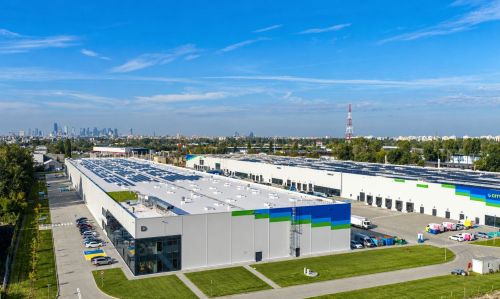
Choosing a new warehouse takes much more than simply comparing rental rates across a few or even a dozen centres. With rising energy costs and varying technical standards, the actu ...
A good foundation from which to grow
CBRE
Poland's role and the strength of its economy are increasingly visible in the European commercial real estate market. We have strengthened our leading position in Central and Easte ...