













Poland Warsaw now a landlord market
Office & mixed-use development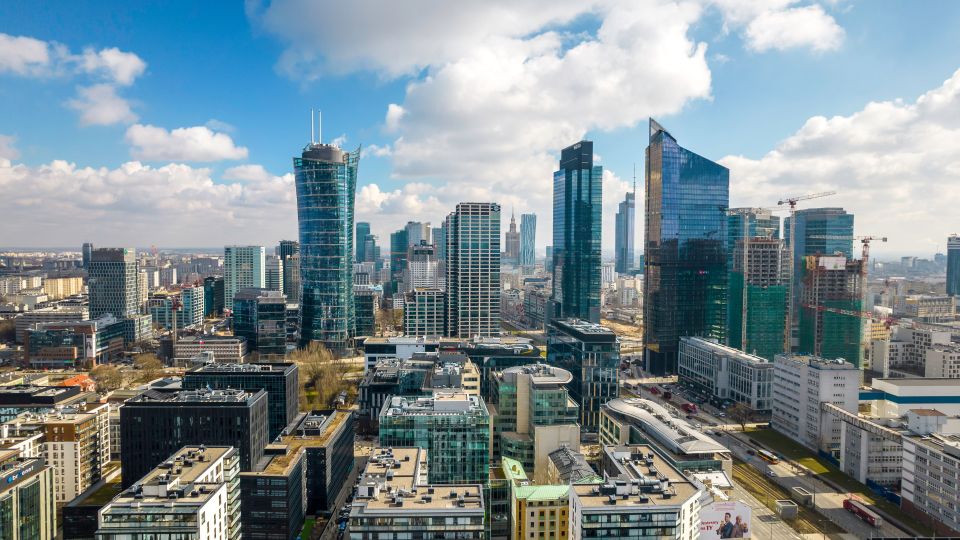
Until recently, most organisations began lease negotiations with landlords around a year before their existing agreements expired. Today, that timeline is no longer sufficient, as companies with leases expiring over the next two to three years are competing for the same office space. As a result, occupiers are launching their searches for office space years in advance.
Starting negotiations or renegotiations of a major lease agreement at an early stage allows companies not only to assess the market thoroughly, but above all to carefully structure the contractual provisions that protect the tenant's interests throughout the lease term.
From a legal perspective, it is essential to plan the negotiation strategy well in advance, ensuring that the tenant is not placed under time pressure that could weaken its bargaining position vis-à-vis the landlord.
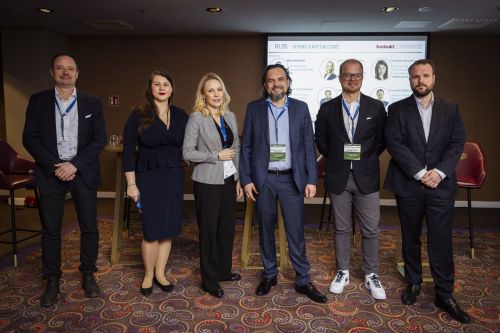
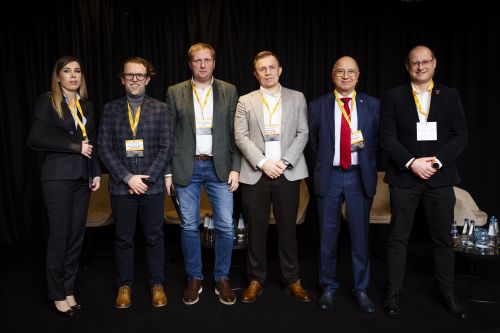
Michał Gliński, attorney-at-law and managing partner at Wardyński i Wspólnicy.
Starting office searches early gives companies the opportunity to evaluate the full range of available options, engage with developers on projects currently under construction, and negotiate favourable terms for remaining in their existing premises. An alternative that is also gaining traction among companies in Warsaw is the acquisition of office properties for owner-occupation. In today's market, a well-prepared real estate strategy has become one of the key components of effective operational risk management.
Time Is Tenant's Most Valuable Asset
The situation on Warsaw's office market has become so challenging that even launching the leasing process several years in advance no longer guarantees securing office space that fully meets a company's requirements. Both large corporations and smaller businesses recognise this, streamlining their decision-making processes and increasing organisational flexibility to respond more quickly when suitable opportunities arise.
In Warsaw's office leasing market today, success is determined not by the highest offer, but by the speed of decision-making. A competitive advantage comes not only from budget, but above all from starting the leasing process early enough. Companies that begin their search well in advance have a range of options to choose from. By contrast, if less than a year remains before the lease expires, companies with substantial space requirements are typically left with only one realistic option: renegotiating their existing lease and remaining in the same location. When more time is available, we can assess and compare a variety of alternatives, including the acquisition of smaller office buildings for owner-occupation - an option for which we are receiving a growing number of enquiries
Bartłomiej Zagrodnik, managing partner and CEO of Walter Herz
Demand Continues to Outpace Supply
The pace of change is best illustrated by occupier activity. In the second quarter of 2026, Warsaw's office market recorded more than 280,000 sqm of leasing volume, one of the strongest quarterly results on record. Net take-up exceeded 134,000 sqm, while lease renewals and renegotiations accounted for 52 pct of total demand. The result was driven by several transactions exceeding 10,000 sqm, alongside a growing number of new lease agreements for office spaces measuring several thousand square meters.
The market had already set an all-time record earlier. In the fourth quarter of 2025, lease agreements covering 310,000 sqm were signed in Warsaw, marking the strongest quarterly performance in the history of the city's office market. During that period, renewals and renegotiations represented 64 pct of total leasing activity.
Record-high demand was not evenly distributed across the market. It was concentrated primarily in the Western Centre of Warsaw, where the largest units of modern office space remained available. As a result, the vacancy rate in this submarket fell by half in a single quarter, reaching just 3.6 pct.
Premium Office Space Is in Short Supply
The level and structure of vacancy rates also provide a clear reflection of the current market situation in Warsaw. While, statistically, vacant office space is still available across the market, it rarely meets the requirements of the largest occupiers. At the end of June 2026, the average vacancy rate in Warsaw stood at 8.5 pct, while in the city centre it reached 4.8 pct.
Although approximately 500,000 sqm of vacant office space is currently available, a significant share of this supply is located in older buildings outside central locations. Such space is generally not considered by large corporate occupiers. Companies are primarily seeking modern Class A office buildings located in central areas of the city or in attractive locations close to major transport hubs.
The Supply Gap Is No Longer Cyclical, but Structural
The declining availability of modern office space is not solely a result of strong demand, but primarily the consequence of a significant slowdown in developer activity. Currently, just over 140,000 sqm of office space is under construction in Warsaw, representing the lowest level in more than a decade. According to Walter Herz estimates, less than 30,000 sqm of new office space will be delivered to the market by the end of 2026. In the first half of this year, only 45,000 sqm of new office space was completed.
Moreover, effective supply is shrinking as older office buildings are being withdrawn from the market or converted to other uses. Projects currently under construction include AFI Tower (approx. 50,000 sqm), Upper One (35,000 sqm), Skyliner II (23,000 sqm), LightOn (23,600 sqm) and Puławska 533 (approx. 4,000 sqm).
Even if a larger number of new developments were launched today, these projects would not reach the market for another 2–3.5 years. This means that a significant increase in office supply is unlikely before the end of the decade.
A Landlord’s Market
The combination of record-high demand and severely constrained supply is leading to a clear shift in the market balance. In the premium segment, building owners are gaining negotiating leverage and increasingly dictating lease terms. The declining availability of modern office space is also driving up rents. Walter Herz analysts forecast that, before the end of this year, rents for the best office space in central Warsaw will exceed €30 per sqm per month.
As Michał Gliński points out, effective protection of the tenant’s interests depends on appropriately drafting the contractual provisions to reflect the tenant’s needs and risks at every stage of the lease. - Among the key legal issues that should be addressed at an early stage of negotiations are lease extension options, rights of first refusal to enter into a lease agreement or to take additional space, the terms and costs of early termination, rent and service charge indexation mechanisms, as well as a precise allocation of responsibilities and costs between the parties—including matters related to fit-out works and their settlement upon lease expiry. Renegotiating an existing lease agreement additionally requires a detailed review of its current provisions, including security clauses (such as bank guarantees, deposits and declarations of submission to enforcement), handover conditions upon lease expiry, and any restrictions concerning subleasing or changes in the permitted use of the premises
Michał Gliński.
Acquiring Office Buildings as an Alternative to Leasing
An increasing number of companies are considering the acquisition of office buildings for their own use as a viable alternative to leasing. This approach was recently adopted by WB Electronics, which acquired Mokotowska Square (8,6,000 sqm) after previously being one of the building’s major tenants.
Łazarski University acquired Taifun (7,000 sqm), located on Jutrzenki Street in Warsaw. The property will be transformed into a modern Medical Simulation Centre and educational facilities for the university’s new medical and dental program.
The Cybernetyki Office Center (7,850 sqm) office building in Mokotów was also acquired for owner-occupation and will be adapted to serve a new function. Earlier, Indotek Group sold Bokserska Office Center (6,600 sqm) to Polish airline Enter Air, which relocated its headquarters there.
Another example of this approach was the acquisition of Building B within the Wiśniowy Business Park complex (8,800 sqm) by a company outside the real estate sector, which plans to use the property for its own operational needs.
Legal Aspects of Acquiring Real Estate
Michał Gliński from Wardyński i Wspólnicy notes that purchasing a building for a company’s own headquarters brings numerous benefits—from greater freedom in managing the property to independence from fluctuations in the leasing market. However, such a decision requires careful preparation of the transaction process.
The starting point is selecting the appropriate transaction structure: a share deal, involving the acquisition of shares in a special purpose vehicle that owns the property, or an asset deal, involving the direct purchase of the property itself. Each option involves different tax implications and requires a separate analysis of lease agreements, service contracts and, where applicable, the transfer of the property management team and employees.
An essential part of preparing for an acquisition is a due diligence process covering both legal and technical aspects. From a legal perspective, the review should primarily include the status of the land and mortgage register, the property title, encumbrances and easements, any ongoing disputes and claims, planning status, construction documentation, the occupancy permit, environmental decisions, as well as—where the building has other tenants—the lease agreements, security arrangements and tenant incentives. The technical audit should cover the overall condition of the building and its systems, including, among other aspects, compliance of the completed works with the design documentation, the building permit, and the occupancy permit.
The transaction process is typically structured in two stages. A share purchase agreement for the acquisition of shares in the company owning the property, or an asset purchase agreement for the acquisition of the property itself, is usually preceded by a preliminary agreement. This agreement sets out conditions precedent, the seller’s liability for representations and warranties, and mechanisms securing the completion of the transaction, such as a deposit, escrow arrangement, or legal indemnity insurance.
The interim period between signing the preliminary and final agreements may range from several weeks to several months. Once the transaction is completed, the buyer takes over the management of the building, updates service agreements, fulfills relevant tax obligations and, where required, carries out fit-out works to adapt the space to the new owner’s needs.


























Who will win and who will lose with changes to the land market
Who will win and who will lose with changes to the land market
Walter Herz
The biggest change to the land market in years is on the horizon. The spatial planning reform will mean that plots previously considered attractive may lose value, while land with ...
Sales up, supply down
Sales up, supply down
JLL Polska
In the first quarter of 2026, the Polish housing market recorded a significant increase in sales. A total of 12,900 apartments were sold across the country's seven largest cities ( ...
Rent isn't everything. The real costs of leasing warehouse space
Rent isn't everything. The real costs of leasing warehouse space
Newmark Polska
Choosing a new warehouse takes much more than simply comparing rental rates across a few or even a dozen centres. With rising energy costs and varying technical standards, the actu ...