




An unprecedented opportunity
Events
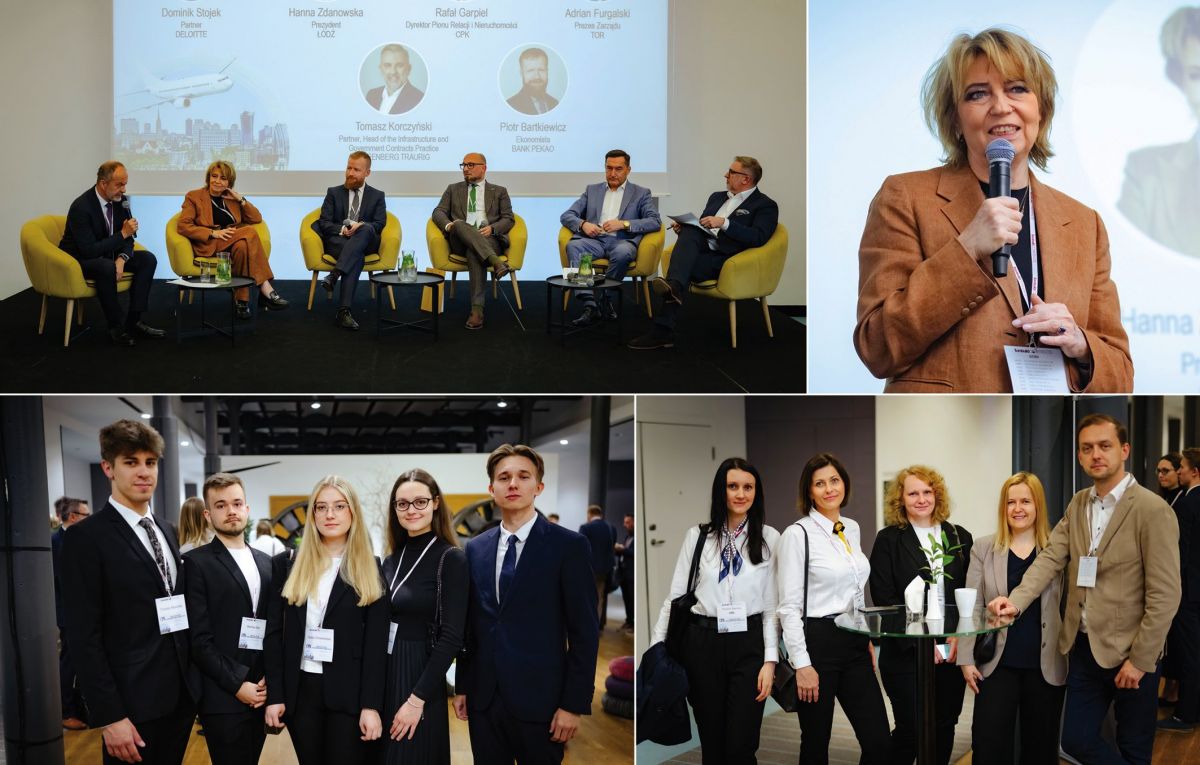
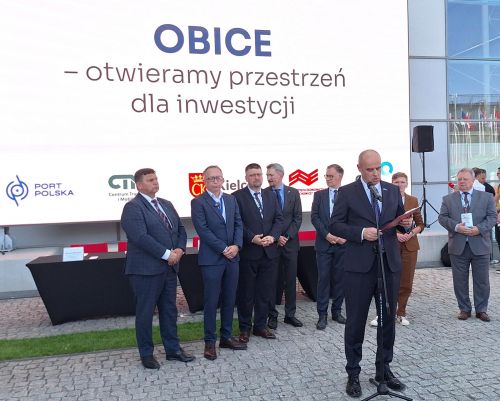
The construction of the Central Communications Port, one of the largest infrastructural projects in Poland’s history, will undoubtedly have a multidimensional impact on all segments of the real estate market. It will have a profound influence on land values and the investment interest in its zone of influence, attracting not only business but also tourists, while generating thousands of jobs, and thus contributing to a wave of migration to its vicinity. This investment will lead to the further development of the local warehouse, office and residential segments, as well as boosting the service sector. On June 10th 2025, in the stylish interiors of the Andel’s hotel in Łódź, ‘EurobuildCEE’ held the ‘CPK: A New Chapter for Poland and the Commercial Real Estate Market’ conference, at which we attempted to examine the scale of the impact of this investment on regional development. The conference, which was jointly organised by the City of Łódź, was opened by the mayor of the city, Hanna Zdanowska, who emphasised the strategic significance of the CPK and high-speed rail for the future of Łódź. She noted that this investment could completely transform the economic functioning of the city, making it more attractive for both residents and business. She particularly highlighted the role of the fast rail connections and also expressed her conviction that the CPK project and accompanying infrastructure would act as a stimulus for further development throughout the region. The first speaker was Piotr Bartkiewicz, an economist from the macroeconomic analysis department at Bank Pekao, who drew attention to the symbolic significance of the conference’s location, reminding us that Łódź was after all the cradle of Poland’s industrial revolution. He also provided a synthetic analysis of Poland’s development path to date, emphasising the recent dynamism of our economic growth. His speech was a commendation of the progress made so far, but also a realistic indication of areas that require some attention. In his view, Poland’s development requires investment in knowledge, innovation, energy and stronger institutional foundations. The next speaker, Rafał Garpiel, the director of CPK’s relations and real estate division, focused on analysing regional development around the emerging transport hub. He stressed that we are talking about somewhere that has the potential to become the best connected location in Central and Eastern Europe. The CPK will act as a catalyst for development within a 50–100 km radius of the airport. Rafał Garpiel also pointed out that for the real estate market it will be vital to prepare land for new functions and to coordinate between local authorities and private investors. According to him, the greatest challenge will be preventing the chaotic development of this area. The CPK company is preparing a development strategy for the environs of the CPK, for which 18 municipalities have been identified as having the strongest ties to the airport. Public and municipal consultations are currently taking place, during which the directions for the development of these municipalities are being discussed.
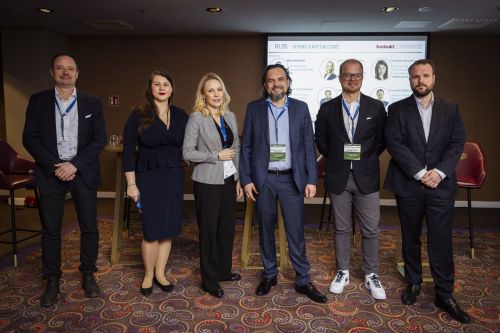
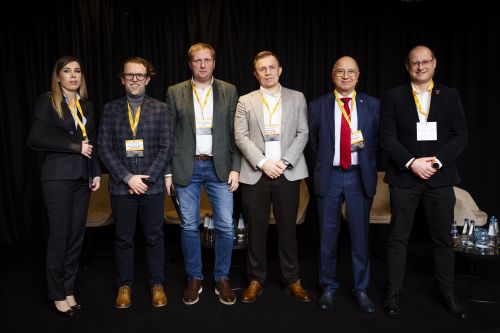
The first discussion panel, entitled ‘CPK as a catalyst for change in Poland – the impact of CPK on Warsaw, Łódź and the central regions’, was led by Dominik Stojek, a partner at Deloitte, who was joined in the discussion by Hanna Zdanowska, Rafał Garpiel, Piotr Bartkiewicz as well as Adrian Furgalski, the CEO of economic advisors TOR, and Tomasz Korczyński, a partner and head of the infrastructure and government contracts practice at Greenberg Traurig. Dominik Stojek pointed out that although the CPK project raises enormous hopes, we can’t pretend that it comes with potential risks – not for the sake of panicking about them, but so that they can be dealt with at the planning stage. Among other things, the debate considered how municipalities – especially smaller ones that lack sufficient resources – will be able to cope with the adoption of spatial development plans within the investment’s zone of influence. Adrian Furgalski spoke of the financial challenges facing the construction of the high-speed rail network. He noted that while road infrastructure has stable sources of funding, rail – including the rail related to the CPK – is largely dependent on EU subsidies. He appealed for support for the work on new legislation for the funding of the railways, aimed at increasing the investment capacity independent of EU budget cycles. The discussion also touched on investment financing, especially the role of Polish capital and the potential of the private sector. The question arose of whether there is a real chance for the active involvement of Polish capital in the development of sites around the CPK. The speakers emphasised that there is no obstacle in the way of domestic investors taking a greater part in this process – but the appropriate conditions, legislative stability and predictability all need to be in place. The moderator of the ‘Commercial real estate market in Warsaw and Łódź after the opening of CPK’ pane was Marcin Włodarczyk, the CEO of Renavis, and the discussion was joined by by representatives of development, advisory and engineering firms involved in projects in Warsaw, Łódź and the CPK itself: Wojciech Stec, a partner at Cundall; Marcin Michalec, the CEO of Okam Capital; Natalia Kaczmarek, the office leasing manager of Echo Investment; Adrian Biesaga, the managing director at Garbe Poland; and Dagmara Jarmicka, the director of the board of Europtima. They wondered whether the CPK effect is already tangible and how it is impacting specific sectors of the market. Wojciech Stec emphasised that the scope for participating in CPK-related projects is a huge opportunity for the development sector – not only commercially, but also in terms of improving competencies, since the project requires co-operation at many levels and the implementation of advanced solutions. In his evaluation, the CPK is acting as a catalyst for the development of know-how in Poland. Meanwhile, Dagmara Jarmicka, whose firm is acting as the cost controller for part of the airport’s infrastructure, saw the possibility of “satellite companies” emerging, whose operations will be directly linked to the Airport City and its surroundings. The discussion also focused on the potential of Łódź and its surrounding districts. In Natalia Kaczmarek’s opinion, Łódź has the chance to take a significant slice of the investment pie, provided that the quality of life and communication improve. Marcin Michalec added that the potential of the CPK is enormous, but that has yet to be properly communicated to its residents. Residential developers also need to play a more active role in educating the market – to stress how CPK-related infrastructure is set to transform the entire region. Adrian Biesaga, representing the industrial and logistics sector, confirmed that CPK is already having a major impact on Garbe’s strategies – the company has been busy securing plots around Łódź, Warsaw and specifically near the CPK. The development of Airport City must go hand in hand with setting up the required logistics support. Attention was also given to the growing role of production space in logistics parks to fit into the trend for reshoring manufacturing to Poland. The development of infrastructure, including cargo facilities, will play a crucial role in this.
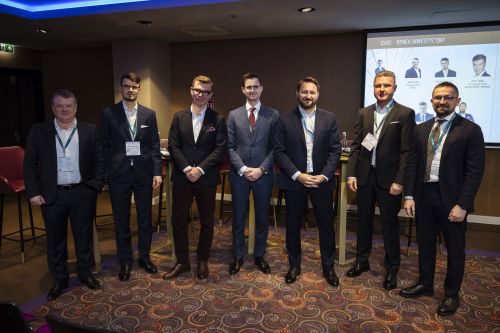
After the lunch break and some more informal chat in the Delight restaurant, it was time for the ‘New residents – new investments – a new reality. Challenges for the labour market and housing markets around CPK’ discussion, which was led by Karolina Kaim, the CEO of Ellis and a member of the ULI Poland executive committee. This panel, which generated the most emotions, included Maciej Król, the head of development of Resi4Rent; Daniel Janiak, the mayor of Sochaczew; Grzegorz Tomaszewski, the CEO of PFR Nieruchomości; Łukasz Arendt, the deputy director of the labour market analysis centre at the University of Łódź; and Piotr Skierkowski, the enterprise sales director of Manpower Group. These experts agreed that carrying out such a massive investment will require not only infrastructure but, above all, people. Piotr Skierkowski highlighted data estimating that the investment will generate the need for the creation of 300,000 and 400,000 jobs (directly and indirectly linked to CPK), but the local market is unable to provide such a volume of labour. About 1.4 mln working-age people live within an 80 km radius of Baranów, most of whom are already employed, with unemployment in the region being at the very low level of around 4 pct. The expert stressed the need to bring in workers from other parts of Poland, Europe and perhaps even from outside the EU. Łukasz Arendt of the University of Łódź noted that the problem is not only the number of workers but also their competences, and the fact that the region currently lacks people with the appropriate qualifications means that migration to it will be essential. In response, the mayor of Sochaczew reminded us that municipalities are on the front line when it comes to the effects of such a scale of investment. He stressed that without real support from the state – both in terms of investment and organisation – the towns and boroughs around Baranów will not be able to cope with the sudden influx of people and the required infrastructural improvements. Nevertheless, Daniel Janiak spoke enthusiastically about the potential that the CPK will bring to his town. He revealed that Sochaczew has adopted a two-track approach: on the one hand, it is developing vocational education to train future employees for sectors linked to the CPK, and on the other, it is investing in the quality of life: culture, leisure and infrastructure. Sochaczew is already planning to absorb up to 40–50 pct more residents than it currently has, which may mean an increase in population to around 60,000 people. The discussion was enlivened by a question from the floor about housing provision for the thousands of workers who will soon begin building the CPK. “Where will they live? Containers are not the ideal solution for engineering staff,” noted one member of the audience. Maciej Król admitted the scale of the challenge and that flexible solutions are needed – worker hotels, temporary buildings, prefabrication. Those representing the development sector also drew attention to the new quality being added to the rental market – medium-sized towns, hitherto overlooked by large funds, are now gaining importance. This could set a precedent – for the first time in Poland, the institutional rental market has a chance to develop beyond major cities.
The final panel of the conference – ‘The future of Warsaw and Łódź after the opening of CPK’ – was led by Katarzyna Lipka, the strategic advisory director of Cushman & Wakefield. Those taking part in this discussion were: Adam Pustelnik, the first deputy mayor of Łódź; Bartosz Rozbiewski, the acting director of the architecture and spatial planning department of the City of Warsaw; Michał Sobczak, the vice-president of the Łódź Special Economic Zone; and Krzysztof Witkowski, the CEO of Virako. Adam Pustelnik expressed his belief that the launch of the CPK and high-speed rail link could help reverse negative demographic trends and the outflow of residents. He added that the city must adeptly exploit this moment to attract new residents, investors and tourists, and this process will require coherent spatial, investment and social policies. Bartosz Rozbiewski, representing Warsaw, emphasised that the development of the CPK will force the capital city to redefine certain urban and transportation assumptions, but will also open up new opportunities for integrating the metropolis with its surroundings. The future of Warsaw’s Chopin Airport in Okęcie also came under the microscope. Although no final decisions have been made, it is rumoured that passenger traffic may be withdrawn from it. In Bartosz Rozbiewski’s view, the worst scenario would be for only military aircraft to remain using the airport. In the case of Chopin Airport’s total decommissioning, the city has declared a readiness to develop the site in a socially accessible manner – not only as a business district, but also as residential, sports and educational facilities. The question was also raised about the conditions needed for effective cooperation between Warsaw and Łódź. The panellists agreed that for such cooperation to be possible, both sides must perceive the real benefits of the CPK, which could potentially bind the functions of both cities within a single metropolitan area in a way that is complementary rather than competitive. Warsaw would naturally take on the administrative structure and central functions, while Łódź could develop the industrial and logistics backbone that Warsaw no longer has the capacity for. Katarzyna Lipka also asked how the construction of the CPK will affect the development of the whole of Poland. According to Krzysztof Witkowski, the investment will bring Poland into the club of modern economies with strong logistical bases. According to a PwC report he cited, the economic impact of CPK could reach PLN 450 bln during the construction period and even more after the airport opens. Currently, 80 pct of Polish air cargo is handled abroad. Building a strong air cargo hub in Poland will allow us to tap into that potential.

The ‘CPK: A New Chapter for Poland and the Commercial Real Estate Market’ conference brought together experts, local government officials and investors to discuss the impact of the CPK on regional development and the property market. The speakers unanimously agreed that its represents a serious opportunity for the economic and urban transformation of the region, and that the years ahead of us will be pivotal for the development of central Poland. They emphasised, however, that its success depends not only on putting the required infrastructure in place, but on coherent spatial planning and cooperation between the state, local authorities and business.
Take me down to the airport city
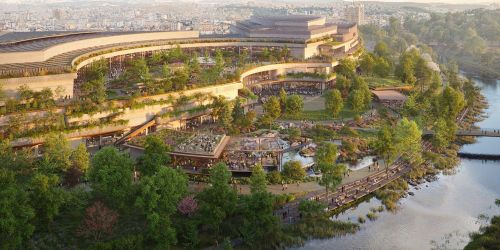
The CPK project for an intermodal transport hub linking air, rail and road transport is being built near the A2 motorway in Baranów, about 50 km west of Warsaw and 90 km northeast of Łódź. It involves the construction of an airport together with accompanying infrastructure and an integrated railway network. The airport, which is to come into operation in 2032, is to have the capacity to handle 34 mln passengers and 300,000 flights per year. By 2030, a high-speed rail line will have been built between Warsaw and Łódź, followed in 2035 by the so-called ‘Y section’ – branching this railway out to Poznań and Wrocław. The entire urban area that is envisaged to emerge around the central transport hub has been given the name Airport City.
Adam Pustelnik
the first deputy mayor of Łódź
A Golden Triangle emerges
The conference was an extremely valuable opportunity for a strategic discussion on the directions that the development of central Poland is likely to take. The CPK project is not only an infrastructural endeavour – it is a real chance to redefine the balance of power in our part of Europe. For Łódź, it represents added dynamism in terms of growth, shortening the distance to the capital city and foreign markets, and attracting new investment – from the real estate sector as well as modern business services and logistics. In the final debate, we emphasised that the futures of Warsaw and Łódź are inextricably linked to the skilful exploitation of the CPK’s potential. Strengthening the relations between the two cities could result in the creation of a strong, integrated duopolis, competitive on a continental scale. The CPK could act as an accelerator for these changes – shortening not only travel times, but also economic, social and investment distances. At the same time, thanks to the planned high-speed rail network, a broader vision of a so-called ‘Golden Triangle’ is emerging – encompassing Warsaw, Łódź, Wrocław and Poznań. It is precisely along these lines that a new geography for economic growth is emerging, and Łódź – thanks to its strategic location at the heart of this system – has a chance to play a key role in integrating the potential of the entire region. As a city, we are ready to meet these new challenges and make the most of this historic opportunity. I am thankful to the organisers for providing a venue for such an important conversation – I believe this is only the beginning of even closer cooperation and ambitious projects that will benefit both Łódź and the entire region.
Wojciech Stec
a partner at Cundall
Adding know-how
The Central Communications Port is a turning point for the entire design and engineering services sector in Poland. This is the first time that we have been given the opportunity to work on an investment of such scale, complexity and level of integration, which from the very outset emphasises sustainable development and innovation. For us as engineers and consultants, it is like a school for designing modern infrastructure – from smart cities and energy recovery to the multilevel integration of air, rail and road transport. The CPK gives us the opportunity to add to competencies that until now we have mainly acquired when working on international projects. Undoubtedly, the impact of CPK on the engineering services market will be long-term – we are laying the foundations for future mega-projects and taking Polish engineering to a higher level. This is a huge opportunity for the entire industry – regardless of specialisation.
Daniel Janiak
the mayor of Sochaczew
A boon for the whole area
The construction of an airport just 11 km from the outskirts of my town will undoubtedly bring on significant social and economic changes. The scale of the upcoming changes will be huge, and their impact will be felt not only in transport but also in the demographic structure, the labour market and the spatial planning of the town. We are already talking to property owners about potential land use and the possibility of merging plots in order to create coherent investment offers while at the same time retaining control over the town’s spatial development. At the same time, we are making improvements to the education system, preparing young residents for the new realities of the labour market. We are providing additional support for the development of vocational and technical schools, adjusting fields of education to the needs of the transport, logistics and services sectors, which will grow along with the development of the CPK. This represents a long-term investment in the vocational competences of young people and in Sochaczew’s economic future.