




Polish real estate 25 years on

Then and now
‘Eurobuild’ has been covering Poland’s real estate market for over a quarter of a century. In this milestone issue, we pause for reflection. Almost 30 years… is that a long time? It’s a significant chunk of an individual’s lifespan, but a relatively short period in the history of a city. Within the span of a single generation, Poland’s property scene has undergone a fundamental transformation - in just the first 25 years of the 21st century
You are reading this content because it is covered by the free limit. Buy full access!

One major turning point for the Polish real estate market took place in 2004 with the country’s accession to the EU. The opening of borders and harmonisation of regulations prompted an influx of international capital. Global players began operating in Poland, accelerating the professionalisation of the market. The construction of modern transport infrastructure – chief among which were express roads and freight terminals – allowed the logistics and retail sectors to finally take off. Warehousing parks began emerging in previously inaccessible locations. In the years after 2000, we also witnessed the intensive expansion of networks of shopping centres, which transformed the lifestyles of Polish people. Besides all the fashion brands, malls started to offer catering and entertainment previously unseen in such centres, while multiplex cinemas became commonplace. Meanwhile, the growth in modern business services added fuel to the emerging office market. Poland became attractive to investors seeking skilled labour and comparatively low operating costs. Regional cities such as Kraków, Wrocław, the Tricity, Poznań and Katowice emerged as rivals to Warsaw.

And then, a brief pause… for the GFC

But in 2008–2009, all this investment activity dramatically slowed down in the wake of the global economic crisis. Some projects were postponed or cancelled altogether, particularly in the office and retail markets. Foreign investors pulled out of acquisitions, while securing new development financing became much more challenging. Nevertheless, Poland – one of the very few EU countries to avoid falling into recession at that time – saw investor confidence recover rather quickly. From 2010 onwards, the market gradually rebounded, and Warsaw along with the major provincial cities began attracting capital once again.

And then, the big game-changer: the pandemic

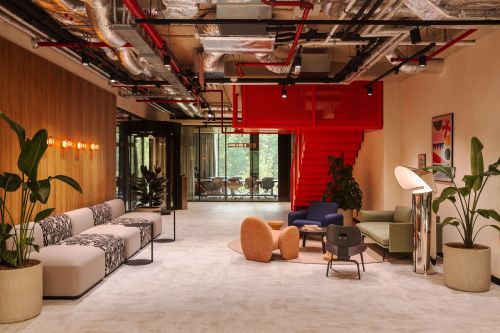
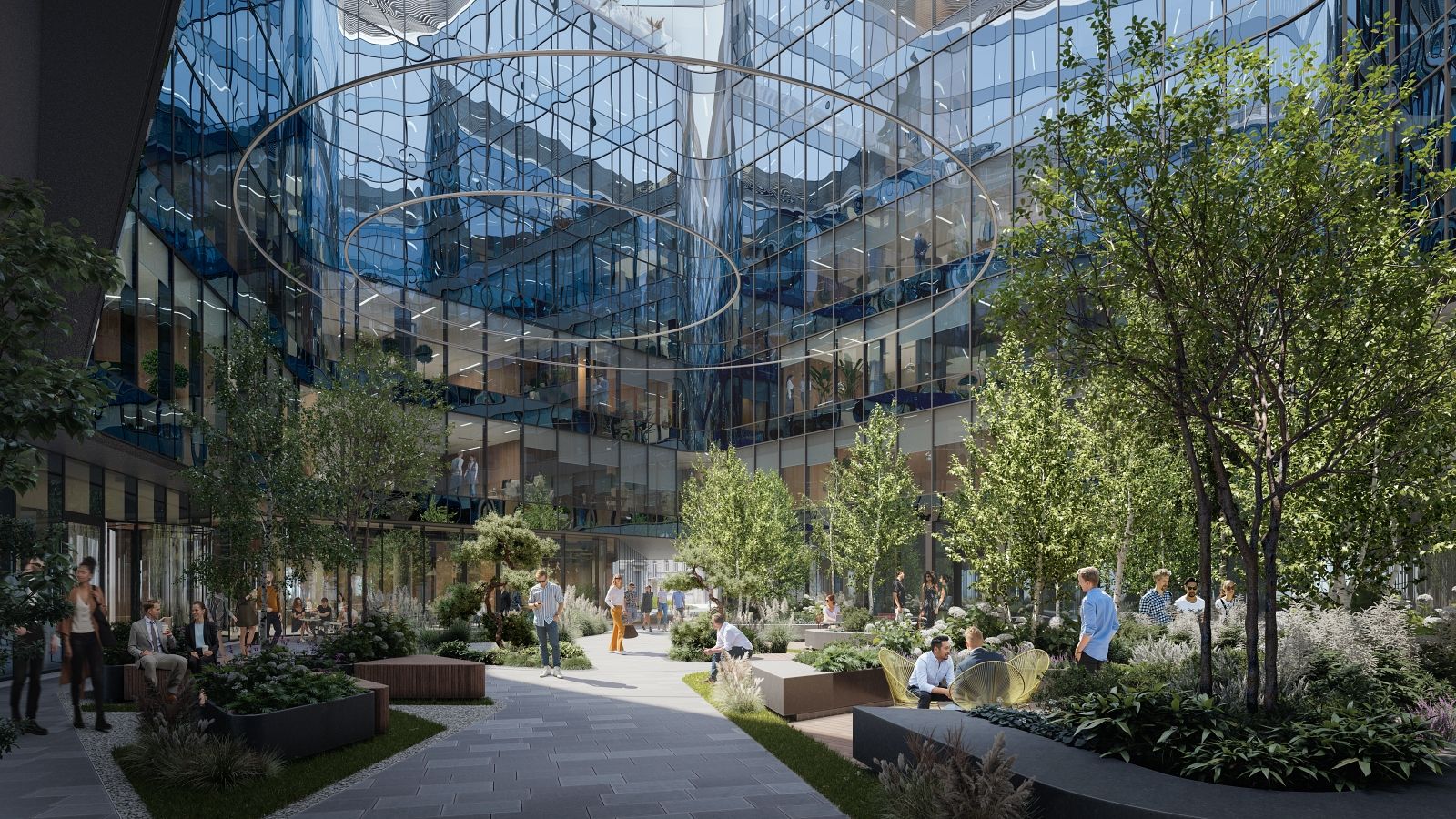
A decade of steady growth followed, only to be upended by another great upheaval. The Covid-19 pandemic in 2020 turned the market upside down. A gradual shift towards hybrid working models had been detected a few years earlier, but the pandemic accelerated and cemented it, permanently changing the face of how offices are used. The new work model brought with it rising vacancy rates, which in turn forced changes in office design. Flexibility became crucial, as did the quality of the communal space provided. Office layouts were reimagined, with the inclusion of zones suitable for hybrid working along with larger recreational and social areas – and this was all necessitated by the need to entice employees back to the office. The models that emerged stronger from Covid were coworking and serviced offices.

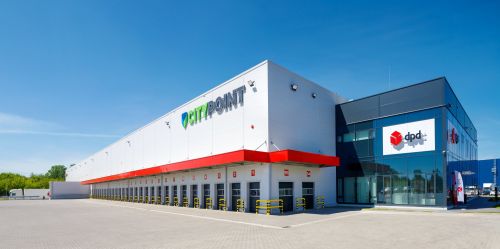
The pandemic also reshaped the demand for warehouse space. The boom it triggered in e-commerce led courier firms, grocery chains and online retailers to seek out locations closer to their end-users, and thus city warehouses took on a greater role. Modern technology and automation in logistics centres also took on greater importance. But despite all these shifts in demand and the structure of the market, the Polish real estate sector remains less digitised than many others.

Sustainability sets the agenda

In recent years, another decisive factor has emerged: sustainability and ESG reporting. Tenants, investors and financiers now expect buildings to be not just modern but also environmentally responsible. International environmental certifications, such as LEED, BREEAM and Well, are now virtually the norm in many segments of the market, as a property’s environmental impact and user well-being have become more than just standards imposed on developers but are also key to the building’s value. They are now investing in energy-efficient, low-emission technology, while competing with each other to come up with the most innovative eco-solutions. Large-scale mixed-use developments that integrate office, retail, services and cultural centres are also becoming common approaches to urban planning.

War and stability

And, sadly, last but not least: the war in Ukraine that has now raged for three years has highlighted Poland’s strategic importance as a stable hub in the region for Eastern European firms. The geopolitical uncertainty to the east of the EU has increased demand for warehouse and office space from companies relocating from Russia, Ukraine and Belarus. Investment in production and logistics for the nearshoring sector has also begun to rise.

From Mordor to the Shire

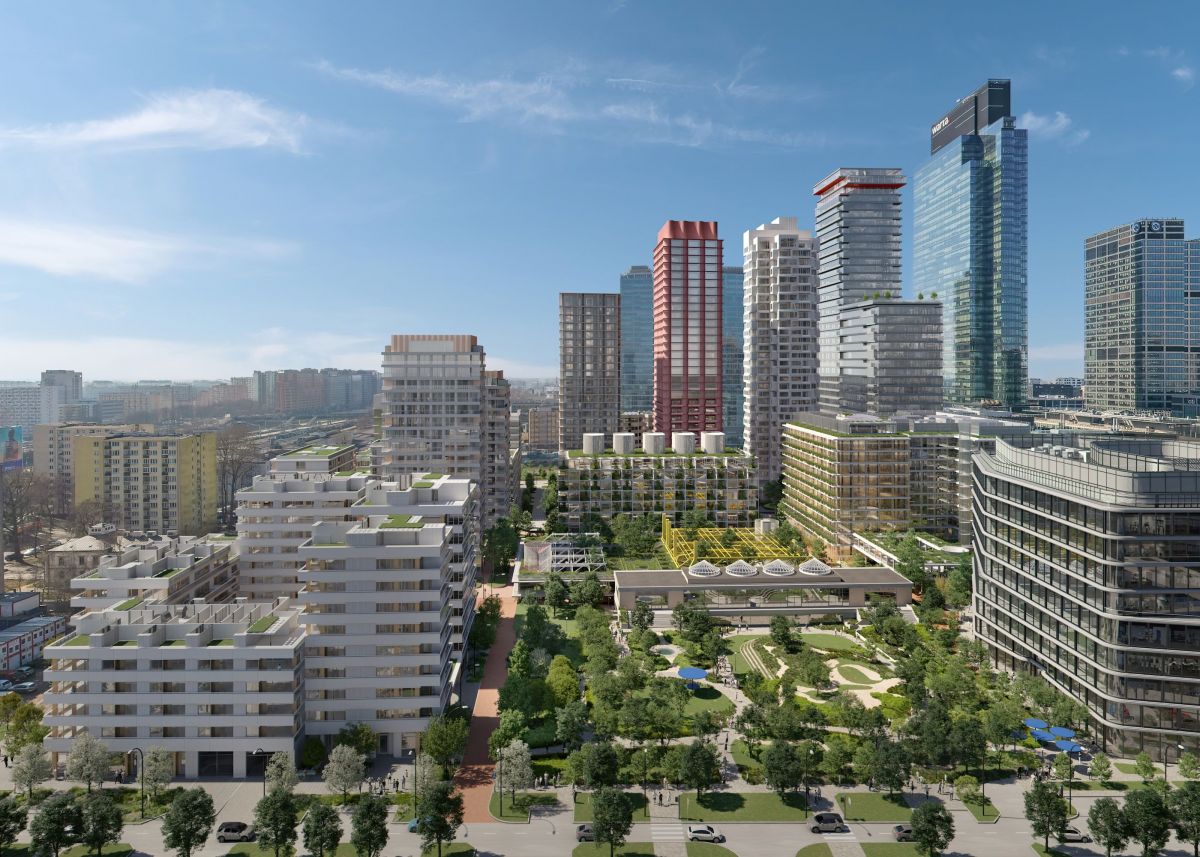
Economic growth, EU accession and the influx of foreign corporations at the turn of the century naturally led to the development of modern business districts in our cities. The growing demand for office space in Warsaw saw the emergence of an office airport corridor as well as the first true business district in the city in the form of the Służewiec sub-district of Mokotów. This had once been an industrial zone near the airport, but it rapidly reinvented itself as a major office basin. It also gained the infamous nickname ‘Mordor’, as it earned a reputation for chaotic development, traffic congestion, and a lack of public space and services. The district simply became a dead zone out oi office hours and at weekends. Fortunately, monofunctional office districts didn’t withstand the test of time. The fall-off in demand for office space post-pandemic led to many older buildings being demolished or repurposed. Służewiec has once again become a vast construction site: old offices are being replaced by modern residential estates; streets are being added and extended; the transport infrastructure is being improved; parks and green squares are being created; and the public space is being made friendlier. Służewiec has decidedly turned its back on a purely office monoculture. The best commercial buildings are being modernised and still offer high-quality offices, enabling the district to become an exemplar of the 15-minute city.

The metamorphosis of Wola

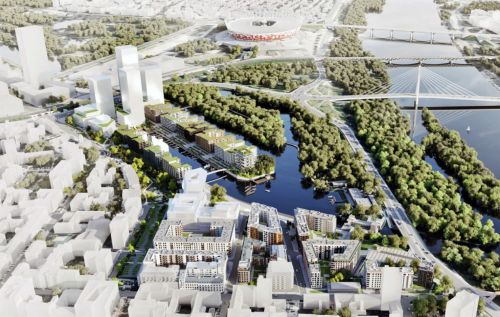
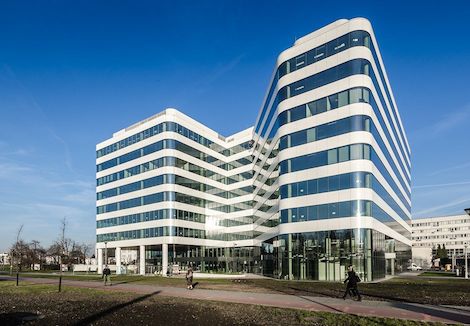
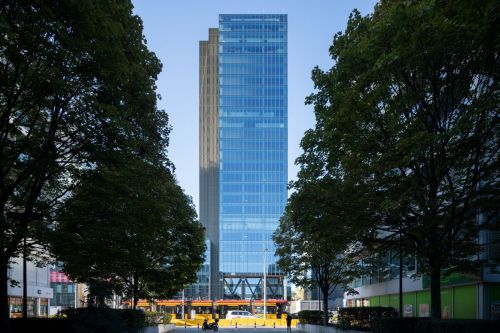
Few places in Warsaw better illustrate the transformation of urban space than the area centred around Rondo Daszyńskiego in the Wola-Centrum district. This was another rundown, post-industrial part of the city that had faded from the collective consciousness of the local citizenry. But that all changed with the construction of the Warsaw Uprising Museum and the second metro line, which unlocked the potential of this centrally-located area. The sites of derelict factories were swiftly snapped up for the development of modern urban fabric: glass towers, ample public space, and excellent connectivity. Today, flagship developments such as Warsaw Spire, The Warsaw Hub, Skyliner, The Bridge and Varso Tower – the EU’s tallest building at 310m – dominate the skyline. And the modernisation continues: on the site of the former Dom Słowa Polskiego printworks, the massive Towarowa 22 multifunctional development is now also rising; while work has also started on another city-forming project, Noho One, on the site of an old pharmaceutical plant. It is this combination of scale, functional diversity and quality public space that now defines the district. Rondo Daszyńskiego has become Warsaw’s new business heart, as Wola’s transformation from industrial wasteland into one of the city’s most modern, prestigious districts nears completion.

From pasture to suburban dream

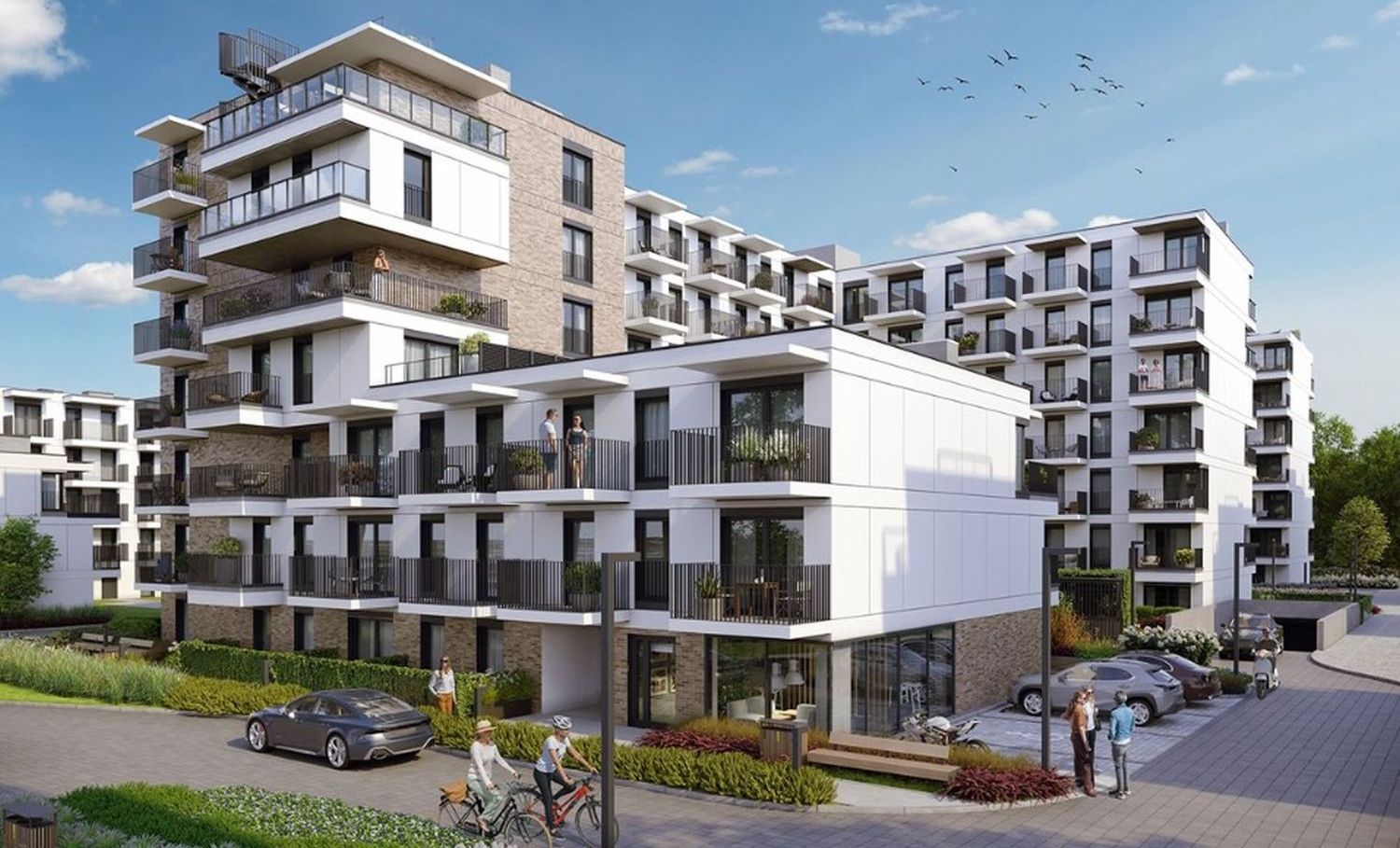
Peri-urban districts on the outskirts of big cities have also undergone massive changes. Until the late 1990s, much of Warsaw’s Wilanów district was fields and pasture. That all changed when urbanist and architect Guy Perry put forward bold plans for the reinvention of the area into an urban district with a coherent street plan and the provision of schools, clinics, parks and services. Initially, this was regarded as something of a utopian pipe dream, but 25 years later, Miasteczko Wilanów is one of Warsaw’s most distinctive addresses. The vast meadows gave way to a fashionable, self-sufficient neighbourhood coveted by the aspirational middle class. As the expectations of residents grew, developers were prompted not just to compete over plots and in terms of prices, but to also focus on the urban quality, architecture, greenery and public space. For some, it represents a paradigm of contemporary urban planning; for others, a subject of scorn or envy. One thing is certain – Miasteczko Wilanów elicits strong emotions one way or another. The recent and long-awaited addition of a tram line connecting the district to the city centre set the seal on the area’s transformation. Wilanów is now fully integrated into Warsaw, no longer just a mere commuter suburb, but a real addition to the fabric of the city. It’s the living proof that a coherent urban vision can transform shabby outskirts into vibrant urban space within a single generation.

The maturing of the mall

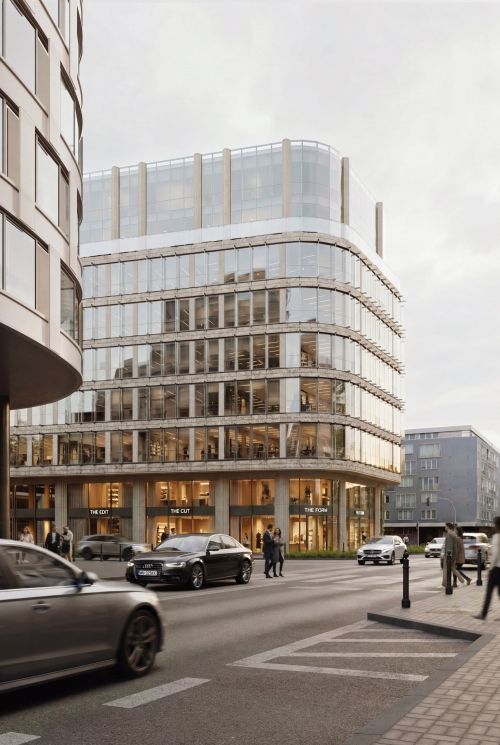
Over the last two decades, Warsaw’s retail sector has come a long way – from the rapid development of first-generation shopping centres in the 1990s, through market saturation, to modern attempts at redefining their role. Initially, their appeal was convenience: a wide range of stores under one roof drew in the punters. Over time, the market matured and consumers demanded more than just brands. Today, retail centres have increasingly become multifunctional experience hubs, combining shopping with gastronomy, entertainment, culture and other services. There’s a growing emphasis on architectural quality, the public sphere and time well spent. One symbol of this shift is Galeria Mokotów (now Westfield Mokotów), which in 1999 set a new standard for shopping in the capital, but that has since been modernised and expanded multiple times. Malls such as Galeria Mokotów, Arkadia and Złote Tarasy reshaped Warsaw’s consumer habits through both their diverse range and modern design. Today, recommercialisation and modernisations are the standard, as Warsaw’s retail scene actively redefines its identity. Malls no longer just sell things – they are venues for the local community to gather in. In the digital age, it is only formats that offer more than just products that stand any chance of lasting success.

Revitalisation in action

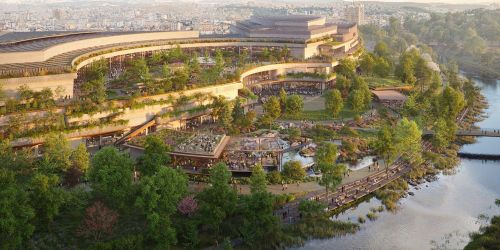
Post-industrial space that has been transformed into mixed-use retail, office, service and residential complexes has become emblematic of the modern approach to the urban landscape. Warsaw lacks greenfield sites, but brownfields abound across the city. Rather than razing everything to the ground and starting anew, developers are increasingly turning to respectful revitalisation that honours the city’s heritage while serving the modern user. Projects like Norblin Factory in Wola, Elektrownia Powiśle and, in Praga district, Soho Factory, Koneser and Bohema exemplify this trend. Once derelict industrial sites are now vibrant, trendsetting places that attract local residents, tourists and investors. Old factories have become mixed-use complexes combining housing, offices, restaurants and art galleries, through the careful blending of restored historic structures and contemporary architecture. Revitalisation is no longer a niche activity – it’s turning Warsaw into a truly modern city.


All the flavours of the world

The food courts that have been popping up in defunct market halls across the capital city are another spectacular example of this metamorphosis, while what were once basic food zones in shopping centres have become stylish culinary and lifestyle spaces. Developers and operators soon recognised that gastronomy was a key aspect of any placemaking strategy. Food halls are no longer mere add-ons to modern development; they are destinations in their own right. The turning point for Warsaw was the 2016 refurbishment and reopening of Hala Koszyki, which set a new standard for urban culinary space. It swiftly inspired similar projects at Elektrownia Powiśle, Norblin Factory and Browary Warszawskie. Today’s food halls have redefined the meaning of the term, offering curated menus and diverse culinary experiences provided by carefully selected tenants. One could argue that these gastronomic hubs are among the most recognisable symbols of the new wave in commercial real estate, and that restaurateurs are now actively courted by property managers for their ability to drive footfall and prolong the time of visits.

E-commerce demands proximity

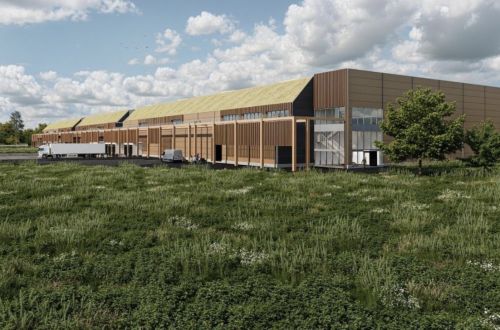
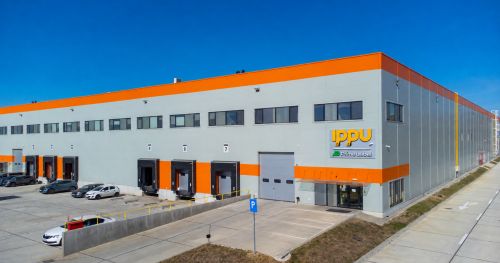
In the 1990s, Warsaw’s warehouse market barely even existed within the city’s boundaries. A few scattered temporary halls and repurposed industrial buildings were all that existed. Modern logistics felt like a distant dream. But today, that situation has been well and truly consigned to history. Warsaw and its metropolitan area have become one of the CEE region’s main logistics hubs. Several overlapping trends have determined the direction of the growth of the sector, chiefly, the boom in e-commerce, especially after 2020. This surge in online shopping required rapid delivery times, fuelling the demand for urban ‘last-mile’ warehouses and modern distribution centres. As a result, the Warsaw area has become a key location for logistics operators, retail chains and e-commerce platforms. The largest of their developments are concentrated on the city’s outskirts – in Błonie, Pruszków, Nadarzyn, Janki and Marki. Global logistics players such as Panattoni, Prologis, GLP, 7R, Hillwood and Segro are now investing not only in large-scale warehousing complexes, but also in urban logistics projects. The warehousing sector has ceased to be peripheral to our cities; it’s now a vital part of the urban infrastructure, often unseen and yet crucial to the very functioning of the city.

Categories

Your order
Your data
Number of access accounts
Each account provides independent access on one device. You will be able to create additional access accounts in the account settings.
Invoicing data
Order summary
Net price
Access accounts #
Net order
VAT (%)
Gross order
Payment security is ensured

Don`t miss out the current edition