



Glass houses in a crystal ball
Future
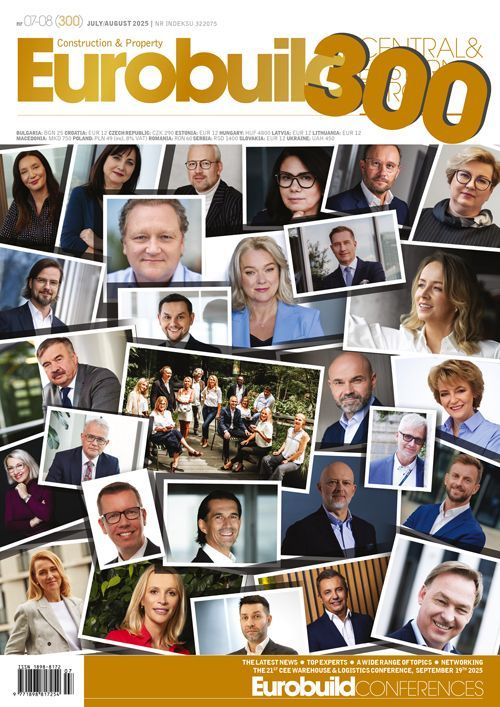
In this issue, we’re primarily recalling and summarising events. This should come as no surprise – Eurobuild has thus far covered numerous turning points that have transformed not only the real estate sector (with liberal use of the terms like ‘pandemic’, ‘uncertainty’, ‘conflict’ and ‘turmoil’). We can probably agree that these years have flown by – and we will be celebrating (or perhaps simply viewing on our screens?) the next anniversary issue before we know it.
Which keyword best encapsulates the future of the real estate market?
Mateusz Skubiszewski, a senior director and head of capital Markets at BNP Paribas Real Estate Poland: “Stability in times of uncertainty” – this phrase, in my view, best captures where the sector is heading. In a world rife with geopolitical conflict, regulatory pressure and unpredictable market trends, real estate remains one of the last bastions of reliable cash flows. For both institutional and private investors, this stability gains in value with each new crisis.
Krzysztof Misiak, the managing director of Cushman & Wakefield Poland: Maturity – this word best describes the stage at which the Polish commercial real estate market has now reached. We’re no longer just talking about scale, although that remains impressive in terms of both the number and variety of investment projects. Today, we have a market that is qualitatively mature, well-formed, more predictable and increasingly resilient to short-term economic fluctuations. Such a market is characterised by steady development and higher demands from tenants and investors. At the same time, its growth is no longer at pre-pandemic speed – instead, it is more sustainable and less flashy. Maturity also encompasses increased transparency – both in ESG standards and market collaboration culture. Over the coming decade, reinforcing these values through sustainable construction and active stakeholder dialogue will be key to maintaining Poland’s competitive strength – especially in the CEE region.
Karol Gwiazdowski, an architect in the Workplaces team at Globalworth: The word, in my view, is ‘responsibility’. Architecture is not decoration – it is living space for work, relationships and emotions. For too long, commercial projects were built “according to budget” rather than “for people”. The result? Artificial, claustrophobic environments that age quickly. The future requires responsibility toward the environment, society and the user. That is the foundation of intelligent, lasting space.
Marek Dobrzycki, a partner at Panattoni: It’s difficult to summarise the future of the entire warehouse market in a single word, but I think it may be ‘integration’. The customer demand for industrial space has been growing and becoming more precisely defined – the market is maturing, heading toward full integration: operational, technological and environmental. Future facilities will coherently combine AI, automation and energy management systems, collaborating seamlessly with production, distribution and sustainable asset management. Integration is key to achieving flexibility and efficiency in multidimensional logistics.
Arkadiusz Rudzki, EVP of sales and leasing, Skanska Commercial Development Europe: ‘Adaptation’ – this will define the future of offices. Space must flexibly respond to the evolving needs of tenants, users and local communities. Future office buildings will not simply be workplaces – they will become dynamic parts of the city’s fabric, integrating and reacting to the rhythm of life around them. Already, we are seeing offices merging with service, cultural and recreational functions.
Jarosław Zagórski, the managing director of Ghelamco Poland: The world today, including the real estate market, is so dynamic that I wouldn’t attempt to predict how it will be even just a few years from now. Given this volatility and dynamism, I would risk saying that the word best describing the future real estate market is ‘flexibility’ – without this, and without the ability to rapidly react and adapt to new conditions, survival will be a major challenge.
Marta Machus-Burek, senior partner and VP of the board for strategic advisory, Colliers: ‘Flexibility’ – this concept encapsulates the qualities that determine the essence of the market and real estate: unpredictability, volatility, complexity and rapid change. Location or asset class are no longer sufficient to maintain value. For companies, flexibility means operational adaptability, investment flexibility, asset-type diversification, and an approach to change management and organisational culture. Flexibility does not cover any specific strategy but rather the ability to thrive in a world where the advantage is held not by the stable, but by those who can change swiftly and intelligently. The ability to adapt quickly could pose a challenge for a real estate market long synonymous with stability.
Michał Kwaśniewski, a partner of Quidea: ‘Climate neutrality’ – real estate stakeholders will need to align their strategies and operations with ESG goals. Already, sustainable investments are attracting capital and generating demand, while energy-intensive ones are losing their appeal. The entire real estate sector – from investment funds to developers – is focusing on decarbonising portfolios. In practice, this has triggered a boom in modernising existing buildings for energy efficiency. Over the next decade, the main challenge will be balancing business ambitions with social and environmental responsibility.
Karol Wyka, the managing director for office leasing at Newmark Poland: The greatest influence on the future of the real estate market in the next decade will be security in Europe. A sense of stability encourages companies to invest and plan long-term development strategies. Under such conditions, the real estate sector can not only expand dynamically but also adapt effectively.
Anna Głowacz, the head of industrial and logistics at Axi Immo: Adaptation is a timeless cornerstone for the commercial real estate sector. All market segments are evolving faster than ever. We are continuously informed about new technologies, the pressure for sustainability, emerging trends, and shifting client expectations. Consultancy firms are expected to be more operationally agile and ready to meet challenges. Without the ability to react rapidly and embrace new realities, the years ahead may be difficult for many operators.
If you had to invest now in one niche to ensure the most certain returns, which segment would it be?
Marta Machus-Burek, Colliers: Data centres are currently among the most reliable real estate sectors. However, the real leverage arises at the intersection of data, energy and infrastructure sovereignty. This refers to facilities functioning as digital districts, equipped with their own power sources, water resources, connectivity (digital independence), R&D centres and housing for employees. We have to bear in mind, however, that any investment decision over where, what and when to invest ultimately revolves around people. They are the ones who connect data with reality, risk with potential, and translate market complexity into solid recommendations. Therefore, I would emphasise that the most vital investment – the one yielding real, long-term returns – is investing in people: in their development, access to knowledge, modern tools and environments that nurture their potential. This is a prerequisite for participation in the sector into the future.
Karol Wyka, Newmark Poland: I would focus on alternative assets, that is, senior housing and data centres. The former is among the most promising real estate segments due to demographic shifts. The rising demand for high-quality services for the elderly and functional, secure housing will make modern senior living facilities increasingly lucrative. As our society ages, this segment will attract further investors. Meanwhile, data centres are the backbone of the digital economic transformation. The massive surge in data and advances in cloud computing, AI and the IoT are translating into growing demand for advanced IT infrastructure. Investment in this sector, as a result, offers high returns.
Michał Kwaśniewski, Quidea: I would choose the logistics sector. Goods circulation in the digital economy – e-commerce, q-commerce and the like – has been increasing, driving the demand for modern distribution centres, sorting facilities and warehouses. Poland has become a logistics hub, drawing investors in with its strategic location and developed infrastructure. Of course, niches like data centres and life-science real estate are growing too, but logistics remains the leader. Data centres, in part due to the energy costs, are not necessarily the first pick for locations in Poland. But who knows… in ten years’ time, the current high energy price levels may be a thing of the past.
Krzysztof Misiak, Cushman & Wakefield: I would invest in the SBU (small business unit) and city logistics segments. These fit perfectly into the megatrends shaping real estate – the e-commerce growth, the need for decentralisation and the pressure for low-emission transportation. SBUs and city logistics offer not only functionality but also operational efficiency and a strategic advantage in urban environments. Such investment will be crucial not just for major metropolitan areas but also for mid-sized cities.
How is the concept of well-designed space set to evolve?
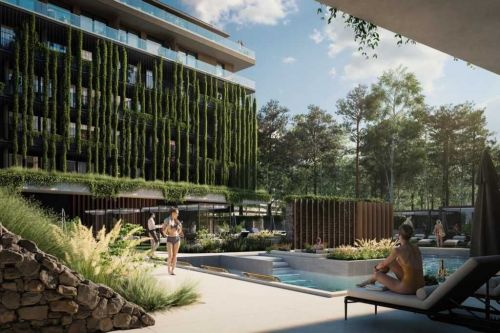
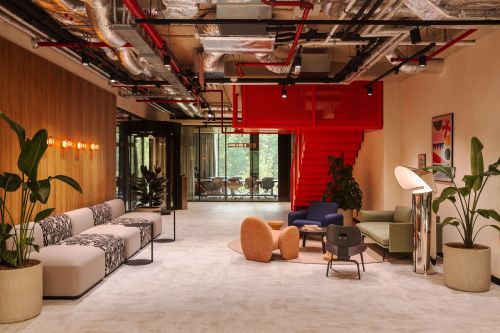
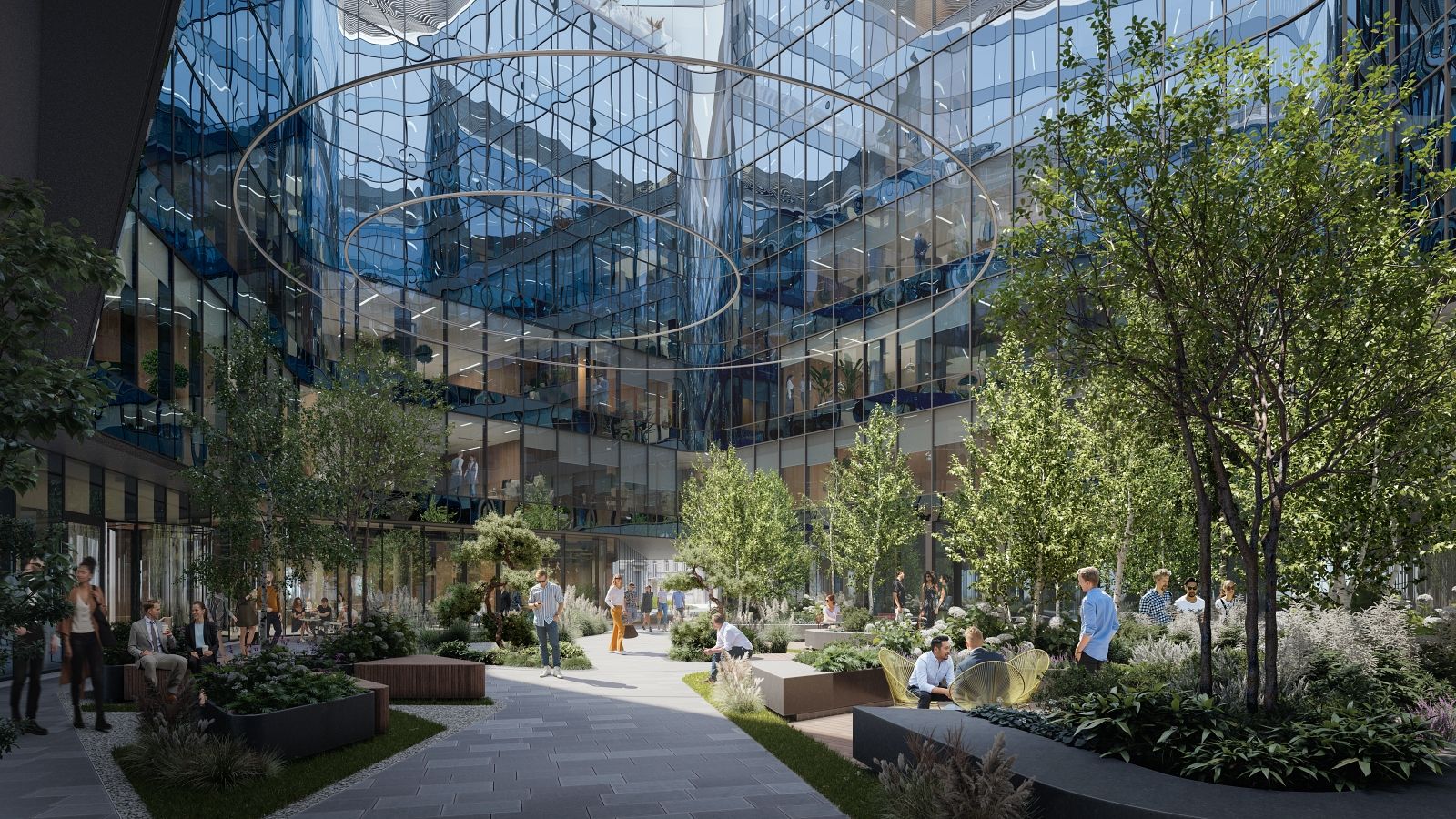
Arkadiusz Rudzki, Skanska: The office building of the future will certainly be a living ecosystem – abundant in greenery, terraces and modular space that can be easily adapted to different needs. Every element, from the façade to the services, will have a concrete impact on the building’s functionality and the everyday life inside it. The building will be an intelligent structure in which all systems are integrated into a digital network managed by AI. Systems analysing data from building installations will enable offices not only to respond to change but also to anticipate it. And although technology will become ever more sophisticated, the primary purpose of offices will still be to connect people. They will primarily be places for meetings, collaboration and relationship building, while deeply rooted in the local culture and community. People and their natural need for contact, belonging and collective activity will always be at their heart.
Maria Pietrenko, an architect in the Workplaces team at Globalworth Poland: Commercial architecture will increasingly reflect ideas of inclusivity, neurodiversity and participatory design. Space must cater to people with diverse perceptions of the world, accommodating various work styles, relaxation needs and social interactions. Instead of formulaic layouts, we’ll see more projects emerging out of dialogue with users and their real needs, shaping space in a more organic and functional manner. Spatial design must respect both the individual and contextual needs, as these are timeless values, though their expression may evolve.
Marek Dobrzycki, Panattoni: The logistics park of the future will be entirely smart and sustainable – a dynamic, tech-driven ecosystem. Facility management will rely more heavily on sensor-derived real-time data monitoring of the warehouse’s operations and resource consumption. The implementation of renewables and energy storage will be key and future parks will be zero-emission. In practice, this will mean modular halls with their own power sources and rapid adaptability, designed for maximum efficiency, flexibility and a minimal carbon footprint.
Wojciech Orlof, an architect and director of SRDK Studio: I have observed a widespread shift in design toward utilising natural light, ventilation, increased greenery and introducing water as a stabiliser in the spatial biosystem. Acoustic comfort and the reduction of light pollution are becoming particularly significant concerns. One notable trend is designing space that fosters integration and fulfils social needs – not just recreational and green zones, but environments promoting health beyond just exercise or contact with nature. City-based food cultivation such as aquaponics, which continues the tradition of allotment gardening without requiring extra land, is just one example. Regardless of trends, the definition of well-designed space remains constant: it must have an appropriate scale, respect for the natural and cultural context, minimise factors harmful to psychophysical health, and balance form with function.
Who will be making the big decisions – humans or algorithms?
Mateusz Skubiszewski, BNP Paribas RE: Algorithms will undoubtedly play an increasingly significant role – they already support data analysis, risk scoring, valuation and scenario modelling. And yet, the ultimate decisions will remain with humans. Investment is not merely mathematics and models – it also entails intuition, experience and emotion, which no machine can grasp.
Anna Głowacz, Axi Immo: Algorithms already support us when it comes to analysis and recommendations, but it’s human beings who will make the final call. Technology enables us to assess the market faster and more objectively, offering broader perspectives. Remember, the most advanced AI models are built upon human knowledge and prior decisions. I expect that, going forward, the synergy between both will grow; nevertheless, experience, market savvy, intuition and relationships will remain indispensable, especially when it comes to major transactions.
Karol Wyka, Newmark Poland: It’s now becoming difficult to distinguish between humans and AI – AI increasingly mimics human behaviours and can adeptly engage in conversation. However, within the next decade, it will become standard to clearly determine whether you are interacting with a person or a machine, and to verify the authenticity of algorithm-generated content. This will be a crucial element in building trust and a sense of security across sectors.
What seems bold or unrealistic today, but may become commonplace in the next ten years?
Arkadiusz Rudzki, Skanska: Digitising the construction process and building management is still viewed as an expensive innovation. In a decade, it will, however, become a market norm. Digital twins and the integration of AI-based technologies will form the foundation of operational efficiency, safety and user comfort. This shift – from a novelty to an everyday tool – will transform how we design, use and evolve office space.
Mateusz Skubiszewski, BNP Paribas RE: From today’s vantage point, buildings that autonomously manage the energy consumption, water recovery and anticipate users’ needs via AI may sound futuristic. Yet the market is moving precisely in that direction. Such features could become standard – not only due to ESG requirements but also because of the cost pressures and rising tenant expectations.
Krzysztof Misiak, Cushman & Wakefield: Given the relentless demographic trends and the need to adapt housing stock for the elderly, Poland has to prepare for a systemic approach to senior housing. This entails not only dedicated residential projects but also integrated care, including medical, social and recreational services within functional urban structures. The limited scale of this market means the decade ahead of us may still be too short for senior housing to become commonplace in Poland. Simultaneously, the idea of a decentralised, 15-minute city and passive, energy-efficient building technologies – both residential and commercial – will also develop.
Maria Pietrenko, Workplaces/Globalworth: It’s hard to predict one specific development, but I hope increasing emphasis will be placed on designing space based on the senses, particularly acoustics. The auditory aspect of architecture is playing a key role in comfort, concentration, well-being and the overall spatial quality. In the future, I expect greater sensitivity to this and the implementation of solutions that harmonise the acoustic environment with the building’s spatial functions.
Anna Głowacz, Axi Immo: I anticipate a completely new approach to warehouse utilisation. Although mid- and long-term leases still dominate, some tenants are looking for shorter tenures or shared warehouse space, allowing faster responses to supply chain changes. I envisage that there will be an on-demand warehousing model similar to coworking in the office sector – especially as seasonality and volatility grow. Warehouses will become part of a larger ecosystem – greener and integrated with the city, its public transport and local communities.
Marta Machus-Burek, Colliers: Senior housing in Poland remains outside investors’ primary focus. But there is much potential in modern, multifunctional, multi-generational housing, combining micro-apartments, supported housing, communal spaces, health zones, coworking and community-building areas. Due to its great potential and with technological support (telemedicine, AI, smart homes), demographic shifts and increasing wealth, this segment will become an attractive investment direction.
Jarosław Zagórski, Ghelamco: One important aspect will be ESG strategy and reporting for office buildings. For many firms, this is still not standard practice. Such reporting leads to the adoption of eco-innovations reducing the utility consumption and carbon footprints, including advanced energy management systems, vacuum sewage systems and waste management integrated with apps allowing collection schedules to be optimised. Today, these tools are seldom used – but they should become standard in the future.
There is much to suggest that, for now, the human factor remains irreplaceable – and not only in data processing and decision-making. These projections clearly confirm that the focus of investors, developers, architects and building managers will be on human beings and their needs, as they increasingly become better understood. Our diversity is no longer an obstacle or something to be homogenised – it has become an inspiration, enabling the design of increasingly functional and modern spaces for living, working and relaxation. And although Karol Gwiazdowski’s words refer directly to architecture, they may just as well serve as a summary of our modest survey and as guidance for the future of the entire market: “Architecture must support health, while being inclusive and sustainable. Comfort and well-being are now the standard, not a luxury. Intelligent architecture serves people, not just Instagram, and leaves a lasting, positive legacy.”