










How the neighbours built their houses
25 years of CEE real estate
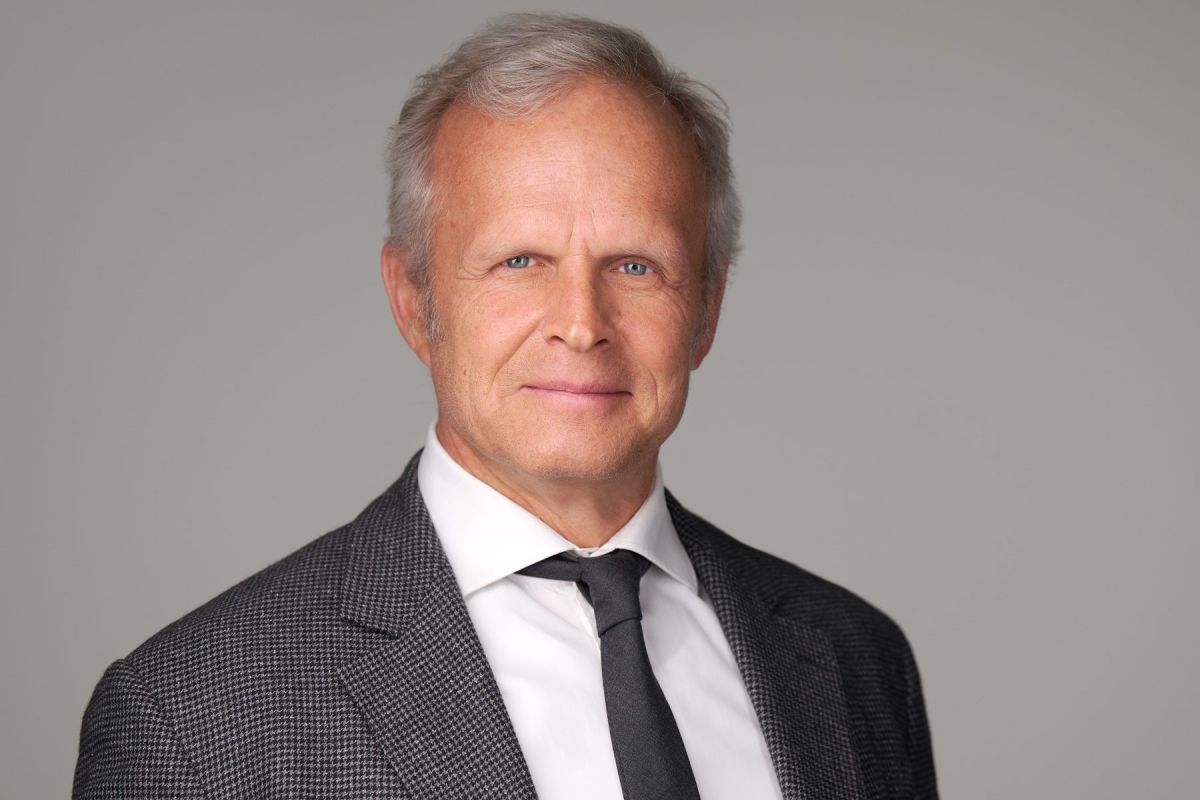
We shall begin our look at the stories behind the region’s real estate markets with Germany – a country that we haven’t always covered in the more than quarter-century existence of our publication, as it lies in Central Europe rather than the CEE region and, unlike Poland and our other neighbours, has been regarded for much longer as a fully-developed economy. But it is the market whose fortunes have had the most direct impact on our own, and so, this increasingly led us to pay it more attention, thus turning ‘EurobuildCEE’ into a truly Central European magazine. Given the very different trajectory that Germany has taken since the fall of the Berlin Wall compared to the CEE region, this article will briefly look at where its market is now, before moving on to how the CEE countries have progressed and currently measure up to it. “The German real estate investment market reached a transaction volume of EUR 34.3 bln in 2024 – up 21 pct compared to 2023. Residential property was the strongest asset class at around a quarter, followed by logistics (23 pct), retail (18 pct) and office (17 pct),” reveals Kai Mende, the Germany CEO of CBRE. However, the economy that is often seen as the powerhouse of Europe still seems stuck in a low gear. “Many project developers remain cautious, partly because the banks are now mainly focused on the refinancing business,” he continues. Nonetheless, Germany is not foundering and may still rebound. “Despite the challenges facing the German economy, vacancy rates have not skyrocketed. The residential market is fully leased, as are many logistics markets. Although the office markets in the major cities recorded a slight increase in vacancy rates, these are still at a very low level. Modern properties in good locations are meeting excess demand almost everywhere and offer correspondingly rising rent levels,” argues the CEO of CBRE in Germany.
A look at Hungary
“Before Hungary joined the EU, annual investment volumes in the commercial real estate market stayed consistently below EUR 300 mln,” points out Ferenc Ferulyas, the managing partner of IO Partners Hungary. “After the 2004 accession, investor activity picked up markedly, driven mainly by international institutional investors. Between 2004 and 2006, yearly transaction volumes approached EUR 950 mln, and in 2007 the market hit its all-time peak with almost EUR 2 bln of investment – a level of activity that has not been seen since. Following the 2008 financial crisis, the market recovered only gradually. Although 2016–2019 saw a tangible revival, transaction volumes still fell short of the 2007 high. From 2019 onward, investor activity trended downward, reaching the lowest level of the past decade in 2024, with less than EUR 500 mln transacted. We have also witnessed over the past decade the strengthening of local investors, who, since the early 2020s, are tangibly accounting for more than half of the annual investment volume, which is comparable to the evolution of the Czech market,” he explains. “In 2025, however, the first signs of renewed momentum are visible, hinting at the possible start of another upswing, which could result in a total volume close to EUR 1 bln. Over the last 25 years, the Budapest office sector went from a couple of thousand square metres of modern office space to pass the symbolic 4 mln sqm mark at the start of 2022. By early 2025, it totalled roughly 4.5 mln sqm of A- and B-class office space. In 2000, the figure was under 1.3 mln sqm, after which development accelerated. With 200,000–300,000 sqm of new completions each year and, from 2010, the inclusion of owner-occupied buildings in the regional statistics, recorded stock exceeded 3 mln sqm by 2010. The 2008–2009 crisis hit offices as well: post-2010, many projects slowed or were halted, and annual new supply dropped below 100,000 sqm. Apart from a few standout years, the earlier pace has not returned. Today, the construction appetite is still weakening, largely due to the Covid-era rise of the home-office culture and changing workplace habits. Leasing activity peaked in 2019, when leases for a total of almost 640,000 sqm were signed and there was an average deal size of about 950 sqm. Following the Covid dip, 2024 almost matched that volume (app. 502,000 sqm), but the average deal size stayed below 670 sqm,” explains Ferenc Ferulyas.
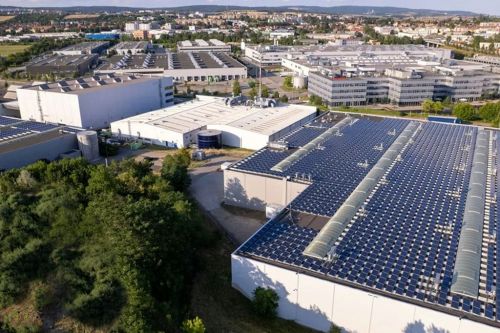
By the end of 2017, speculative industrial stock in Budapest and its surrounding area was over 2 mln sqm, compared to the virtually non-existent, obsolete stock 25 years ago. It has expanded sharply since, adding another 1 mln sqm in five years to reach roughly 3.8 mln sqm in Q1 2025. Tenant demand was about 100,000 sqm per year in the early 2000s; but due to its steady growth since then, it now exceeds 600,000 sqm. The record year was 2022, when lease take-up reached almost 680,000 sqm. Average deal sizes vary widely: until 2020, they generally stayed below 4,500 sqm, but since then they have regularly risen above 6,000 sqm, mainly due to the boom in e-commerce and the resulting need for extra storage. According to Ferenc Ferulyas, the industrial market continues to expand vigorously. In recent years, large regional cities have also seen strong growth: nationwide, 5.7 mln sqm of speculative space is now available, with almost 170,000 sqm under construction in such locations. Greater Budapest is likewise active, with about 390,000 sqm of space currently being built. The Budapest region itself has broadened dramatically: whereas 25 years ago logistics was mainly clustered along the M1–M7 corridor near Páty, Biatorbágy and Törökbálint, new sub-markets have emerged along new ring-road sections and within urban-logistics zones. Today, the Southern industrial zone along the M0 ring road near Szigetszentmiklós and Dunaharaszti is the largest, exceeding 1.1 mln sqm.
“Hungary has been at the forefront of the economic change, opening its economy to foreign capital and thus modernising its economic structures over the past 25 years, especially over the 1990s. However, this trend has slowed down since the end of the first decade of the new millennium – the great financial crisis took very long to process and recover from, with the real estate market only picking up from around 2015 and 2016 – in large part due to funds received from the EU. And yet, increased state redistribution and interference have slowed down the development of the national economy, which has resulted in lower economic growth over the last few years. The commercial real estate market has followed this general trend, and presently we see subdued development activity and, as a result, reduced international institutional investor interest,” explains Ferenc Ferulyas.
Turning to the Czech Republic
In 2023, Cushman & Wakefield celebrated 30 years in the Czech Republic, at the time writing: “All of the modern shopping centres currently operating were built over the last 30 years. Now there are 107 of them in the Czech Republic, with a combined area of 2.6 mln sqm. Prague’s high street retail has also developed. Over the three decades, hundreds of significant retail brands from abroad were successfully introduced to the Czech Republic, elevating the local retail market to a level comparable to Western markets. The modern warehousing/logistics space market has also grown from zero since 1993: the first buildings around cities emerged in the mid-nineties, but their overall area now comes to more than 11 mln sqm. Retail parks as we know them today did exist 30 years ago; the first one, Avion Shopping Park Praha, was built before the turn of the millennium in Prague’s Zličín district. They then soon started to appear on the outskirts of other big cities as well as smaller towns across the country, which now has 270 retail parks with an overall retail area of nearly 2 mln sqm.”
Prague’s hotel market comprised 194 hotels and roughly 38,000 beds in 1993; in the three decades since, the number has today grown to 547 hotels and 80,000 beds – a total growth in accommodation capacity of 109 pct. Several hotels have changed owners over the years, with as many as 72 transactions taking place in the last 15 years. During the 30-year period, properties with a total value of CZK 900 bln were sold on the Czech real estate investment market, though in the Czech Republic, trading with modern commercial properties started only after the country entered the EU in 2004. Cushman & Wakefield also revealed that “the office market has grown in 30 years to today’s 3.5 mln sqm of class A space (according to Western European standards). The first project of this kind was the IBC building on the boundary of Prague’s city centre and Karlín district, followed by more individual commercial buildings, establishing various commercial hubs around the city. From 2002, Chodov district was among the first such hubs due to the development of The Park complex – and today it is hard to imagine this place, where the D1 motorway heads out of Prague, without the big shopping centre and a row of office buildings with famous logos on the façades. Similarly, the nearby Brumlovka complex came to life in 2003, and thrived despite the lack of a metro station. The Karlín district underwent the greatest development, with Danube House, the first building of the River City complex, completed in 2002, the year of the catastrophic floods.”
According to CBRE, in 1999, 1.3 mln sqm of office space was available in Prague, almost a third of which was right in the centre. Since then, significant office hubs have started to emerge, of which the metropolis currently has eleven. The total leasable area has since tripled to the current 3.9 mln sqm. With the boom in digital tools and technologies, such as video conferencing and cloud services, coworking centres have grown in popularity and now account for 4 pct of the capital’s total office stock.
A quick glance at Romania
According to Vlad Saftoiu, the head of research at Cushman & Wakefield Echinox in Romania: “Over the last 25 years, Romania’s real estate market has seen a remarkable transformation across all major sectors – office, retail and industrial – from less than 100,000 sqm of such space in 2000, to 17 mln sqm by 2025, emerging as a mature, diversified market. Modern office stock was minimal in 2000 (at around 25,000 sqm), but had surged to more than 4.5 mln sqm across Romania by 2025. Among the top players (with more than a third of the modern stock) are: Globalworth, Paval Holding, CPI Property Group, AFI Europe, Iulius Group & Atterbury Europe and One United Properties. The retail market in 2000 consisted of only two shopping malls, namely București Mall developed by Anchor Grup and Iulius Mall Iaşi developed by Iulius Group. In 2025, the stock reached 4.7 mln sqm, with the top owners being NEPI Rockcastle (South Africa), MAS & Prime Kapital (South Africa), Iulius Mall & Atterbury Europe (Romania/South Africa), CPI Property Group (Czech Republic), AFI Europe (Israel) and M Core (UK).
There was no modern industrial stock in 2000, as the only facilities were older platforms that had mainly been built during the communist era. This segment then rapidly expanded to 7.7 mln sqm in 2025, with CTP (Netherlands) and WDP (Belgium) controlling more than 60 pct of the market, with the other active players being P3 (Singapore), VGP (Belgium) and Logicor (China),” explains Vlad Saftoiu.
The biggest surprise for Vlad Saftoiu over the last 25 years was “the emergence and strength of Romanian capital in a market generally dominated by foreign investors. Romanian-owned companies and groups, such as Paval Holding, Iulius Group, Forte Partners, Genesis Development and One United Properties, have gradually become some of the most significant owners of modern space across the country, a shift that illustrates not only the maturity of the local investment environment, but also the confidence and capability of Romanian businesses to compete with global institutional investors.”
Speaking generally about the entire region, Grzegorz Sielewicz, the CEE head of economic and market insights at Colliers, explains: “The last 25 years have witnessed a remarkable economic transformation in Central and Eastern Europe. Following the collapse of communist regimes in the early 1990s, these economies embarked on an ambitious journey from centrally-planned systems to market-oriented economies, implementing reforms, privatising state assets, liberalising markets and integrating with the EU. This transition, while challenging, has resulted in significant economic development, improved living standards, and integration into the global economy. Thanks to foreign direct investment, expanding trade and accelerating domestic consumption, CEE countries have recorded solid growth rates. At the beginning of this century, GDP growth averaged almost 5 pct annually, and living standards subsequently improved rapidly. EU membership accelerated institutional reforms and provided access to development funds, helping CEE countries narrow the gap with Western Europe. While the 2008–2009 global financial crisis slowed progress, the region rebounded, and convergence with Western Europe continued. The region has recovered much faster from the pandemic-induced recession than Western European countries. Today, CEE economies are marked by robust manufacturing sectors, increasing innovation, and skilled workforces. Challenges remain, such as demographic decline and the need for further innovation, but the region is well-positioned for continued growth, with GDP per capita steadily approaching the EU average. CEE commercial real estate is expected to benefit from ongoing economic growth, infrastructural investment, and the region’s strategic role as a near-shoring destination for European supply chains.”
“As someone active in the CEE real estate market since the early 2000s, I can confidently declare that today’s market is a completely different landscape,” says Kevin Turpin, the EMEA key account management lead for capital markets at Colliers. He continues, “Back in 2000, the market was largely developer-led, with limited institutional capital and limited transparency. Legal frameworks were underdeveloped, and there was a glaring undersupply of modern logistics and office space. It was a fragmented market, and investors often had to navigate a patchy, high-risk environment. Fast forward to today, and the transformation is remarkable. Aside from the pace of economic development, the market has become highly institutionalised, with international developers, investors, lenders and occupiers deeply embedded in most major CEE countries. In recent years, we have seen the rise and dominance of domestic capital, particularly from the Czech Republic and Hungary, as geopolitics and other factors have reshaped the investor landscape. Transparency has also improved dramatically, especially in Poland and the Czech Republic, where standards are often on a par with Western Europe. Some markets, however, still suffer to some extent from international investors’ poor perception of them. But if they took the time to come here, they would find these markets are far more diversified, with strong, well-established submarkets across all major asset classes.”