





Building a market for people

Interview 300
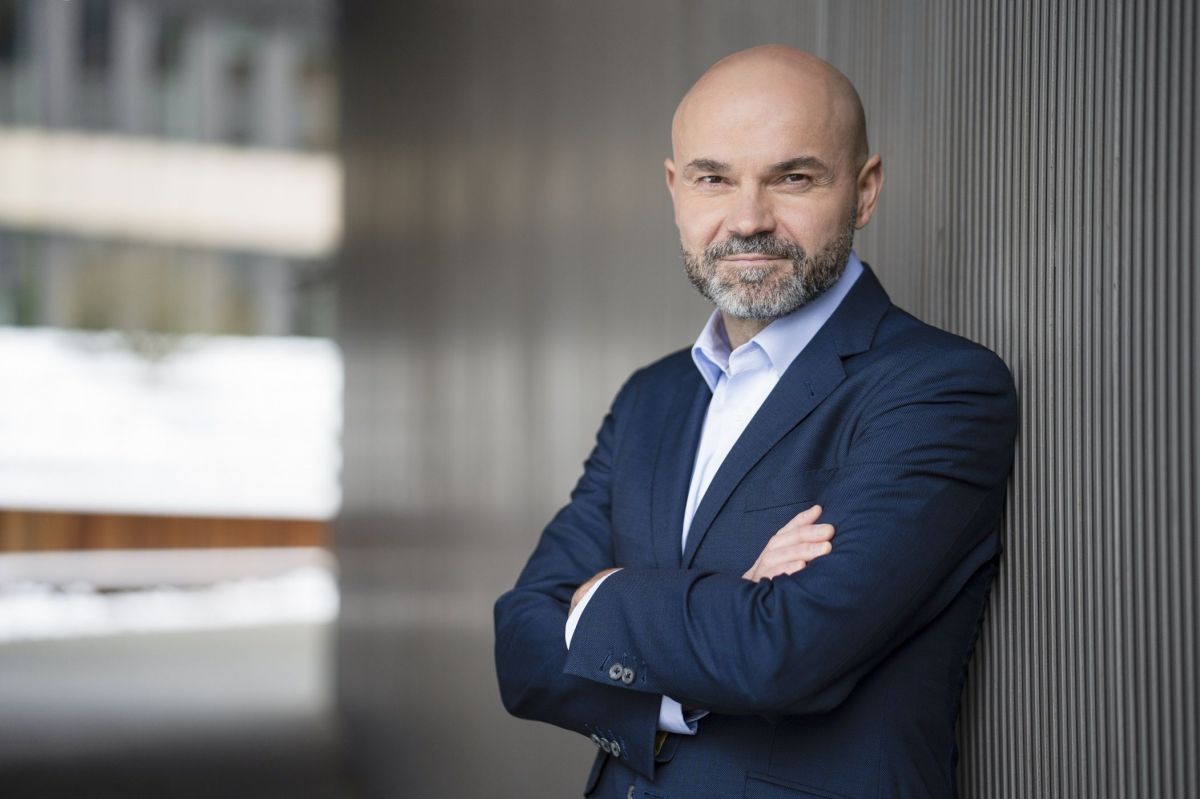
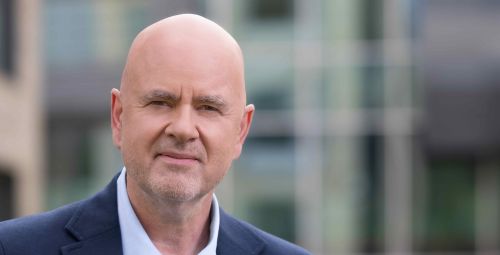
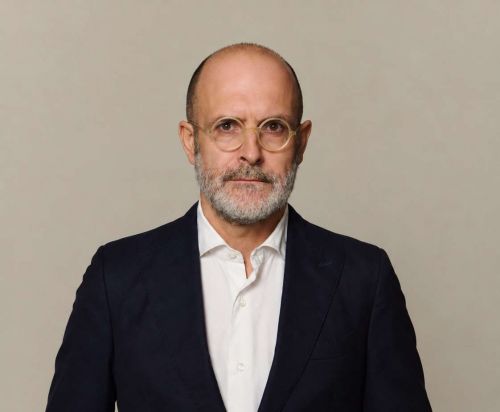
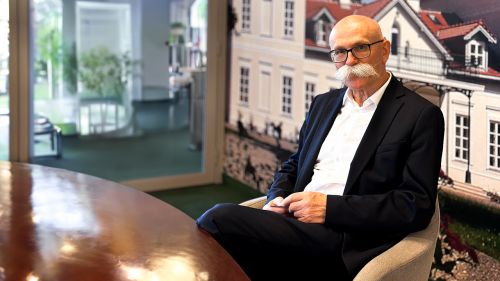
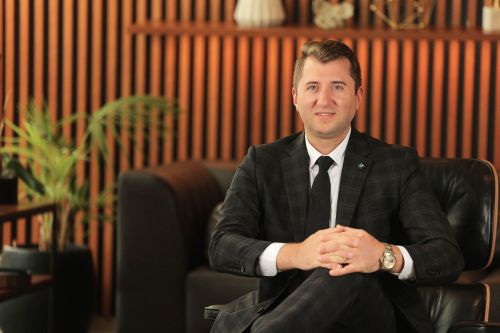
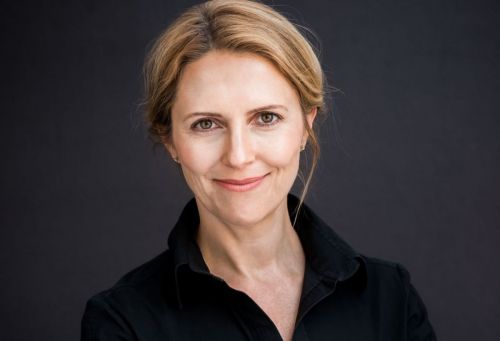
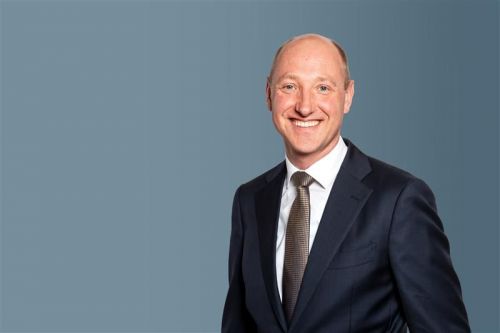
Tomasz Trzósło is an expert with almost 30 years of real estate market experience in the CEE region. Before joining EPP, he was the managing director of JLL for Poland and Central and Eastern Europe. He was also a member of the legal and procedural board at Tétris. His responsibilities have included involvement in a large number of capital market transactions, including the sales of portfolios and individual properties, capital raising and transactions using debt securities, and structured capital transactions.
You are reading this content because it is covered by the free limit. Buy full access!


How would you assess the state of the market today? From your perspective, especially when it comes to retail, how does what we’re seeing now compare to the early years of the market, 25–30 years ago?

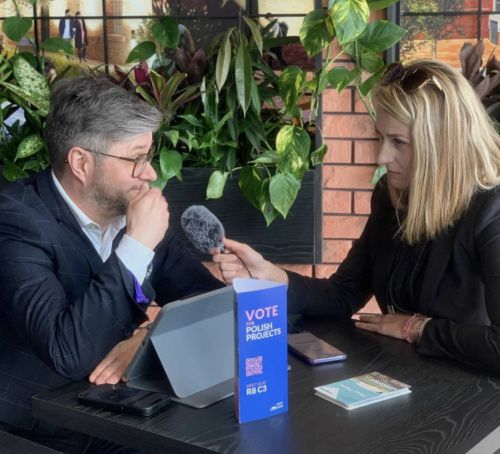
Tomasz Trzósło, the CEO of EPP: Looking at where the Polish commercial real estate market stands today – both in retail and office – it’s clear that we’ve come a long way: from an aspirational market to a mature one. Thirty years ago, we were a transitioning economy – full of energy and potential, but lacking such fundamentals as modern space, business know-how, experience, talent and capital. The market absorbed everything new and modern. There was a massive supply gap and strong consumer demand, but also a very simple operating model. In the 1990s, we were essentially starting from scratch – we’d get excited about every single project and deal. One of the first transactions I was involved in, with support from Tomek Puch, was a building in Gdańsk that we sold for just over USD 1 mln. Today, larger apartments can cost more than that. Now, we’re in a completely different place – Poland is the largest and most developed commercial real estate market in Central and Eastern Europe. We have almost 17 mln sqm of modern retail space and over 13 mln sqm of office space nationwide. The numbers speak for themselves. Although we can now talk about a mature market with strong fundamentals and a high degree of professionalism, that doesn’t mean stability – quite the opposite, in fact. To manage office and retail assets well today, they have to be constantly redefined and adapted to the fast-changing realities. The challenges we face today are far more complex than those ofr three decades ago. Take the office sector, for example. It’s undergoing a fundamental transformation due to hybrid working, which has changed how space is used while slowing growth trends – significantly reducing demand. Wage growth and the strong złoty are also factors, particularly in the SSC/BPO sector, which has traditionally been a major office tenant, especially in regional cities like Kraków or Wrocław. I believe Poland is losing its edge as a leading destination for this sector due to rising costs. This doesn’t mean that companies are leaving, but their expansion plans are certainly being scaled back, and, as a result, the demand for office space is falling. We can see the impact in vacancy rates – around 10 pct in Warsaw and 15–20 pct in regional cities. These are the highest levels in many years. I remember when the market had similar numbers before, and it bounced back. It will this time as well, but it will take time. As for the retail sector, this is one of the segments that has coped best with recent challenges, proving its flexibility and resilience. But still, it’s also evolving. The new developments are dominated by retail parks – in 2024, they accounted for 85 pct of new retail supply in Poland. The main challenges include Poland’s demographic situation, which will negatively impact centres in medium-sized cities, as well as the need to coexist with e-commerce. There’s also the growing importance of ESG standards and increasing cost pressures – from energy prices to wages and logistics. And let’s not forget consumer expectations: today, people don’t go to shopping centres for things they can find online. They come for the experience – and that changes how we think about the tenant mix, the range of goods and services, and the overall narrative around a property. One of the biggest challenges across the commercial real estate sector today is the access to capital. That’s why it’s so important to secure new sources of financing beyond just bank loans. This could significantly boost the growth of the sector while opening up new opportunities for both institutional and private investors in Poland. It feels awkward to bring up REITs again, but they’re a relevant example. In many EU countries, real estate investment trusts are a basic investment tool and a key source of capital. In Poland, this topic has been on the table for years, but the legislation is still not in place. I probably wouldn’t have believed 25–30 years ago that this would still be the case, that while REITs from the Czech Republic, Hungary or the Baltic states can operate in Poland, Polish capital remains marginal in its own market. To sum up: today, it’s no longer about having the most square metres, but about making every square metre truly serve the needs of users. The Polish market has matured, and now it has to prove that it can not only deliver new projects but manage assets well – leasing them effectively, adding value, and developing them in a way that considers their function, the environment, and local communities. In the past, we built the market mainly with foreign investors in mind. Today, we should be doing it again – but for the people. And by that, I mean both end-users and local communities – and hopefully also with the growing involvement of Polish capital.


With such extensive experience, what would you say was the most pivotal moment for Poland and the CEE region in shaping their development over the last two or three decades?

After almost 30 years of monitoring the market, I can confidently say that Poland’s accession to the EU was the most transformative moment. It was a paradigm shift, including mentally – both for foreign investors and local market participants. EU membership meant access to the common European capital market, greater investor confidence, and the influx of EU funds. From that point on, Poland stopped being a test market and became a credible investment destination. Aligning with EU regulations improved the transparency of the market, which, together with the steady economic growth, became a major factor for investor decision-making. The results speak volumes: between 2005 and 2024, the total investment in Polish commercial real estate has reached almost EUR 80 bln – 70 pct of which has been in the office and retail sectors. Joining the EU also led to improvements in technical and operational standards. Today, certifications like BREEAM and LEED are widely employed. EU funding supported the growth of many local companies and boosted domestic consumption. EU-subsidised infrastructure – in the motorways, bypasses, public transport – improved accessibility and made regional locations more attractive. The second key moment was the global financial crisis of 2008–2009. That was the first real stress test for Poland’s young commercial real estate market. Until then, investment was growing steadily. The crisis ground it to a halt, restricted access to financing, and slowed expansion. However, the scale of the impact was much smaller than in other countries. Shopping centres maintained their footfall, while the demand for office space actually increased. Ironically, the crisis boosted the market’s credibility. It showed that it wasn’t just built on capital flows, but had solid demand fundamentals. In hindsight, it allowed the Polish market to come of age. Institutional investors started to see Poland as a resilient, well-managed, and predictable market. This is something we’ve all heard many times – in 2009, Poland was the only EU country with positive GDP growth. And this fuelled investor interest for subsequent years. The third – and still very fresh – milestone was the Covid-19 pandemic. In just a few months, the commercial real estate sector globally was heavily disrupted. But it became the catalyst for a profound transformation. In the office sector, it triggered the widespread adoption of hybrid work models. Office space had to be changed dramatically – in line with new expectations surrounding its quality, functionality and social value. These trends had already been emerging, but the pandemic accelerated them. Retail underwent a revolution too, with the surge in e-commerce during the first months of the lockdown. Nevertheless, contrary to the fears of many analysts, shopping centres retained their customer base by focusing on safety, experience and locality. The pandemic also fast-tracked digitalisation and ESG implementation. What we had once planned to do over several years had to be implemented in a few months: automation, digital systems for utility and building management, client apps and digital marketing. Each of these occurrences, although very different in nature, forced us to rethink how we do our business.


You’ve been a familiar face for ‘EurobuildCEE’ for many years. Is there a particular interview, event or moment with us that stands out for you?

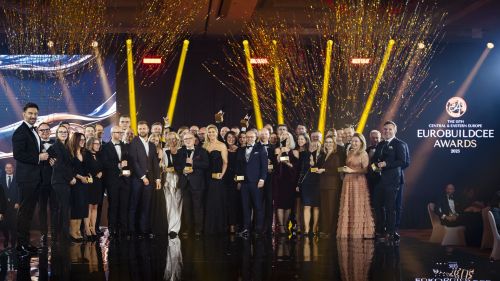
That’s a great question – and one that involves indulging in a bit of nostalgia. There have been many such moments, because Eurobuild has always been a presence on the Polish real estate scene. But if I had to pick one, it would be the Eurobuild Awards gala in 2016. I was heading JLL at the time, and we took home seven awards that night. It was probably a rather dull evening for our competitors – but seriously, it was great to see the hard work of the JLL teams recognised. But what stood out the most for me was the award for the Charity Real Estate Beach Volleyball Tournament. It was recognised as the most spectacular non-business achievement of the year – and not just in 2016, but in subsequent years too. That event was my “baby” and it was truly the highlight of the year for me at the time. I felt similar emotions in 2019, just before the pandemic hit us. We won three awards, and the volleyball tournament again claimed top spot for best non-business initiative. But what gave me the greatest joy that evening was the ‘Real Estate Agency of the Decade’ award. It was a beautiful way to close my long chapter with JLL – and shortly afterward, I began a new one with EPP.

Categories

Your order
Your data
Number of access accounts
Each account provides independent access on one device. You will be able to create additional access accounts in the account settings.
Invoicing data
Order summary
Net price
Access accounts #
Net order
VAT (%)
Gross order
Payment security is ensured

Don`t miss out the current edition