









Capital abhors stagnation
Interview 300
One could say that ‘Eurobuild’ and Knight Frank in Poland are almost the same age. How do you assess the development of the market from the perspective of your extensive experience? What major changes have occurred? Which sector has undergone the most spectacular transformation?
Michał Grabara, director of capital markets, Knight Frank: It’s true – both ‘Eurobuild’ and Knight Frank in Poland can boast over 30 years of activity. Over these three decades, we’ve witnessed – and in our case, also contributed to – some dramatic transformations that have completely reshaped the sector. The Polish property market has gone from being a marginal investment environment in the 1990s, to what it is today – a mature, transparent and globally attractive market for investors. Not only have technical and architectural standards evolved, but, more importantly, so has the approach to planning, management and sustainable development. Over these years, all segments of the market have made progress, but the warehouse and logistics sector has undergone the most spectacular transformation. Once considered a less attractive, more niche investment class, it has now become one of the most dynamic segments – fuelled by the growth of e-commerce, integration with global supply chains, and the modernisation of the transport infrastructure in Poland. At the same time, we are witnessing the growing significance of the private rental sector, as a result of shifting demographic and social needs, as well as the development of mixed-use projects combining office, residential and service functions – a response to the trend of creating more sustainable and functional urban space.
What do you consider to have been the most pivotal event for the Polish real estate market?
It’s difficult to pinpoint a single event as definitively groundbreaking – the development of Poland’s real estate market has been a gradual process, shaped by successive milestones. Without a doubt, one of the most significant moments was EU accession in 2004. This step not only opened up the market to new opportunities but, above all, it has significantly increased the confidence of institutional investors. The alignment with EU legal frameworks, access to European funds, and enhanced economic stability accelerated capital inflows and contributed to the professionalisation of the real estate sector. Another turning point was the global financial crisis following the collapse of Lehman Brothers in 2008. For many market players – both developers and investors – this was the first major test of resilience. It encouraged greater caution, reshaped approaches to risk, and reinforced the importance of long-term planning. The Covid-19 pandemic, in turn, brought with it a revolution in how we perceive space – whether office, retail or residential. It became a catalyst for changes that had been progressing only slowly previously – such as hybrid work models, digitalisation, and the redefinition of shopping centre functions. Businesses and investors had to rethink their strategies in response to users’ and tenants’ evolving needs. We also cannot ignore the impact of the war in Ukraine, which has shaken up the geopolitical landscape in the region. Changes in supply chains, relocation decisions by international companies, and the intensified movement of capital and people have all had a direct effect on the market dynamics – especially in the warehouse and residential sectors. In recent years, another key factor reshaping the market has been ESG – no longer just a buzzword, but a real decision-making criterion for investors, developers and tenants. Sustainability, energy efficiency and social responsibility are now integral to a professional investment approach in real estate.
How significant has the impact been of new technology and the development of AI on the property market? Should employees be worried, or will artificial intelligence never truly replace valued experts?
New technologies, such as artificial intelligence, are already having a genuine impact on the real estate market, and their significance will only grow. The automation of data analysis, support in valuation processes, trend identification, investment scenario modelling, and portfolio management optimisation are just a few areas where AI enhances efficiency and precision. This represents a huge opportunity for the sector – enabling faster, better-informed decisions, lower operational costs, and more tailored services that meet market expectations. At the same time, this does not entail the marginalisation of human expertise – quite the opposite. Technology can support, but it cannot replace real experts. A real estate professional is not just someone who processes data – they are advisors who understand the social, economic and local context, who can anticipate the consequences of decisions and build trust. The ability to interpret nuances, foster relationships, and respond flexibly to unexpected changes is still beyond the reach of even the most sophisticated algorithms. Rather than being afraid of change, it’s better to embrace and actively harness it. Employees who develop digital competencies and learn to be effective in the use of new tools will gain a competitive edge and be able to offer services at an even higher level. Because the future of real estate – as will be the case in any sector – won’t belong to those who resist the march of technology, but to those who are able to best integrate it into their work with experience and insight.
What should we expect in the months and years ahead of us? What are likely to be the main trends?
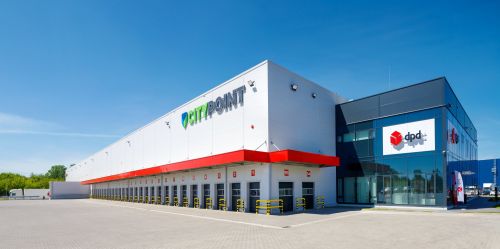
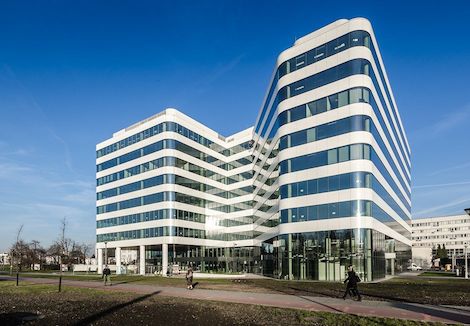
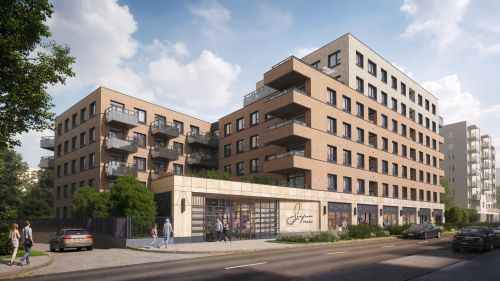
Operating in this market environment will require both caution and flexibility. Investors will become increasingly selective – driven by increased economic and regulatory pressures, as well as ongoing geopolitical uncertainty. As a result, core assets – those with stable cash flows, a low risk and high ESG standards – will stand out even more, along with projects that combine energy efficiency with long-term value growth potential. In the warehouse sector, we expect continued expansion – it remains a cornerstone of the market, supported by supply chain transformation, the growth of e-commerce, and the nearshoring trend. Transactions such as sale-and-leaseback are also attracting increasing interest – allowing companies to release capital while offering investors long-term stability and predictable returns. We are also seeing renewed interest in the office market – both in Warsaw and in regional cities. However, the key will be the alignment of evolving work models and environmental and technological standards. Retail assets – especially those with a strong local presence and a good tenant mix – are also regaining investment appeal. At the same time, the PRS market is continuing to mature and redefine its role within the housing sector. Over the coming years, this segment will gain in importance – the demand for this product continues to grow in major cities and investment in it can serve as a form of capital protection in times of rising inflation and credit market instability. We’re entering a period of intense transformation, where flexibility, knowledge, and the ability to adapt quickly will be critical. One thing, however, remains unchanged – capital abhors stagnation, and always strives to seek out attractive, sustainable investment opportunities. That is what the market activity will be focused on – quality, lasting value, and intelligently managed risk.