












Poland Retail parks strengthen their position in Poland
Retail & leisure
The segment has expanded particularly rapidly since 2020. Between 2020 and 2025, retail park stock increased by 2.2 mln sqm, compared with just over 500,000 sqm of shopping centre space, excluding closures. In the first half of 2026, retail parks accounted for 92 pct of all newly opened retail space in Poland.
According to the report’s authors, the format’s appeal is driven primarily by convenient locations, easy access and an offer focused on consumers’ everyday needs. For investors, stable occupancy, predictable cash flows and the segment’s resilience to changing market conditions are also important. At the same time, the market is maturing, with refurbishment, repositioning and active asset management becoming increasingly important.
The evolution of retail parks
The first properties of this type appeared in Poland in the late 1990s, following the country’s political and economic transformation. Early developers built retail schemes on the outskirts of major cities, creating new shopping destinations that were later complemented by additional retail and service uses.
The sector’s growth has varied over the past three decades. In 2019, Poland had around 1.5 mln sqm of retail park space in schemes larger than 5,000 sqm.
Retail parks strengthened their position during and after the COVID-19 pandemic because they were largely able to operate without the restrictions and closures that affected enclosed shopping centres. Consumers also became more interested in local retail and quick, convenient shopping. As shopping habits changed and investors gained confidence in the resilience of the format, retail park development accelerated sharply.
Paulina Brzeszkiewicz-Kuczyńska, research and data manager at Avison Young.
Between 2020 and 2025, retail park stock increased by 2.2 mln sqm, while a further 220,000 sqm was added in the first half of 2026. Around 480,000 sqm is expected to be delivered by the end of the year. Developers are also planning a similar level of new retail park supply for 2027.
A more diverse retail landscape
Retail parks now account for the vast majority of new retail space delivered in Poland. In the first half of 2026, they represented 92 pct of new openings. At the same time, shopping centres are undergoing significant transformation, including refurbishment, repositioning, extensions and the introduction of new uses.
Poles visit shopping centres an average of 44 times a year, but increasingly for more than shopping alone. Centres are becoming “third places” where people meet, use services, dine, access healthcare and education, and take part in local activities.
Demographic change is also reshaping the market. An ageing population and expected depopulation in many regions – potentially involving as many as 1.4 mln people over the coming years – will significantly change the consumer profile. At the same time, generations differ considerably in the way they shop and use retail spaces, from Baby Boomers and Generations X and Y to Generations Z and Alpha. Retail destinations therefore need to cater to very different needs at the same time. For some consumers, healthcare, rehabilitation and accessibility will be priorities; for others, it will be entertainment, food and beverage, education or the seamless integration of online and offline experiences.
Bogda Korolczuk, managing director and board member of the Polish Council of Shopping Centres
Retail parks today
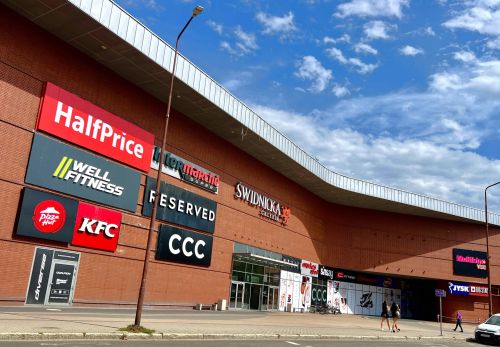
Poland currently has 3.8 mln sqm of retail park space, representing 25 pct of the country’s total modern retail stock. There are 355 retail parks in operation, with further projects under construction.
As of August 2026, the ten most active developers of retail parks and convenience schemes accounted for nearly 60 pct of the space under construction. Saller was the market leader, with an 11 pct share of total space under construction, followed by Redkom Development and BIG Poland, with 8 pct and 7 pct respectively.
Around 746,000 sqm across 88 new retail park and convenience schemes is currently under construction. Ownership and development activity remain highly fragmented, with around 50 active developers currently involved in projects under construction.
Smaller cities are attracting a significant share of new supply: 44 pct is being developed in towns with fewer than 50,000 inhabitants, while 25 pct is located in Poland’s eight largest metropolitan areas. This reflects the expansion of modern retail provision in smaller markets, alongside efforts to complement existing retail infrastructure in major cities in line with the 15-minute city concept. Of the 88 projects under construction, 26 will offer more than 10,000 sqm of space.
Retail parks have accounted for 2.2 mln sqm of new retail space delivered in Poland since 2020, compared with slightly more than 500,000 sqm of new shopping centre space, excluding closures.
Why invest in retail parks?
Retail parks are currently among the more resilient segments of the European retail property market. Their appeal is based on convenient locations, easy access and a tenant mix focused on everyday consumer needs.
The sector has also evolved significantly in recent years. Modern retail parks are increasingly moving beyond a traditional offer centred on discount and convenience stores, attracting new tenants and retail concepts that were previously absent from many local markets.
This trend is also visible across Newgate Investment’s portfolio. Centrum Rowerowe has joined Comfy Park Bydgoszcz, while RR Moto has expanded its presence at Park Wysockiego. Such tenants broaden the mix, extend the catchment area and attract customers looking for more specialised products and services.
From an investment perspective, the segment benefits from stable occupancy, predictable cash flows and resilience to changing market conditions. The gradual compression of capitalisation rates over the past decade also reflects growing investor interest in the asset class.
We believe retail parks in medium-sized towns, particularly those with more than 50,000 inhabitants, offer attractive investment opportunities. These markets often combine strong local purchasing power with limited availability of modern retail space and a loyal customer base. In many cases, well-located schemes can continue to perform strongly through thoughtful repositioning and quality improvements, without the need for major redevelopment.
Krystian Modrzejewski, chief investment officer at Newgate Investment
Newgate Investment sees retail parks as assets with long-term value creation potential. Active management, refurbishment, ESG initiatives and operational improvements remain key elements of the company’s strategy for enhancing the value and further developing its portfolio.
For Newgate Investment, Poland is not only a growth market for new retail park investments, but also a market where value can be created by developing and transforming existing assets. We believe the next stage of the sector’s growth will be driven not only by new supply, but also by the refurbishment, repositioning and sustainable transformation of existing retail parks in strong regional catchment areas. This is where we see some of the greatest investment potential in the years ahead.
Krystian Modrzejewski, chief investment officer at Newgate Investment













Who will win and who will lose with changes to the land market
Who will win and who will lose with changes to the land market
Walter Herz
The biggest change to the land market in years is on the horizon. The spatial planning reform will mean that plots previously considered attractive may lose value, while land with ...
Sales up, supply down
Sales up, supply down
JLL Polska
In the first quarter of 2026, the Polish housing market recorded a significant increase in sales. A total of 12,900 apartments were sold across the country's seven largest cities ( ...
Rent isn't everything. The real costs of leasing warehouse space
Rent isn't everything. The real costs of leasing warehouse space
Newmark Polska
Choosing a new warehouse takes much more than simply comparing rental rates across a few or even a dozen centres. With rising energy costs and varying technical standards, the actu ...