










Poland Lease renewals now dominate
Warehouse & industrial
However, the structure of the demand has changed – for the first time, new leases (3.3 mln sqm net) were lower than renewals (3.5 mln sqm).
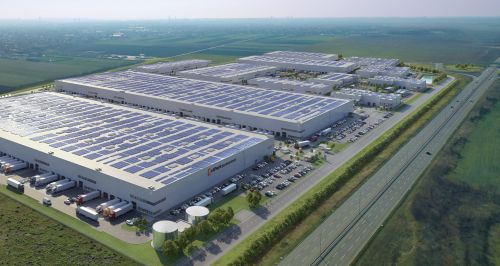
In 2025, the Polish warehouse market was very active, but instead of spectacular record-breaking results, we saw a thorough restructuring of existing portfolios. Companies were renegotiating existing contracts more frequently because they now understand the full cost of relocation better than ever: from CAPEX to the risk of supply chain disruptions and the recruitment of new employees. It's becoming increasingly clear that the market's direction is determined not so much by the scale of space, but by the suitability of facilities to business needs – technological, cost, and operational. At the same time, the market is constantly stratifying: alongside traditional logistics, formats for e-commerce, e-grocery, and parcel locker networks are developing.
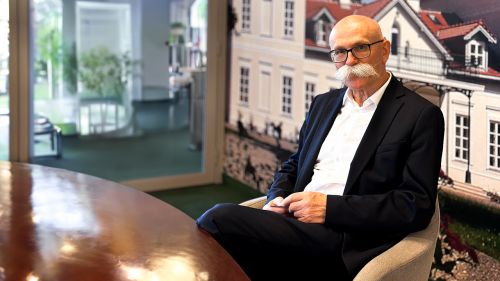
Tomasz Mika, head of industrial agency, JLL
Modernisations, widely implemented by warehouse park owners and managers, are also a factor motivating tenants to renew their leases in their current facilities.
In 2025, the geographic structure of the Polish logistics market remained unchanged, with tenants primarily demonstrating confidence in the country's largest hubs. Only three regions – Warsaw, Central Poland, and Upper Silesia – accounted for more than half of the total gross demand. Each region leased over 1 mln sqm (mostly through lease renewals). Coastal markets – Tricity and Szczecin – also stood out, generating a combined total of over 670,000 sqm of demand. It is worth noting that net new demand in the Gdańsk and Gdynia areas alone reached a staggering 275,000 sqm. A similar result was also recorded in Kraków, where new developments opened up new leasing opportunities.
Supply and Developer Activity
2025 was another year of selective developer activity. New supply declined in each subsequent quarter of 2025, reaching only 140,000 sqm in the October-December period. A total of 1.7 mln sq m were delivered last year, representing a 35 pct decline compared to 2024 and a whopping 47 pct below the average for the past five years.
As of early 2026, Poland's warehouse stock stands at 37.2 mln sqm, with a further 1.8 mln sqm under construction. Although the space under construction is showing a slight increase, it remains significantly below the levels seen during the record-breaking boom years of 2021-2022.
The structure of planned investments clearly reflects developers' cautious approach to new projects. In the fourth quarter of 2025, only around 700,000 sqm (around 40 pct of total activity) was being built speculatively. Limited supply is driving down the vacancy rate, which could gradually put pressure on rents.
Maciej Kotowski, research & consultancy director, JLL
Vacancy
Limited supply, combined with stable net demand (3.3 mln sq m, close to the five-year average), has led to a further decline in the vacancy rate, which reached 7.3 pct in December 2025. around 3.3 mln sq m of space under construction and existing space is available in total, although this stock is largely fragmented across regions and individual parks. Consequently, there is a risk of supply shortages in some regions.
Rents
Moderate developer activity helped keep rents stable. Rents in non-urban logistics parks in the five largest markets ranged from EUR 3.50 to EUR 6.00 per sqm per month, while in urban locations they remained stable at around EUR 8.00 (although prime properties in Warsaw were even higher).
Rental pressure remains evident, particularly in key locations and newly completed properties, as reflected in the gradual increase in the upper limit of headline rents. On the other hand, the continued elevated vacancy rate led to a slight adjustment in effective rents in 2025. Selected developers demonstrated greater flexibility in negotiations to secure leases. The growing gap between nominal and effective values also underscores the maturity of our market, supported by a diversity of formats, standards, and locations.
Investment Attractiveness
The industrial sector remained a key pillar of the commercial real estate investment market throughout 2025. A total of 34 transactions were completed during this period, the highest number since 2022. Rising average deal values and a robust pipeline of planned transactions underscore growing investor confidence in this asset class.
Industrial real estate investment reached EUR 1.5 bln last year, a significant 12 pct increase compared to 2024. This figure does not include the groundbreaking international acquisition of GLP Capital Partners Limited by Ares Management Corporation, which changed the ownership structures of many industrial parks around the world, including in Poland.
One of the most noticeable trends in 2025 was the growing popularity of sale-and-leaseback transactions. Both investors and businesses are increasingly viewing this model as an effective way to release capital from existing assets. For investors, sale-and-leaseback transactions provide long-term lease security and stable cash flow, making them particularly attractive during periods of uncertainty related to customs and international trade.
In December 2025, yields on prime multi-tenant projects with an average lease length of around five years were around 6.50 pct. For the most attractive assets in Warsaw, yields were slightly lower at around 6.25 pct.
Future Prospects
In the current situation, we can expect that those who don't wait for ideal conditions will gain a market advantage. If developers' current caution persists, the volume of modern space in the most desirable locations and segments could significantly decrease, especially for large, high-end modules. According to our data, only 10 modules larger than 30,000 sqm are currently available in Poland. On the other hand, the shadow of geopolitics, including the potential end of the war in Ukraine, is creating entirely new scenarios. Poland has the potential to become a logistics hub for reconstruction and the main beneficiary of the reorganisation of supply chains in the region, and the first potential challenges will concern the labor market and the availability of materials. Therefore, we expect 2026 to continue with stable growth, based on well-thought-out decisions – with an emphasis on portfolio quality and flexibility.
Tomasz Mika

Strong warehouse sector whilst capital cautious and offices yet to rebound
Newmark Polska
Poland’s commercial real estate market enters 2026 in good health and with solid growth potential. Warehouses remain one of the strongest sectors in Europe, while constrained ...
The end of greenwashing as flex grows in strength
Walter Herz
The office sector is entering a period of deeper qualitative and financial scrutiny. Decisions regarding new projects, refurbishments, or leasing are now supported by more thorough ...
The quiet revolution in Małopolska
Axi Immo
Developers across the region are increasingly favouring heat pumps and photovoltaic systems over traditional gas boilers in warehouse construction. This shift marks a growing commi ...