

















Poland Warehouse market now stable
Warehouse & industrial
The sector remained one of the most stable in the entire commercial real estate market, accounting for over 30 pct of the total investment volume in 2025. Nevertheless, market participants are expected to continue to focus on risk mitigation in response to changing economic and geopolitical conditions.
In 2025, warehouses, similar to the previous year, accounted for 45 pct of the volume of all our valuations, and the vast majority were used as loan collateral. This reflects their importance to the financial sector. Financing institutions expect valuations to identify investment opportunities and risks, which demonstrates the importance of appraisers properly identifying a property's strengths and weaknesses in the valuation process. To meet banks' requirements, we analyse the legal and technical documentation, as well as the commercial situation of warehouse properties. We position the property being valued within the warehouse sector based on available market data. ESG analysis and its impact on value are also playing an increasingly important role in valuations, requiring us to conduct a more comprehensive analysis in this area than before.
Agnieszka Bogucka, senior valuer, valuation and advisory, Avison Young
The total stock of modern warehouse space in Poland is now more than 37 mln sqm, underscoring the market's maturity and high level of development. The so-called Big Five markets continue to play a dominant role, accounting for over 70 pct of total stock.
Tenant activity has increased significantly, with renegotiations still dominating the demand structure. Tenants continue to prioritise operational continuity and cost control over relocations or expansions.
Developer activity remained limited, with only 1.8 mln sqm of space under construction, primarily in tenant-specific (BTS/BTO) projects. The launch of new investments largely depends on securing pre-lease agreements, which are crucial for securing financing. As a result, speculative investments are limited and subject to careful risk management.
Vacant space has decreased to app. 2.5 mln sqm, translating into an average vacancy rate of approximately 7 pct. The highest vacancy rates were recorded in Western Poland and Wrocław, which is why landlords in this region are showing increasing flexibility in lease negotiations, while the lowest vacancy rates were observed in Opole, Kraków and Szczecin. High tenant activity was consistently observed in the Big Five markets, which accounted for 80 pct of total demand. Furthermore, Warsaw, Upper Silesia, and Central Poland dominated in terms of leased space, each exceeding 1.0 mln sqm.
Rents remained relatively stable, with an upward trend observed in new prime projects. The highest rents are consistently recorded in the Big Five markets. Effective rents are under pressure in regions with elevated vacancy rates, where landlords are offering incentive packages to tenants.
Looking ahead, we expect current trends to continue. The Polish warehouse market is transitioning from a phase of rapid expansion to a more mature stage characterised by strategic investments aligned with real demand.
As available supply tightens, lease renewals will likely continue to dominate demand. New transactions will be more selective, with a greater emphasis on expansions. Developers will remain cautious when launching new projects, focusing on core markets and those with the lowest vacancy rates. In locations with higher vacancy rates, landlords will be increasingly willing to offer incentives to attract potential tenants.
Dorota Koseska, director, industrial agency, Avison Young
From a tenant perspective, the current situation in the warehouse market is more balanced than during the peak of the investment boom. Increased availability of space in some locations offers greater choice and stronger negotiating power, prompting tenants to consider various options, from lease renegotiations to relocation to modern buildings with higher technical standards.
Tenant decisions are increasingly being analytical, with companies focusing on total operating costs rather than solely on headline rent. Energy costs, building efficiency, and warehouse functionality are key factors. Tenants are also increasingly looking for modern buildings offering higher technical parameters, such as higher floor load-bearing capacity, higher connection power, or the possibility of implementing warehouse automation.
Strategic lease planning is becoming the standard, resulting in more frequent contract renegotiations or space optimisation, instead of quick relocation decisions. More and more companies are beginning market analysis even 18–24 months before the expiration of their current contract to increase their negotiating power and secure the best available locations.
Companies are more thoroughly analysing their logistics needs and available market options, which means decision-making and negotiation processes are taking longer than during the period of peak market dynamics.
After a period of very dynamic market growth between 2020 and 2022, the warehouse sector is now entering a phase of more balanced development. Developers have reduced the number of speculative projects in recent years. At the same time, demand remains stable. As a result, more and more new investments are being implemented only after securing a tenant through pre-let or build-to-suit agreements, which reduces the risk of projects being implemented without confirmed demand.
The increasing automation of logistics processes and the growing importance of robotic systems are leading to warehouses being designed with increasingly advanced technology. New facilities take into account higher requirements for energy efficiency, floor load-bearing capacity, storage height, and IT infrastructure. In many cases, the possibility of installing automated storage systems or logistics robots is considered already at the building design stage.
As the market develops, the increasing specialization of functions within individual logistics regions is becoming evident. In the largest metropolitan areas, the importance of urban warehouses and last-mile distribution centers, which support fast deliveries to consumers, is growing. Regions with a strong industrial base are developing as locations for manufacturing projects and warehouses supporting industrial and assembly processes.
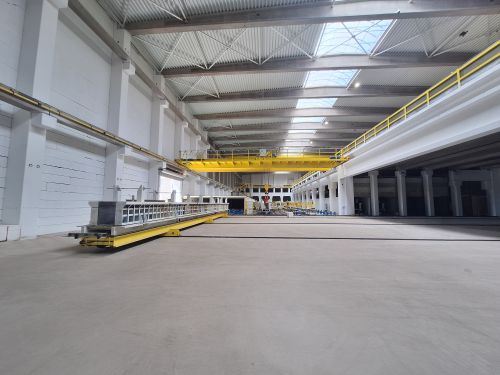
Manufacturing companies and companies operating more advanced logistics processes are playing an increasingly important role in the demand structure. Consequently, there is a growing demand for facilities offering higher technical parameters, including higher floor load-bearing capacity, the ability to install overhead cranes, greater connection power, and dedicated production zones. In many cases, warehouses are no longer solely used for storage and are becoming an integral element of the production infrastructure.
The market is increasingly diversifying between modern Class A facilities and older warehouse assets. Tenants are increasingly choosing buildings that meet ESG standards, offer higher energy efficiency, and provide better working conditions for employees. Older facilities, especially those located outside major logistics corridors, may require modernization or repositioning to remain competitive.
On a global scale, one of the most important trends remains the reorganisation of supply chains. Companies are increasingly diversifying their production and relocating some operations closer to their markets to increase supply security. Nearshoring and reshoring processes are strengthening the role of Central and Eastern Europe, including Poland, as an important production and logistics base for the European market.

A good foundation from which to grow
CBRE
Poland's role and the strength of its economy are increasingly visible in the European commercial real estate market. We have strengthened our leading position in Central and Easte ...
Zero-emission, zero-backup? The resilience gap in modern building standards
Independent Expert
As commercial buildings move rapidly toward full electrification, modern standards optimise for efficiency and emissions – but largely assume uninterrupted power supply. In C ...
Strong warehouse sector whilst capital cautious and offices yet to rebound
Newmark Polska
Poland’s commercial real estate market enters 2026 in good health and with solid growth potential. Warehouses remain one of the strongest sectors in Europe, while constrained ...