















Poland Good year for retail
Retail & leisure
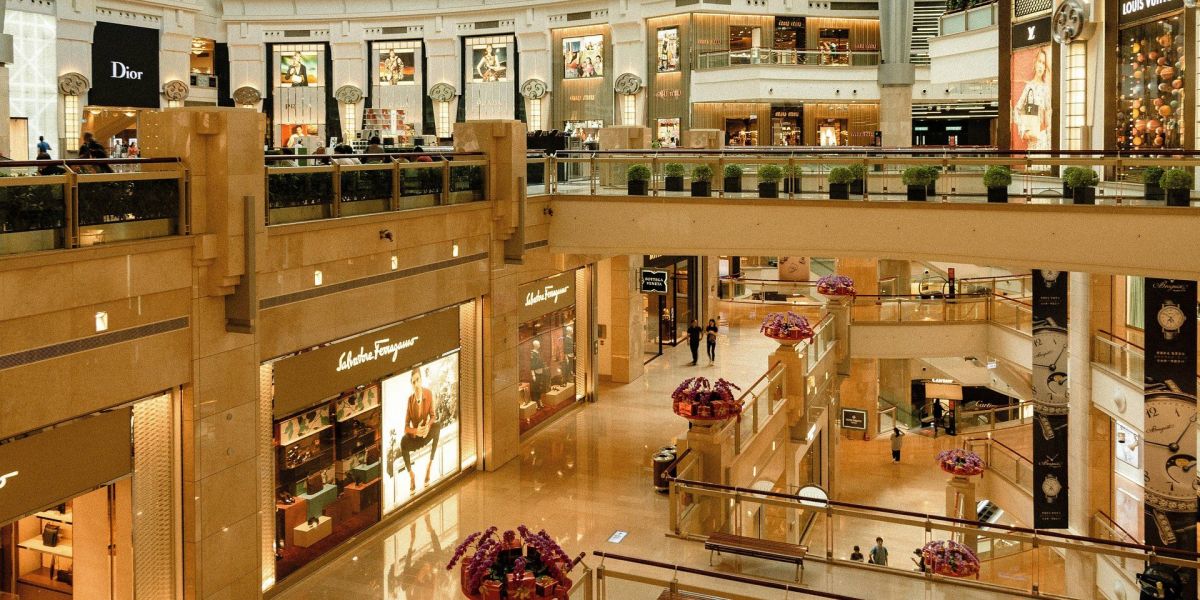
Over the past 12 months, around 545,000 sqm of new space was delivered in Poland, and as many as 31 brands made their debuts. The footfall and turnover across shopping centres, although fluctuating month-on-month, remained high overall.
Supply: Q4 the best in nearly a decade
According to Q4 data, retail space stock increased by around 314,000 sqm. This is the highest quarterly increase since 2016. The supply statistics cover properties of over 5,000 sqm and include new buildings, as well as extensions and renovations.
Throughout 2025, around 545,000 sqm of new space was delivered, with deliveries dominated by retail parks, which accounted for 75 pct of the space, followed by 13 pct in big box stores such as Obi and Castorama, 8 pct in shopping centres, and 4 pct in outlet centres. Last year also saw several closures, including the Glinka Shopping Centre, Makro in Rybnik, and Galeria Lubelska in Lublin. As a result, around 80,000 sqm of retail space will disappear from the market in 2025.
Ewelina Staruch, senior analyst at Cushman & Wakefield.
The largest retail parks completed over the last quarter of 2025 included the S1 Dąbrovia retail park (17,800 sqm), Agata Meble in Olsztyn (16,000 sqm), Targowa Lubartów retail park (15,000 sqm), the S1 Tarnowskie Góry retail park (a 15,000 sqm redevelopment of a Tesco site), and the Brama Jury shopping centre (14,500 sqm). Nearly 65 pct of the newly completed space was in centres under 10,000 sqm. Total modern retail space in Poland currently reaches around 17.26 mln sqm.
At the end of the fourth quarter, around 644,000 sqm of retail space remained under construction, and despite the presence of new projects in Poland’s large cities, only one in four square meters of new space is being built in urban areas with populations above 400,000. Investors are actively developing the empty spaces in smaller towns.
Ewelina Staruch.
Among the largest projects currently under construction are BIG Piła (38,000 sqm), Brama Bieszczad in Sanok (21,500 sqm), and Galeria Podhalańska in Nowy Targ (21,500 sqm). Additionally, construction has begun on the Plac Wiślany shopping centre in Warsaw, scheduled to open in spring 2027.
Demand: Over 30 debuts
In 2025, 31 new brands opened their first brick-and-mortar stores in Poland. This is similar to the number of debuts in 2024, when 29 retailers entered the country. In the fourth quarter alone, 10 new tenants debuted: Nikon (cameras and photography accessories, first location in Złote Tarasy), Influcenter (an influencer brand in Bonarka), Longines (a luxury watch brand, Westfield Mokotów), Boardriders (a return to the market, clothing, footwear, and accessories, Wola Park), Dan John (a luxury Italian men's clothing brand, G City Targówek), HeyDude (footwear, Wola Park), Burgermeister (a burger chain, debuting in Szczecin), GymBeam (supplements, healthy food, and accessories, Towarowa 7 in Warsaw), Adopt Parfums (a perfume brand, Posnania), and Baseus (electronics, Wola Park).
Retail Sales: 2025 a Rebound
Retail sales improved significantly throughout 2025, reaching a peak in April and then maintaining the growth through the second half of the year. In the January-November 2025 period, sales increased by 4.4 pct year-on-year. Based on available data from the Central Statistical Office (GUS) for the fourth quarter, which currently covers two months of the quarter, October saw a solid 5.4 pct year-on-year increase, but in November, the growth rate slowed to 3.1 pct year-on-year.
In the fourth quarter, the highest growth was recorded by furniture, consumer electronics, and household appliances, up by 16.6 pct year-on-year in November, while textiles, clothing, and footwear saw a rise of 12.2 pct year-on-year. At the same time, November saw declines in only two segments: press and books (-5.2 pct year-on-year) and food, beverages, and tobacco products (-2.9 pct year-on-year).
The data for December, driven by the Christmas shopping period, could yet impact sales growth in the fourth quarter. Moreover, the consumer confidence index is rising, especially in comparison to other European countries. In the December Eurostat survey, the index for Poland was -1.4, while the average for the entire European Union was -13.6. This means that Polish consumers are among the most optimistic in the region. This may be a sign of stabilisation and greater resilience to external economic shocks.
Ewa Derlatka-Chilewicz, head of research, Cushman & Wakefield
GUS data also show that the foundations of consumer confidence are growing stronger. In December, the current financial situation of households was assessed particularly positively, reaching a value of +30.8. Expectations regarding the future financial situation (+15.1) and the propensity to save (+14.3) also indicate increasing stability. The only area that remains in the shadows is planning major purchases – this index reached -26.3, representing a 15.6 percentage point improvement compared to the same period in 2022, when the index reached -41.9 in December.
October and December on the Upswing
Footfall in shopping centres in the last quarter reached its highest levels of the year, and this was no different in 2025. October brought an average of 427,000 visitors per centre, representing a slight increase of 0.4 pct year-on-year. In November, footfall fell to around 400,000, a 3.2 pct year-on-year decline, which was the weakest result of the quarter. December, in turn, saw a clear rebound – the number of visitors increased 4.0 pct year-on-year to around 514,000, making it the best month at the end of the year.
Ewa Derlatka-Chilewicz.
An analysis of shopping centre tenants' sales results in the fourth quarter shows that October was better than November. In October, average turnover was around PLN 1,140 per sqm, representing a 4.2 pct year-on-year increase. November, however, saw a decline to around PLN 1,120 per sqm, which is 2.3 pct year-on-year less than a year earlier. December data is not yet available.
Turnover between January and November 2025 increased the most in services (>10 pct), entertainment (>7 pct), and food and beverages (>6 pct). Turnover in the health and beauty sector, which had one of the highest growth rates the previous year, increased by almost 6 pct in 2025. Meanwhile, declines in shopping centre turnover was recorded in the food and home and electronics segments. However, a closer look at the latter category reveals that declines occurred in the DIY and electronics subcategories, while furniture and home décor saw an increase.
Retail Parks on the Rise
In 2025, rents in Poland's top shopping centres and high streets remained stable, unchanged quarter-on-quarter, although they increased by around 5-6 pct compared to 2024. Meanwhile, in prime retail parks, rents rose steadily quarter-on-quarter, achieving the highest increase of all three retail formats – around 10 pct compared to 2024. It's worth noting that these increases take into account inflation. In non-prime retail parks, rent increases were primarily driven by indexation.
Michał Masztakowski, head of retail agency, Cushman & Wakefield
In early 2026, rent indexation due to inflation will be around 3.5-4 pct, similar to 2025. Additional increases may occur during renegotiations, particularly for flagship stores, supported by high demand and strong tenant performance. In the case of new contracts, prime retail properties have the highest potential for rate increases.

The end of greenwashing as flex grows in strength
Walter Herz
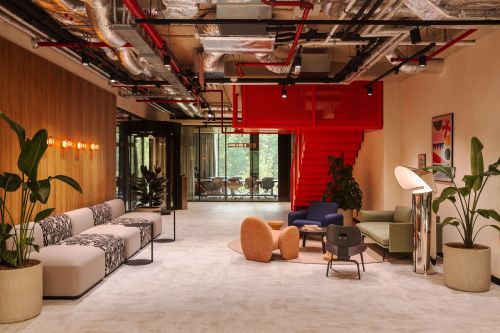
The office sector is entering a period of deeper qualitative and financial scrutiny. Decisions regarding new projects, refurbishments, or leasing are now supported by more thorough ...
The quiet revolution in Małopolska
Axi Immo
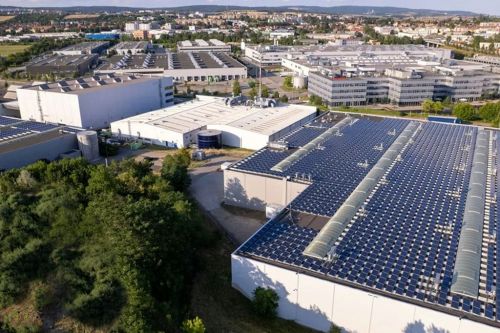
Developers across the region are increasingly favouring heat pumps and photovoltaic systems over traditional gas boilers in warehouse construction. This shift marks a growing commi ...
Modular construction becomes more prominent
Spectis
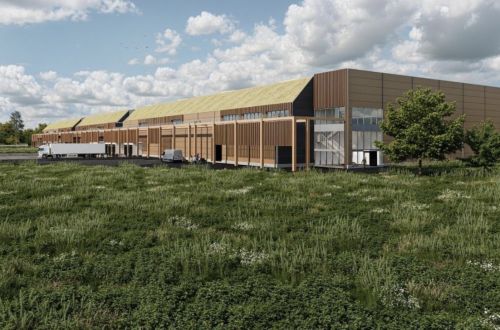
After a temporary slowdown, the modular construction market in Poland continues to expand in 2025. Although the sector faces challenges such as high material costs and investment f ...