












Poland A year of stability
Investment & finance
Key sectors — offices and industrial — are back on an upward track, and a rush of activity in the final quarter of the year, plus improving financing conditions, provide a solid base for a bounce-back expected in 2026.
Total value of closed investment deals on the Polish market in 2025 was EUR 4.3 bln, down 12.9 pct year-on-year. But the story is more nuanced than the annual headline suggests. Fully 45 pct of the year’s volume was done in Q4 alone, signalling growing liquidity and investors’ determination to close deals before year-end. Crucially, the drop in volume wasn’t due to waning interest in Poland, but to the postponement of some big transactions into early 2026. There were fewer one-off, blockbuster deals than the year before; instead, the market was dominated by smaller and mid-sized deals, especially in industrial-logistics and retail.
Economic fundamentals and outlook
The market stabilisation is helped by solid Polish economic performance — GDP grew by around 3.5 pct in 2025, keeping Poland among the EU leaders. Inflation slowed to 2.4 pct in December and both the ECB and Poland’s central bank cut rates, bringing the refinancing rate in the euro area to 2.15 pct and Poland’s reference rate to 4 pct. Better monetary conditions and forecasted economic acceleration in 2026 create a predictable backdrop for long-term investment strategies.
Poland enters 2026 with strong confidence. Friendly fiscal and monetary policy, together with accelerating investment, could lift GDP growth to as much as 4 pct in 2026, making our market one of the more attractive places to park capital in the region.
Wioleta Wojtczak, head of research, Savills Poland
Investment market — transaction volume and sector mix
Investment value in 2025 reached just under EUR 4.3 bln across more than 145 transactions, a 12.9 pct decline versus the previous year. That reflects fewer headline retail deals we saw in 2024 and the shifting of several large transactions into early 2026, which bodes well for a stronger start to this year. Despite the overall fall, Q4 2025 was particularly busy — nearly EUR 1.9 bln was invested, accounting for 45 pct of the annual total.
Concentrated year‑end activity shows investors are returning, albeit cautiously and selectively. Importantly, the office and industrial-logistics sectors rose by 7.4 pct and 11.8 pct respectively.
Mark Richardson, head of investment, Savills Poland
Last year saw seven deals above EUR 100 mln and another 18 in the EUR 50–100 mln band. One of the biggest moves was CPI Property Group buying back a 49 pct stake in its Polish office-retail portfolio from Sona Asset Management — shares that had been sold in 2024 and were counted in that year’s volume. Other notable deals included the sale of two plants owned by Eko-Okna and the sale of parts of the Vendo Park retail portfolio. The sectoral breakdown shows clear shifts in investor preferences over recent years: industrial-logistics grew from roughly 25 pct (2016–2020) to 37 pct (2021–2025), while offices fell from nearly 40 pct to 32 pct and retail from 30 pct to just under 23 pct.
Office sector — activity picking up in city centres
The office sector saw over 50 deals worth close to EUR 1.8 bln — up 8.5 pct by number of deals and 7.4 pct by value year-on-year. Two deals were portfolio sales, both portfolios entirely in Warsaw. Of 49 single-building purchases, 27 were in Warsaw; Kraków (6) and Wrocław (5) also featured strongly.
Investor activity in central Warsaw is supported by attractive leasing conditions. The market has relatively low vacancy and limited space under construction, creating a supply gap and upward pressure on rents.
Daniel Czarnecki, head of landlord representation, Savills Poland
Office buildings in Warsaw that changed hands in 2025 were mainly central assets. Some 88 pct of the value from 17 transactions across the city was concentrated in the central area, mostly the west side, including assets such as CPI holdings, Mennica Legacy Tower, Wola Center, Senator, Vibe B and Wronia 31.
Czech and Polish capital were the most active buyers in the office sector in 2025, making up around 38 pct and over 30 pct of the total deal value respectively — far ahead of British investors at just over 9 pct. Prime central Warsaw yields are estimated at 6–6.25 pct. Top offices outside the strict centre and in regional cities trade at yields roughly 1.25–1.5 percentage points higher.
Retail sector transformation
The retail sector had over 50 deals totalling EUR 862 mln, down nearly 48 pct year-on-year. It’s worth noting that in 2024 over EUR 1 bln was concentrated in just three deals (Silesia City Center, Magnolia Park and a six-asset portfolio bought by Star Capital Finance). Despite the fall in value, deal count stayed similar to 2024 (51 vs 54). The investment market in retail mirrors a long-running developer trend toward small and mid-sized retail parks.
No retail transaction was higher than EUR 200 mln over the last 12 months. The largest transactions included part of Trei Real Estate’s portfolio sold to Ares Management and Slate Asset Management, the sale of Libero shopping centre in Katowice to Estonian Summus Capital, and Reticulum Group’s purchase of a small retail park portfolio.
Polish investors were among the most active buyers in retail — second by value (19 pct of the sector) and first by number of deals (31 pct). But with Trei’s portfolio taken by Ares and Slate, plus several smaller transactions, US capital led the sector by value (24 pct). Czech investors contributed 12.7 pct and Estonian capital (via Summus) 12 pct.
Retail yields depend on format, location, competitive environment and tenant mix. With no big transactions this year, prime shopping centre yields in Poland are estimated at 6.25–6.5 pct. Retail park yields sit at 7–8 pct, while smaller convenience centres and local parks range around 6.75–7.5 pct.
Growth leader — industrial-logistics sector
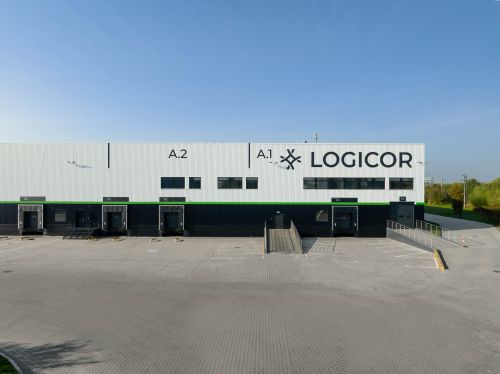
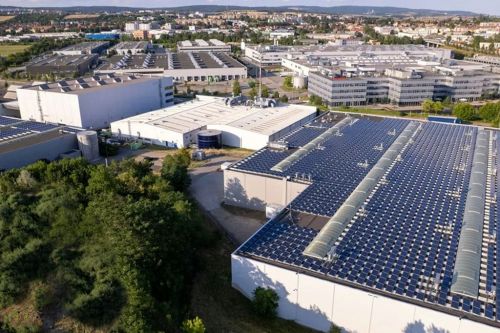
The industrial-logistics sector saw the completion of 34 deals, representing an investment of nearly EUR 1.5 bln. It was the second-largest sector after offices and grew by close to 12 pct year-on-year, with deal count up by four. Average deal size was just over EUR 43 mln, though values ranged from EUR 2 mln to more than EUR 253 mln. Twelve deals were worth more than EUR 50 mln, four were under EUR 10 mln, and nine fell in the EUR 10–20 mln range.
The biggest deal was the portfolio sale of two Eko-Okna production plants to US-based Realty Income. The second-largest was two industrial assets in Bieruń and Tychy in Upper Silesia bought by US Hillwood for around EUR 100 mln. Third was three Panattoni warehouses bought by Rysy Properties for about EUR 84 mln.
As in previous years, US investors topped the list in industrial-logistics, contributing over 41 pct of sector capital in 2025, well ahead of Czech investors at 23 pct. For the first time Polish capital was among the most active in the sector (8 pct of value), driven by DL Invest and several smaller private buyers. Yields for prime industrial assets have stabilised after the decompression seen in 2023; year‑end levels were around 6.25 pct, regardless of single- or multi-tenant profiles.
Living sector — potential in the pipeline
Investment activity in Poland’s living sector (PRS and PBSA) remains limited. The small existing stock means most deals are forward — buying or financing projects in construction. In 2025 total investment exceeded EUR 130 mln across five transactions, covering forward financings and pre-sales. Two deals involved existing assets bought by Belgian Xior Student Housing in Warsaw and Wrocław.
A widely discussed transaction was the mid-2025 preliminary agreement between TAG Immobilien and Resi4Rent to sell over 5,300 residential units. Completion requires clearance by the Polish competition authority (UOKiK) and is expected mid-2026. Prime PRS yields stayed stable in 2025 at around 5.5–6 pct, depending on whether assets sit on residential or commercial land. Top PBSA deals trade at roughly 6 pct.
Sources of investment capital
Czech investors put in over a quarter of capital invested in Poland, largely thanks to CPI’s repurchase of 49 pct of its Polish office-retail portfolio from Sona Asset Management. Czech capital, across 14 deals, came to more than EUR 1.1 bln in 2025. Three of the biggest deals involved US capital, which participated in 16 acquisitions totalling nearly EUR 867m. Polish investors were also active, accounting for almost 20 pct of the total value. By deal count, Polish players — private, institutional and public — were involved in about 35 pct of all acquisitions. Middle Eastern investors provided 6.8 pct, the UK just under 5 pct, and Germany around 3.3 pct. Investment from all other countries remained limited, below 3 pct each.
Outlook for 2026
After a year of adjustment, 2025 was one of stabilisation and returning activity, while 2026 should bring transactional revival. H1 looks set to be particularly busy, with a number of deals to be closed that are already in negotiation or at the preliminary agreement stage.
Mark Richardson
These include several large, market‑important deals such as Resi4Rent’s sale of a residential portfolio, Adventum Penta Fund SCA SICAV‑RAIF’s purchase of eight retail assets from Auchan, and further deals for retail parks from Trei Real Estate’s portfolio.
In retail Savills expects activity not only in retail parks but also through the completion of sales of several big shopping centres. The office investment market should also see a return of larger transactions in 2026, including top-tier new projects.
Although overall liquidity is expected to improve, investors will stay selective. Premium assets in prime locations are likely to perform better, while properties in less attractive locations or needing capex will trade at discounts — but such deals are supported by credible repositioning strategies.
Wioleta Wojtczak
Among the most active investor groups, capital from CEE and the Baltic states is expected to remain very engaged. A gradual return of Western European capital to Poland is also expected as liquidity improves in investors’ home markets. Recent years have shown persistent interest from domestic investors. Looking ahead, Polish capital should remain a meaningful and stable part of total market activity.
Alongside traditional property funds, wealth-management offices handling family assets are becoming noticeably more active. These players are increasingly investing in real estate, seeking stable incomes, safe capital placement and refurbishment projects across all sectors.

Strong warehouse sector whilst capital cautious and offices yet to rebound
Newmark Polska
Poland’s commercial real estate market enters 2026 in good health and with solid growth potential. Warehouses remain one of the strongest sectors in Europe, while constrained ...
The end of greenwashing as flex grows in strength
Walter Herz
The office sector is entering a period of deeper qualitative and financial scrutiny. Decisions regarding new projects, refurbishments, or leasing are now supported by more thorough ...
The quiet revolution in Małopolska
Axi Immo
Developers across the region are increasingly favouring heat pumps and photovoltaic systems over traditional gas boilers in warehouse construction. This shift marks a growing commi ...