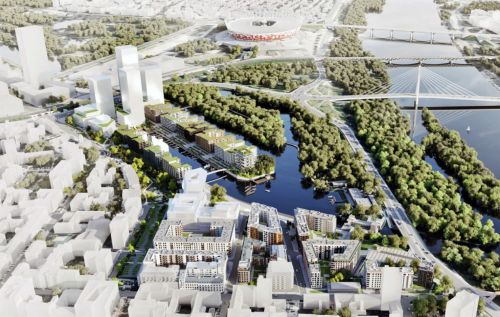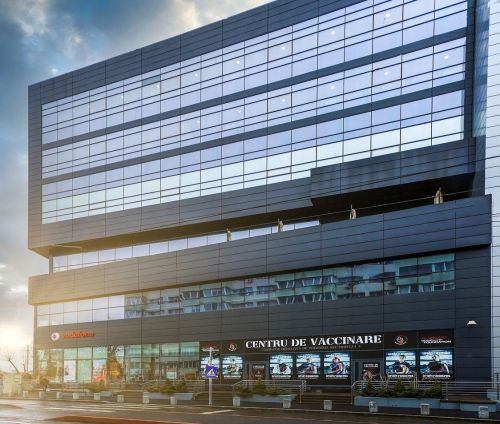











Poland No space left in Warsaw
Office & mixed-use development
At the end of December 2025, around 560,000 sqm was available for lease in Warsaw's office buildings. This space was available in around 1,000 units of varying sizes and quality. This is a relatively small number, especially given the growing appetite of tenants to relocate. In many cases, vacant office units were concentrated in single properties. As a result, the number of potential locations was significantly smaller. Companies interested in smaller units under 500 sqm are in the most favourable position. Such lease options – both in terms of the number of units and individual locations – are the most plentiful on the market. Companies seeking offices over 1,000 sqm operate in a completely different environment.
The availability of such units is highest in three zones: Służewiec, the Aleje Jerozolimskie corridor, and the City Centre, with the former two being predominantly second-hand space. The real challenge, regardless of the size of the space sought, is availability in the premium segment. The lack of space—whether of the right size, quality, or availability within a specific timeframe—means that many tenants will be unable to realise their plans in the short and medium term.
Demand
Throughout the past year, tenants signed contracts for nearly 800,000 sqm, representing a 7.3 pct increase compared to 2024. The last quarter was record-breaking, with the total transaction volume exceeding 300,000 sqm. During this period, six transactions larger than 9,000 sqm were recorded, but only one of these was a new agreement.
The City Centre (32 pct of demand) and Służewiec (23 pct) saw the highest activity throughout the year. In the latter, over 60 pct of the total transaction volume was recorded. Renegotiations were a major activity. This business district was not alone in this. Similar activity was seen in the Al. Jerozolimskie corridor, Północ, Ursynów/Wilanów, and Puławska zones. In previous years, tenants renegotiated contracts because they lacked clarity regarding their workplace strategy. Today, renegotiations are a necessity for many, as the market offers very limited opportunities for change. In 2025, such contracts accounted for half of total demand.
Supply
At the end of 2025, the supply of office space reached 6.23 mln sqm. A total of 88,700 sqm of new offices were delivered, the largest of which were The Bridge (51,800 sqm) and Office House (27,800 sqm). A modernised office building within the Lipowy Park complex (10,000 sqm) also returned to the market. Although the developers' plans for the end of the year were ambitious, they were not achieved. Projects announced for the fourth quarter (new and those undergoing renovation) will not be launched until the first months of 2026. With the commencement of the next phase of office space at the Towarowa 22 complex, construction activity in the capital increased to 185,000 sqm.
Another important trend seen in 2025, alongside renegotiations, was the ongoing transformation of the office stock: office buildings being repurposed (especially for residential purposes and in locations outside the city centre) or demolished to free up land for new projects. Jll believe this process will continue in the coming years.
Over the past 12 months, the office market in Warsaw has shrunk. Over 160,000 sqm of office space disappeared from the capital's map, and developers delivered less than 89,000 sqm. The relocation, repurposing, or demolition of older office buildings is nothing new, but 2025 was a record year in this regard. We estimate that over the last five years, this process has affected over 540,000 sqm of offices, and the next two years will bring further changes to approximately 180,000 sqm of existing office buildings.
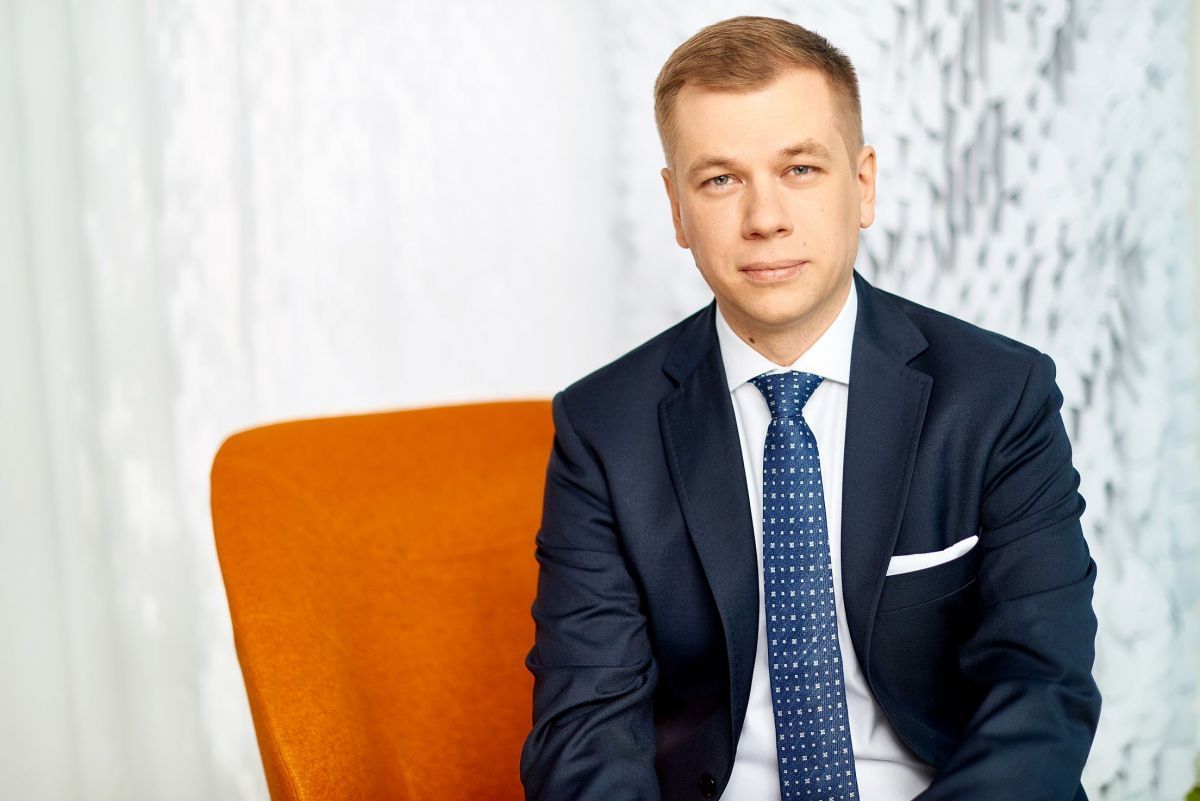
Mateusz Polkowski, head of research & consultancy, JLL
Vacancy
At the end of December 2025, the total vacancy rate for Warsaw was 9.1 pct, a result 1.5 pct lower than a year ago. This significant reduction was due to several factors: the aforementioned revision of existing stock, minimal growth in new supply, and revived demand in the second half of 2025. At the end of Q4, vacancy in the city centre stood at 6.1 pct. Outside the city centre, it was nearly twice as high at 11.6 pct.
Over the year, vacant space decreased most rapidly in the premium segment, where only 6.3 pct is currently available. existing supply, and for office buildings in the city centre – only 4 pct. Due to higher than expected new supply (resulting from postponed completion dates of projects planned for 2025), the vacancy rate will increase slightly in the first quarter of 2026.However, this is only a temporary reversal of the downward trend.
Rents
Last year brought further increases in rents for prime office space. The Central Business District, after sharp increases in 2024, recorded a 2.7 pct increase year-on-year to EUR 28.75 per sqm per month. Last year, prices in the City Centre zone rose significantly faster (+6 pct year-on-year, to EUR 26.50per sqm per month), which was closely related to the delivery of new premium projects to the market. Rents for prime properties in zones adjacent to the city centre, i.e., the Aleje Jerozolimskie corridor and the West zone, also saw rapid change. The average rent increase for all zones outside the city centre exceeded 4.0 pct year-on-year. The supply situation will not change significantly in 2026, which will translate into further price increases in high-quality buildings.
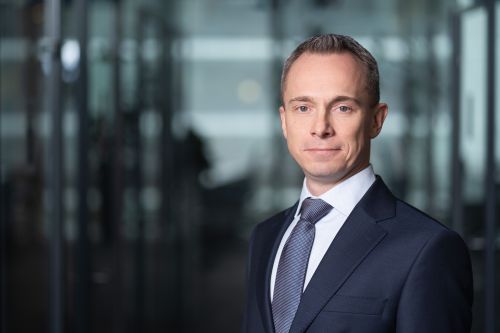
In 2025, we saw a further decline in the vacancy rate in Warsaw, which currently stands at 9.1 pct. The capital city has now equalled the European average in this respect, a unique situation in the history of the Polish office market. Low vacancy, coupled with very limited developer activity and stable, unwavering demand from companies, creates an exceptionally favourable market environment for further rent growth. I am confident that this year, peak transaction rents will rise to EUR 30per sqm per month. We will also see exceptional, individual transactions closing at as much as EUR 34-35per sqm per month for smaller units on the top floors of prime skyscrapers.
Piotr Kamiński, executive director, office agency, JLL

Strong warehouse sector whilst capital cautious and offices yet to rebound
Newmark Polska
Poland’s commercial real estate market enters 2026 in good health and with solid growth potential. Warehouses remain one of the strongest sectors in Europe, while constrained ...
The end of greenwashing as flex grows in strength
Walter Herz
The office sector is entering a period of deeper qualitative and financial scrutiny. Decisions regarding new projects, refurbishments, or leasing are now supported by more thorough ...
The quiet revolution in Małopolska
Axi Immo
Developers across the region are increasingly favouring heat pumps and photovoltaic systems over traditional gas boilers in warehouse construction. This shift marks a growing commi ...