









Poland record demand but no supply
Office & mixed-use development
The key developments in 2025 included the predominance of renegotiations, the limited availability of large units in the city centre, and growing pressure on rents in prime buildings.
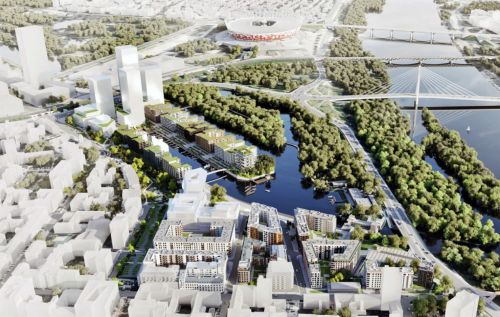
The total stock of modern office space in Warsaw at the end of 2025 reached 6.23 mln sqm 1 pct less than a year earlier. This was the result of demolitions and the repurposing of older buildings. Last year alone, over 152,000 sqm of offices disappeared from Warsaw. At the same time, new supply was low, reaching 88,700 sqm. The number of new office buildings in Warsaw has dropped by 15 pct year-on-year, with around 90 pct of this occurring in central locations. 202,000 sqm remains under construction, and the largest projects, such as AFI Tower and Upper One, are being built in the city centre.
Since 2020, nearly 410,000 sqm of office space have already disappeared from the Warsaw market. This is certainly not a temporary trend, but a significant shift in market structure, with older office buildings giving way to apartments, hotels, or undergoing extensive renovations. This is increasingly true in central locations, further limiting the availability of office space in the most sought-after parts of the city.
Wioleta Wojtczak, head of research at Savills
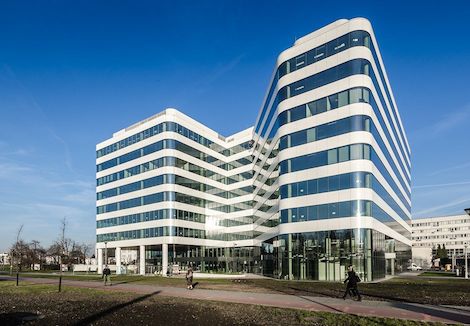
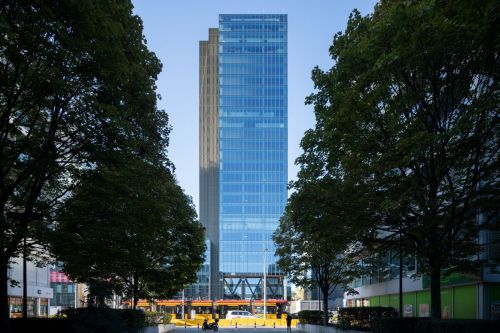
The largest projects delivered in 2025 were in the western part of the city centre (West Centre zone). These included The Bridge, with 47,000 sqm, and Office House, with 27,800 sqm. The scale of projects varies significantly depending on location – in central areas, the average building area under construction reaches approximately 25,000 sqm, while smaller, more intimate projects, typically under 10,000 sqm, predominate outside the city centre.
The report estimates that by the end of 2028, a total of 290,000 sqm of new office space could be delivered to the market, of which nearly 230,000 sqm will be in central locations, primarily in the Western City Centre zone.
Demand reached 794,000 sqm, representing a 7 pct year-on-year increase and placing 2025 among the best years in the market's history. In the fourth quarter alone, a record-breaking 310,000 sqm of space was leased. Renegotiations accounted for 51 pct of the total volume throughout the year, demonstrating that companies were more likely to choose to remain in their current locations than to relocate. Outside the city centre, Służewiec stood out, with 180,000 sqm leased. This was the third-highest figure ever recorded for the zone, only surpassed by 2015 and 2019. The most active tenant groups were the manufacturing (14 pct), IT (13 pct), and financial (11 pct) sectors.
The decline in new supply and high demand translated into a significant reduction in the vacancy rate. At the end of 2025, it stood at 9.1 pct, 150 basis points lower than the previous year. In the central zones, availability fell to 6.1 pct of the stock, with only seven buildings in central locations offering a total of over 5,000 sqm of vacant space. At the same time, net absorption increased by a staggering 117 pct year-on-year, to 188,400 sqm.
The limited availability of prime space began to impact rents. In the second half of 2025, rents in central locations rose to around EUR 27.50 per sqm per month, and outside the city centre to around EUR 19. Service charges stabilised at PLN 30-40 per sqm, although in some buildings they were more than PLN 45.
2025 confirmed that the Warsaw office market has entered a phase of significant imbalance between demand and supply. In the city centre, the problem today is not a lack of tenant interest, but the very limited availability of sufficiently large and modern space. This phenomenon will be one of the key factors shaping the market this year, both in terms of rents and tenant strategy.
Jarosław Pilch, head of tenant representation at Savills
The report indicates that with the forecasted acceleration in economic growth in 2026 and further declines in interest rates, pressure on prime office buildings may persist, and the market polarisation between prime buildings and older stock will deepen.
In Warsaw, prime buildings are clearly gaining in value. The decreasing availability of prime space means increased competition and further pressure on rents, and landlords can afford to be more selective in choosing tenants. At the same time, stabilising inflation should limit the scale of indexation, which will partially mitigate cost increases. However, this does not change the fact that some companies will start to seriously consider relocating outside the city centre in search of more affordable options.
Daniel Czarnecki, head of landlord representation at Savills

Strong warehouse sector whilst capital cautious and offices yet to rebound
Newmark Polska
Poland’s commercial real estate market enters 2026 in good health and with solid growth potential. Warehouses remain one of the strongest sectors in Europe, while constrained ...
The end of greenwashing as flex grows in strength
Walter Herz
The office sector is entering a period of deeper qualitative and financial scrutiny. Decisions regarding new projects, refurbishments, or leasing are now supported by more thorough ...
The quiet revolution in Małopolska
Axi Immo
Developers across the region are increasingly favouring heat pumps and photovoltaic systems over traditional gas boilers in warehouse construction. This shift marks a growing commi ...