










Poland A time of rising cost pressure
Retail & leisure
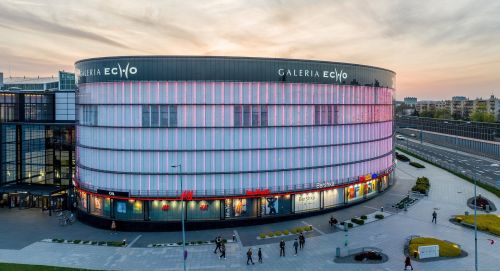
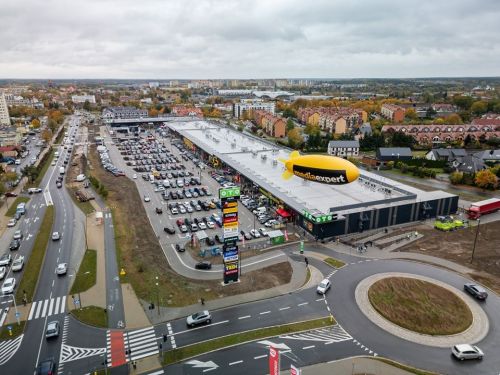
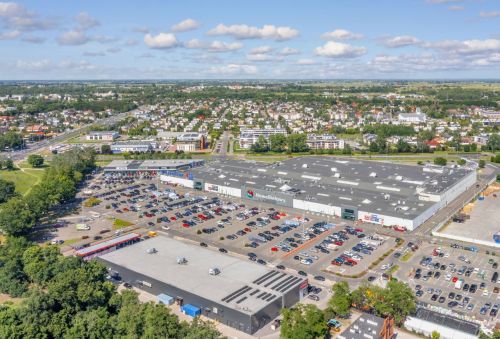
Currently, the retail real estate market is seeing the highest level of new supply since 2017. Poland remains the European leader in terms of newly completed retail park space, and 2026 is likely to maintain this high level, given the record-breaking space currently under construction.
Rents and operating costs under pressure
In early 2026, rent indexation due to inflation will be around 3.5-4 pct, similar to 2025. Additional increases may occur during renegotiations, particularly for flagship properties, supported by high demand and strong tenant performance.
Prime properties, including the best shopping centres, parks, and high street locations, currently have the greatest potential for rent growth. With high occupancy levels and a well-balanced tenant mix, real rent increases during renegotiations are possible, reaching up to several euros per square meter. In properties with a weaker market position, the negotiation terms still rest with the tenants.
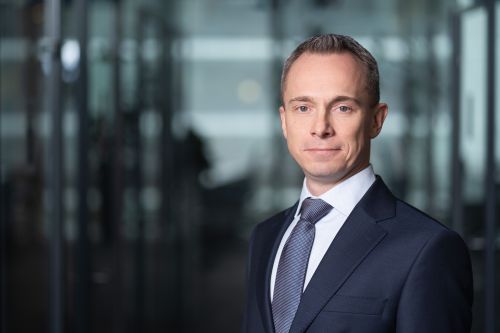
Agnieszka Bobela-Musiał, head of asset services retail at Cushman & Wakefield
At the same time, landlords must prepare for further increases in service charges, which are also forecast at around 4 pct. This is due to factors beyond the control of landlords and managers, such as an increase in the minimum wage, higher local taxes, and the effects of the withdrawal of government mechanisms supporting energy prices.
The most important operational challenge will be maintaining cost efficiency without compromising service quality, which necessitates the use of technology. Investments in AI, HVAC systems, and cleaning robots are no longer optional, but are becoming the foundation of a property's competitiveness. Every CAPEX expense is now meticulously analysed from a business perspective – the key is a measurable impact on the building's value and return on investment, ideally within 12 months.
Agnieszka Bobela-Musiał.
Tenant Strategies: Optimisation Instead of Aggressive Expansion
In 2026, the market will witness further optimisation of retail chains and a redefinition of formats. Some brands, especially those in the fashion sector, plan to expand existing premises at the expense of opening new stores. Meanwhile, electronics chains and large supermarkets are announcing reductions in space, a response to customer migration to online channels and cost pressures.
Tenant optimisation-related moves demonstrate a maturing market. Retail operators increasingly understand that success is not about the number of locations, but the quality of displays, conversion, and customer fit. This year will also be marked by the development of services and discount stores, while leading brands in the fashion, health, and beauty categories continue to strengthen their positions.
Michał Masztakowski, head of retail agency.
Development Activity and High Street Development
Development activity in 2026 will focus on completing a record pipeline of projects, with shopping centres accounting for only about 10-15% of new supply. Developers must consider an estimated 2-5 pct increase in construction costs.
There is currently a shortage of large units exceeding 400 sqm in shopping centres, and retail parks, with their slightly different tenant profiles, will not be able to fully fill this niche. Consequently, many shopping centre owners will prioritise "reclaiming" space by combining smaller units. Such consolidation allows for the creation of attractive flagship formats for key brands, or anchor tenants, which, given the limited choice of new locations, becomes a key tool for building a market advantage for older properties.
Ewelina Staruch, senior analyst at Cushman & Wakefield
The Consumer of the Future: A New Beginning in Spending
Despite structural challenges, the outlook for tenant turnover remains promising, driven by high consumer confidence.
The Polish consumer enters 2026 with a significant dose of optimism, higher than the European Union average. We are seeing a return to selective but stable spending growth, particularly in the health and beauty, services, and broadly defined entertainment categories. Demographics will determine long-term changes – people over 40 are becoming a strategically important group, as they are more affluent and loyal to selected brands. Success in the coming years will be achieved by projects that can translate this optimism into actual sales by better adapting to the needs of an aging but increasingly affluent society.
Ewa Derlatka-Chilewicz, head of research

Strong warehouse sector whilst capital cautious and offices yet to rebound
Newmark Polska
Poland’s commercial real estate market enters 2026 in good health and with solid growth potential. Warehouses remain one of the strongest sectors in Europe, while constrained ...
The end of greenwashing as flex grows in strength
Walter Herz
The office sector is entering a period of deeper qualitative and financial scrutiny. Decisions regarding new projects, refurbishments, or leasing are now supported by more thorough ...
The quiet revolution in Małopolska
Axi Immo
Developers across the region are increasingly favouring heat pumps and photovoltaic systems over traditional gas boilers in warehouse construction. This shift marks a growing commi ...