
















Poland Polish retail still booming
Retail & leisure
The Polish economy stands out in Europe, providing a strong foundation for further growth in the retail sector. According to forecasts by Oxford Economics, the country's GDP will grow by an average of 2.4 pct annually between 2026 and 2030, significantly faster than the entire eurozone (less than 1.5 pct). With relatively low unemployment and rising wages (although the rate of wage increases is noticeably slower than in recent years), Poles maintain a high propensity to consume. Another advantage of Poland over western EU countries is its large working-age population. The ratio of people of non-working age (children and seniors) to those working, is 54.7 pct, compared to almost 70 pct in the largest EU countries, such as France, Germany, and Italy. All this means that retail trade in Poland is growing rapidly – according to forecasts, total sales volume will increase by an average of 2.9 pct annually over the next three years.
For several years, the value of online transactions has remained stable at 9-10 pct of total retail sales, while in the EU it averages 14 pct and in the UK as much as 28 pct. The forecast indicates that by 2030, e-commerce in the EU and the UK will grow at a rate of 5.2 pct annually, significantly faster than traditional retail (3.3 pct annually). Poles, like Spaniards and Italians, are quite attached to traditional shopping, and the growth of e-commerce in Poland is progressing noticeably slower.
Sandra Ludwig, head of retail investment EMEA, JLL
Retail Parks Still on Top
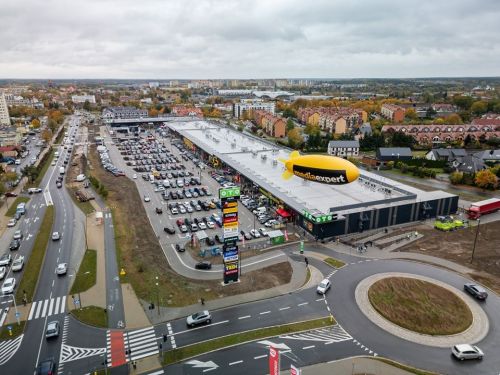
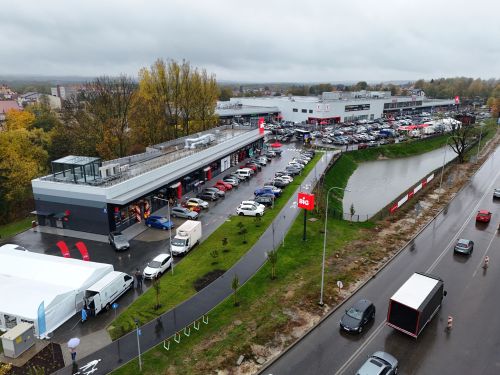
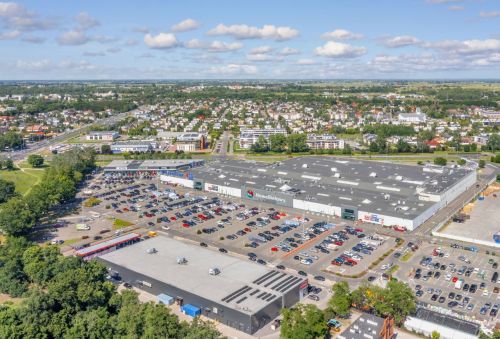
Recent years in the Polish retail market have seen the rapid expansion of retail parks and convenience centres, which represented 80 pct of new supply by 2025 (as recently as 2017, this figure was only around 30 pct). Last year, no new shopping malls were opened in Poland, and only two large-scale projects of this format are planned. Markets in large and medium-sized cities are already close to saturation – in cities with over 100,000 people, there are approximately 1,100 sqm of retail space per thousand people. In small towns with populations between 30,000 and 100,000, this ratio averages around 700-800 sqm. For towns of 10,000 to 30,000, this figure is 200 sqm per thousand people. Between 2023 and 2025, new supply of retail parks and smaller shopping centres reached a staggering 325,000 sqm, the majority of which were projects of up to 10,000 square meters.
At the other extreme are the largest cities, where the development of everyday shopping is driven by suburbanisation and new residential developments on the outskirts. This compares to another 250,000 sqm of this type of retail space between 2023 and 2025.
We anticipate further growth, particularly with retail parks, which will continue to dominate new supply over the next 2-3 years. Projects currently under construction total over 500,000 sqm. After taking into account individual developments that may yet be launched, we expect another record volume to be set for new space, approaching the 700,000 sqm delivered in 2025. The plans of developers and investors, both domestic and international, remain ambitious for 2027. However, given the increasing saturation level and the pace of market development, some projects may be abandoned or postponed. Players are seeking new opportunities and attractive plots in locations where the retail services remain limited, even despite the relatively lower purchasing power of local consumers.
Maciej Kotowski, director, research & consultancy, JLL
Increased Investor Activity
Last year saw the third-highest number of commercial real estate transactions on record. All key market segments – from offices to logistics to retail – saw an increase in transaction activity, consistent with the growing trend that began in 2023.
In the retail sector, retail parks and retail warehousing facilities proved to be a real magnet for capital – segments that consistently saw the greatest investor interest.
Importantly, last year was distinguished by an exceptionally broad base of capital sources. Investors from almost all major geographic regions were active in Poland and each real estate segment saw multiple transactions, including industrial, retail and offices. This demonstrates systematic, long-term interest in Poland, not just occasional investments.
New players and private investors, who previously were less likely to engage in such ventures, are becoming increasingly active in the market.
We still expect this year to see a return to large deals, as well as sale-and-leaseback transactions, which have proven popular in other sectors. New investors are already moving from the analyses to concrete actions. This year, we still expect foreign capital to dominate, but with a steadily growing share of Polish investors.
Agnieszka Kołat, executive director, head of retail investment, JLL

A good foundation from which to grow
CBRE
Poland's role and the strength of its economy are increasingly visible in the European commercial real estate market. We have strengthened our leading position in Central and Easte ...
Zero-emission, zero-backup? The resilience gap in modern building standards
Independent Expert
As commercial buildings move rapidly toward full electrification, modern standards optimise for efficiency and emissions – but largely assume uninterrupted power supply. In C ...
Strong warehouse sector whilst capital cautious and offices yet to rebound
Newmark Polska
Poland’s commercial real estate market enters 2026 in good health and with solid growth potential. Warehouses remain one of the strongest sectors in Europe, while constrained ...