












Poland Poland unprepared for ageing population
Residential
By 2050, the number of people aged 65+ will increase by approximately 2.1 mln, and the population aged 75+ will reach nearly 4.8 mln. At the same time, the national supply of 24-hour care spaces and senior housing remains disproportionately low: long-term care facilities offer only 49.5 spaces per 1,000 people aged 75+, while commercial senior housing has approximately 600 units nationwide, or approximately 0.2 units per 1,000 people aged 75+. With an average occupancy rate of 95 opct. and months-long waiting lists, these figures clearly confirm a persistent excess of demand over supply.
The report points out that the current narrative of alleged cultural barriers and excessively low pensions does not hold up to scrutiny. A clear shift in attitudes is evident: the active generation of people 65+ now perceives modern senior housing as a conscious choice that improves quality of life, not a last resort. This change is also reflected in the decisions of families, who increasingly replace personal care with professional assistance. At the same time, purchasing power is increasing: one in four retirees receives benefits exceeding PLN 5,070 gross, and the share of the highest benefits is growing rapidly. However, the real "hidden capital" is housing assets – 75.4 pct of households own a mortgage-free home, which in practice allows them to finance their stay by selling or renting their current home. The income of children – currently the highest earners in their 40s and 50s – further secures payments, and in the six largest metropolitan areas, the value of housing transactions by people aged 60 and over reaches approximately PLN 7 bln annually.
The biggest barrier to development is not the reluctance of seniors or a lack of resources, but the lack of suitable products and difficult access to debt financing. Demand and capital are already there – what's missing is scale and modern, urban projects that meet the real preferences of people aged 65 and over.
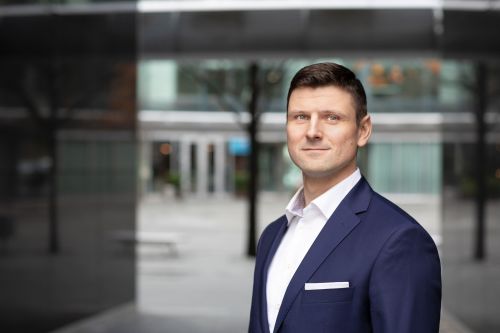
Paweł Sztejter, executive director, head of living, JLL Poland
The report lays out the location paradox: to date, many commercial projects have been built outside cities, while active seniors are choosing locations with access to healthcare infrastructure, services, culture, and transportation. The fastest-growing segment will be those guaranteeing support and care, namely assisted living with a guaranteed care package and private nursing homes. However, as the market matures, the share of independent living apartments (housing for fully independent individuals) will increase, particularly in the largest metropolitan areas. The target model remains the Continuing Care model, which combines all of the above models in a single ecosystem, allowing residents to seamlessly transition between levels of support depending on their needs and health status.
The scale of investment required to keep pace with demographic changes is significant. Maintaining the current – already low – rate of 49.5 full-time care places per 1,000 people aged 75+ by 2050 requires adding approximately 86,000 places. Assuming an efficiency threshold of approximately 6 pct of the 75+ population (approximately 60 places/1,000), the gap currently reaches approximately 81,000. places after adjusting for the actual use of the resource by seniors. In the Senior Housing segment, the gap is even greater: to even reach the level of France, approximately 60,000 units would be needed now and approximately 95,000 by 2050. Compared to reference markets such as the Netherlands, the differences are numerous – there, the saturation with senior housing projects is 81.1 units per 1,000 people aged 75+, compared to only 0.5 in Poland.
The data shows the depletion of informal care potential – due to demographics, the professional activity of caregivers, and the dispersion of families. The coming years will be about building the missing link between independence and comprehensive healthcare. The segment of assisted living and modern nursing homes will accelerate the fastest, and consequently, the independent living segment in urban locations will become increasingly visible. At the operational level, the market is still characterised by fragmentation and immaturity of operator networks, which hinders traditional transaction structures and portfolio scaling. The shortage of healthcare and care staff forces the employee base to be considered at the stage of location selection and design.
Urszula Kowalska, director, living investments, JLL.
At the same time, the first signs of consolidation and professionalisation are visible in the private segment – private nursing homes are growing at a rate of 13.9% annually, the first large-scale acquisitions are taking place, and developers are implementing the first investments in independent and assisted living. The scale of these initiatives is currently small, but these are the first signs that more and more entities are beginning to take an interest in this sector.
A case study of the Warsaw metropolitan area illustrates the supply-demand imbalance in the largest cities. The region is home to 263,600 people aged 75+, and the total supply of private care places is 5,366, of which only 2,557 are medium- and high-end – a mere 9.3 per 1,000 people aged 75+. Commercial senior housing is practically nonexistent. At the same time, this is where the purchasing power of seniors and their families accumulates, and apartment values and rents enable financing a stay in the private sector.
The first to deliver scalable, well-located investments with a full service package and clear standards will benefit from a pioneering premium. It's worth remembering that the emergence of other segments of the housing market was accompanied by precisely the same uncertainties. A decade ago, the rationale for institutional leasing was questioned, citing Poles' attachment to ownership – today, nearly 30,000 apartments operate under this formula, with an average occupancy rate of 97 pct. Previously, similar doubts were raised about the development market itself, and Poland is now its leader in Europe. The first step has always been the hardest. However, those who took the risk have received a significant reward.
Paweł Sztejter
The report suggests three practical courses of action: further, increasingly conscious adaptation of standard housing projects to accommodate seniors; the parallel development of assisted living and nursing homes as a driver of scale; and the gradual construction of apartments for independent seniors in urban locations. In the current phase of development, developer-operator-investor partnerships and consistent locating of projects where demand is concentrated – in large cities and their immediate surroundings – will be crucial.

Sales up, supply down
JLL Polska
In the first quarter of 2026, the Polish housing market recorded a significant increase in sales. A total of 12,900 apartments were sold across the country's seven largest cities ( ...
Rent isn't everything. The real costs of leasing warehouse space
Newmark Polska
Choosing a new warehouse takes much more than simply comparing rental rates across a few or even a dozen centres. With rising energy costs and varying technical standards, the actu ...
A good foundation from which to grow
CBRE
Poland's role and the strength of its economy are increasingly visible in the European commercial real estate market. We have strengthened our leading position in Central and Easte ...