




















Poland An end to housing subsidies
Residential
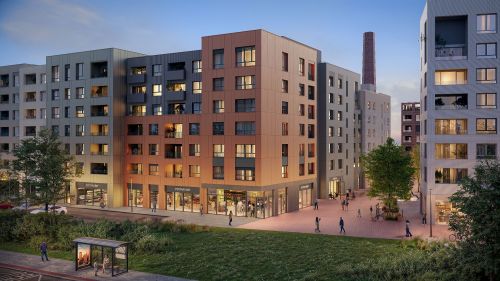
The combination of high prices in city centres and the needs of young families has led to the flourishing of satellite communities around the largest urban areas. Home buyers are willing to accept longer commutes (mitigated by hybrid work) in exchange for an extra room or access to green spaces.
The ability to work from home several days a week has led some people planning to buy a home to consider locations far from the city centre. Improved transportation options were also a key factor in purchasing decisions, with satellite towns largely benefiting from these changes. Currently, the largest urban areas in terms of available apartments are the towns surrounding Warsaw, the Tricity area, and Wrocław. The Katowice metropolitan area is also noteworthy, with almost as many properties on sale as in Katowice itself.
Aleksandra Gawrońska, director of housing market research at JLL Living
The popularity of suburban locations also stems from the prices of apartments and houses built there, which are significantly lower than in major housing markets. In practice, this means that for the price of a small apartment in the city centre, a young family can buy a significantly larger apartment in a neighbouring town. It is precisely this ability to tailor an apartment to actual needs—not just budgets—that is causing more and more customers to choose a move to the suburbs rather than compromise on living in too small an apartment in the city centre.
Fundamental Differences Between Markets
Smaller regional markets such as Szczecin, Bydgoszcz, Rzeszów, and Lublin are also worth noting. Over the past ten years, the scale of housing construction in cities outside the seven largest markets has increased from approximately 15,000 to over 25,000 units delivered annually.
The conference highlighted significant differences between regional markets and large cities, which require different business strategies. In regional markets, customers are more likely to purchase apartments for their own needs —in contrast to markets like Warsaw, where the share of investment and package buyers is much higher. This translates into higher expectations regarding the ability to tailor a property to individual needs. At the same time, due to their different sales structures, regional markets are characterised by a more limited role for real estate agents. In practice, this means for developers that customer communication and product strategy require a completely different approach than in the larger market.
A market without subsidies
The end of the cycle of government programmes supporting housing demand – in particular, the discontinuation of subsidies for mortgages such as the "Safe 2 pct Loan" – has brought an end to the era of artificially raised demand. A clear consensus emerged during the conference: neither developers nor banks expect the return of subsidies. The main concerns include the risk of disrupting market mechanisms, the exclusion of non-beneficiaries of the programme, the potential "freezing" of borrowers in undersized apartments, and threats to the financial security of beneficiaries themselves in the context of potential interest rate increases and the upcoming elections.
Jan Dziekoński, chief economist at RynekPierwotny.pl
Suggestionsto support demand focus on long-term solutions that have for many years been used in other countries – such as tax breaks spread over time, and savings accounts.
Lending and home sales – despite the lack of support – have remained at healthy levels. Developer sales have been steadily increasing for almost two years, particularly supported by interest rate cuts between May 2025 and March 2026.
Industry Recommendations
Representatives of the development and banking sectors agreed on the direction the state's housing policy should go. The greatest potential to increase housing availability is in the supply side. Ensuring transparent and stable conditions for obtaining building permits is a key element of any future strategy. Regulatory stability is one of the most important factors in long-term planning.
The development sector currently has no particular concerns about social rental housing. The British system, in which developers ensure the cost-effective supply of social housing in response to needs expressed by local governments during the building permit process (whereby some are allocated to the municipal housing stock or are rented at reduced rates), was cited as a good example. In this context, there were also voices suggesting greater scope for cooperation between local governments and the development sector (models such as PPP, Lex Deweloper, or ZPI/Lex Deweloper).
Technology is changing the rules of the game
The Sopot forum also confirmed a fundamental shift in developers' sales strategies, driven by two forces: the introduction of the Price Transparency Act (September 2025) and the AI-based technological revolution.
Purchasing an apartment has fundamentally changed. Customers are more educated, more demanding, and have significantly more information at their disposal than ever before. On the other hand, online analysis of buyers' purchase paths using artificial intelligence allows developers to better tailor their offerings to buyers' needs.
As Marcin Zaremba, head of product at Rynekpierwotny.pl, emphasizes, remote recommendations are becoming increasingly important in apartment sales, and portals can no longer be just bulletin boards. Price remains an important tool for attracting customers, but market leaders will leverage a comprehensive approach – marketing, direct salesperson service, and AI technology – to gain market share.
The Senior Housing Market
JLL also presented its'Senior Housing Market in Poland' report at the Sopot Forum, which reveals one of the largest supply gaps in the Polish real estate market. Poland is ageing the fastest in the European Union – by 2050, the number of people aged 65+ will increase by around 2.1 mln, and the population aged 75+ will reach nearly 4.8 mln. At the same time, the national supply of 24-hour care spaces and senior housing remains disproportionately low: long-term care facilities have only 49.5 spaces per 1,000 people aged 75+, while commercial senior housing has approximately 600 units nationwide (around 0.2 units per 1,000 people aged 75+). With an average occupancy rate of 95% and waiting lists lof several months, these figures clearly confirm a persistent surplus of demand over supply.
Data shows the depletion of informal care capacity due to demographics, the professional activity of caregivers, and the dispersion of families. The coming years will be about building the missing link between independence and comprehensive healthcare. The fastest-growing segment will be assisted living and modern nursing homes, and as a result, the independent living segment will become increasingly visible in urban locations.
Urszula Kowalska, director, living investments, JLL
The scale of investment required to keep up with demographic changes is significant. Maintaining the current – already low – rate of 49.5 full-time care spaces per 1,000 people aged 75+ by 2050 requires adding approximately 86,000 spaces. In the senior housing segment, the gap is even greater: to even reach the level in France, approximately 60,000 units would be needed now and approximately 95,000 by 2050.
The Next Phase of Housing Market Development
The record-breaking industry interest in participating in the Forum in Sopot confirms that the Polish housing market is entering the next phase of development: without the artificial stimulus of subsidy programmes, but with lasting structural changes – suburbanisation, the growing role of regional markets, the technological revolution, and a huge gap in the senior segment – that will set the industry's direction for the next decade.
The market is shifting to where residents' real needs are – including neighboring municipalities and regional markets, where customers buy for themselves, not for their investment portfolios.
Aleksandra Gawrońska
Weaning off steroids is not a weakening effect, but a return to health. Stable sales without subsidies show that demand is now standing on its own two feet, and the future of the market will be determined by supply,
Jan Dziekoński.

Who will win and who will lose with changes to the land market
Walter Herz
The biggest change to the land market in years is on the horizon. The spatial planning reform will mean that plots previously considered attractive may lose value, while land with ...
Sales up, supply down
JLL Polska
In the first quarter of 2026, the Polish housing market recorded a significant increase in sales. A total of 12,900 apartments were sold across the country's seven largest cities ( ...
Rent isn't everything. The real costs of leasing warehouse space
Newmark Polska
Choosing a new warehouse takes much more than simply comparing rental rates across a few or even a dozen centres. With rising energy costs and varying technical standards, the actu ...