









Poland Building permits a scarce resource
Residential
In Warsaw, we are seeing an increasingly visible change in the valuation of land for residential projects. Previously, the attractiveness of a plot was primarily determined by its location, purchase price, and development potential. Now, the speed it can be developed is becoming equally important. In practice, this means that land with a regulated planning status and valid building permits is growing in value. For years, the market rewarded bold investment decisions. Developers who actively acquired land, taking advantage of the continuous rise in real estate prices, collected a risk premium. However, this model no longer works. The current market environment requires much greater selectivity and reliable risk analysis.
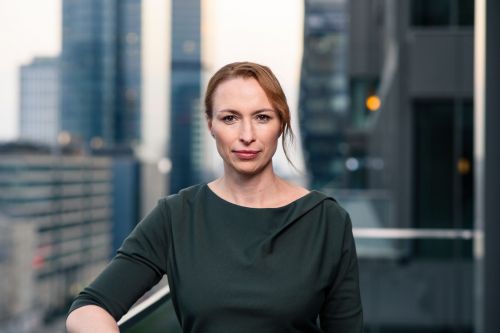
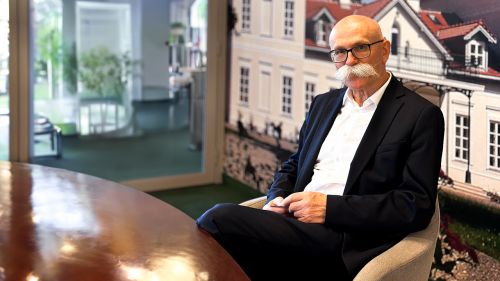
Damian Karkosiński, investment and acquisition specialist at Walter Herz
This change is not accidental. This stems from the consistently lengthening administrative procedures over the years, which have become one of the most important factors influencing the profitability of residential investments undertaken by developers in Warsaw.
Analyses by Walter Herz, based on data from the General Office of Building Control (GUNB), show that Warsaw is currently experiencing record-breaking times for obtaining building permits for multifamily projects. The average time required to obtain a decision from the submission of an application is currently approximately 18 months.
Data from the last ten years indicate a systematic deterioration of the situation.
In 2016, the average time to issue a building permit for multifamily projects in Warsaw was approximately 82 days. By 2025, this had increased to 488 days, more than fivefold. This trend is even more visible when excluding replacement permits; the average time to issue a decision increased from 88 days in 2016 to 531 days in 2025.
Damian Karkosiński
Walter Herz analyses show that the pace of change has accelerated significantly in the last two years. The average processing time increased by around 30 pct in 2024 and another 35 pct in 2025 year-on-year.
The process of granting building permits for residential projects in the Warsaw market, which has been extended to a year and a half, is no longer merely a formal stage of the investment process. A permit is increasingly becoming an asset that in itself has a tangible market value.
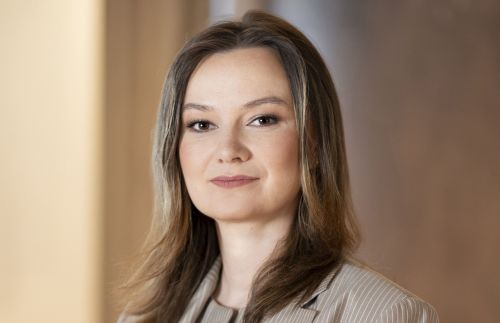
Katarzyna Tencza, transaction director at Walter Herz
Building Permits: A Scarce Resource
Although regulations generally stipulate a one-month deadline for issuing a building permit for standard cases and two months for particularly complex proceedings, the reality is quite different. In the case of large multi-family investments, the administrative process from submitting the application to the commencement of construction now takes, in extreme cases, two or even three years. These lengthy procedures are influenced by factors such as the need to supplement documentation, environmental approvals, road and infrastructure issues, the involvement of neighbouring parties, suspension of proceedings, and appeal procedures. The average waiting time of one and a half years for a decision encompasses the entire complex administrative process.
In practice, this means a longer investment preparation cycle, increased land financing costs, and a limited number of new projects entering the market. This results in a smaller supply of apartments, which can be delivered even two or three years later. Therefore, as Damian Karkosiński notes, developers and private equity funds are now redefining their purchasing strategies, increasingly focusing on properties covered only by the Local Spatial Development Plan (MPZP). Investors' actions are often speculative and pursue a dual goal: increasing the value of the land by obtaining a building permit (PnB) and selling it at a premium within a two-year timeframe, or strategically building a land bank. Consequently, price competition now encompasses not only projects ready for immediate implementation, but above all, the most promising locations already in the planning stage.
At the same time, the number of building permits issued in the Warsaw residential land market is declining, from a record 281 in 2017 to just 143 in 2025, of which 112 new decisions were issued.
Project feasibility and investment security are valued.
The increasing unpredictability of the administrative process is causing a fundamental change in the way investment land is valued. The subject of valuation is not the plot itself, due to its urban parameters, but the possibility of completing the project on it within the assumed time and budget. In other words, the value of real estate is increasingly dependent on the project's feasibility.
While traditional criteria such as location, purchase price, development potential, and expected return on investment remain important, they are no longer sufficient for assessing land attractiveness. The stability of the regulatory environment, the timing of administrative procedures, the availability of technical infrastructure and connection capacity, the transportation system, and environmental and social risks also play a role in land valuation. This means a shift from valuations based solely on the property's urban parameters to a comprehensive feasibility analysis.
Katarzyna Tencza
Warsaw has been struggling with a shortage of attractive investment sites for many years. Available plots are increasingly expensive and, at the same time, more demanding in terms of formal, environmental, and infrastructure requirements.
Capital is increasingly focusing on properties that ensure the security of the investment process. Land covered by local zoning plans (MPZPs) or with development decisions, particularly plots with valid building permits, is enjoying the greatest interest. These are now becoming the most scarce assets on the market.
At the same time, properties whose future planning status remains uncertain are increasingly being discounted, especially in the context of the introduction of new master plans. The residential land market in Warsaw has reached a turning point. Developers and investors are increasingly analysing which properties will retain investment potential after the new master plans come into effect, and which may lose it.
The limited supply of land with regulated planning status means that plot prices remain resilient to the economic cycle. In Warsaw's most prestigious locations, transaction prices already exceed several thousand złoty per square meter of usable area, and the cost of purchasing land can be as much as a quarter of the price of an apartment.

Who will win and who will lose with changes to the land market
Walter Herz
The biggest change to the land market in years is on the horizon. The spatial planning reform will mean that plots previously considered attractive may lose value, while land with ...
Sales up, supply down
JLL Polska
In the first quarter of 2026, the Polish housing market recorded a significant increase in sales. A total of 12,900 apartments were sold across the country's seven largest cities ( ...
Rent isn't everything. The real costs of leasing warehouse space
Newmark Polska
Choosing a new warehouse takes much more than simply comparing rental rates across a few or even a dozen centres. With rising energy costs and varying technical standards, the actu ...