





















Poland Data centres to transform Polish economy
Data centres
The data centre sector also contributes to supporting nearly 41,000 jobs annually across the Polish economy – a scale similar to the number of people employed in the domestic aviation industry. The report is the first such comprehensive study on the Polish market, precisely assessing the economic impact of the sector and its development prospects in the coming years. PLDCA believes that digital infrastructure should be considered a crucial pillar of the Polish economy.
Until now in public debate in Poland, data centres have been considered to be the technical, almost invisible backbone of the digital world. They have usually appeared in the media only in conjunction with spectacular, multi-billion investment announcements by global technology giants. The report, prepared by the Polish Data Center Association (PLDCA) in collaboration with PwC Polska, radically changes this perspective. For the first time in the Polish market, this sector is presented using the language of macroeconomics. The report estimates key indicators for development, including value added and tax revenue.
Digital infrastructure has ceased to be merely a support for other businesses and has become an independent, fully-fledged sector of the economy, whose importance and actual impact on GDP can now be confidently compared to many traditional, long-established sectors in Poland. The PLDCA report provides the public and decision-makers with hard numbers that end the stage of intuitive estimates and open an era of mature discussion about the digital foundation of Polish prosperity.
Piotr Kowalski, managing director of PLDCA
Billions for GDP and the Budget
According to PwC calculations for the PLDCA report, in 2025 alone, data centres will support the Polish economy with PLN 10.6 bln in gross value added. The billion-dollar value added packages and strong growth prospects for the sector are a boost to productivity, placing digital infrastructure on a par with mature industries and modern business services.
The second, equally important pillar of this equation is the fiscal balance. Data show that the data centre industry generated a staggering PLN 4.3 bln in tax revenue in 2025. This amount consists of a wide range of taxes: from income taxes (CIT and PIT) paid by operators and their employees, through indirect taxes (VAT), to local taxes.
The latter are of fundamental importance from the point of view of local governments. Data centres are facilities with a huge initial value, requiring advanced construction and technological infrastructure. For the municipalities and cities where such projects are being built, they mean stable annual property tax revenues in the millions of złoty. These funds can be directly invested by local authorities in roads, schools, and local infrastructure.
These financial and tax results were not achieved out of thin air. Today's billions contributing to GDP and the state budget are a direct result of the significant capital expenditures (CAPEX) that has been committed in Poland in recent years. The data centre sector has exceptionally high capital intensity – before a facility can begin to pay for itself, it requires enormous financing in the planning, energy supply, and construction stages. Today's PLN 10.6 bln in added value is proof that this capital has been effectively invested, and Poland is beginning to reap the rewards of its position as the largest digital construction site in Central and Eastern Europe.
Kinga Barchoń, PwC partner and leader of real estate services in Central and Eastern Europe
An Archipelago of Digital Power
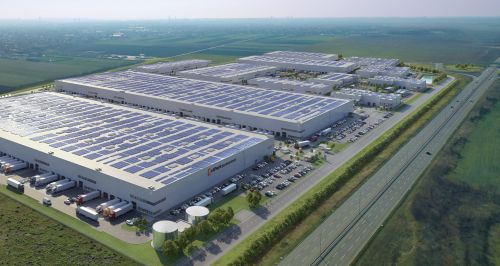
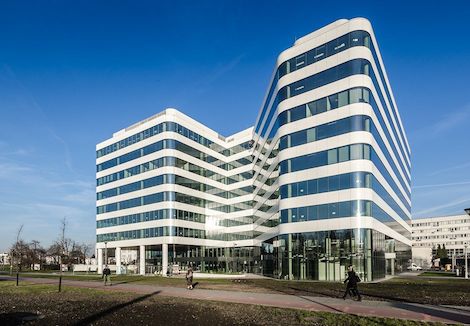
To fully understand the economic phenomenon of this industry, one must descend from the level of macroeconomic balance sheets to earth—literally. Cloud computing, though elusive in name, has very heavy physical foundations. Data centres operating in Poland are no longer isolated, distributed server rooms, but rather massive data factories, located primarily around major business agglomerations, with Warsaw at the forefront.
However, the sheer number of buildings does not reflect the scale of the technological leap that has taken place in Poland. In the digital infrastructure industry, the key currency and measure of potential is not square meters of space, but connection capacity. Poland currently has a base of approximately 250 megawatts of operating capacity. According to EUDCA data, the total capacity of data centres in Poland could exceed 550 MW by 2031, which would more than double the levels in 2025. At the same time, more optimistic scenarios in PSE's investment plans indicate that, under favourable conditions, the market's long-term potential could be significantly higher, reaching as much as approximately 1.2 GW by 2030.
This powerful technological foundation is transforming our country's geopolitical and economic position. Poland has emerged as a growth leader in Central and Eastern Europe. We are no longer merely a market for technology imported from the West or a peripheral recipient of services located in Europe's traditional digital hubs, such as Frankfurt, London, or Amsterdam. Thanks to the rapid increase in capacity and modern infrastructure, Poland is becoming a regional hub, attracting global capital and guaranteeing the digital sovereignty of the entire region.
Piotr Kowalski
Poland's position aligns perfectly with Brussels' latest economic policy directions, which indicate the need to triple the size of the European data centre sector in the next 5-7 years, in a geographically balanced manner. The strategic initiatives announced by the European Commission in early June – including the draft regulations on the development of cloud and artificial intelligence (CADA) and the roadmap integrating digitalisation with the energy sector – clearly demonstrate that data processing infrastructure has become a top priority for the entire European Union. The new EU legal and strategic framework could not only accelerate the influx of further investments into Poland but also facilitate the integration of energy-intensive facilities with the national power system, ultimately cementing Poland's position as the digital heart of the region.
The Domino Effect
As the PLDCA report demonstrates, the economic impact of data centres extends far beyond the walls of the facilities themselves and the direct operating profits of operators. This industry generates a powerful multiplier effect, becoming a driving force for many other business sectors.
Building a modern data centre is a highly complex engineering process. It requires advanced, rigorous construction, extensive energy infrastructure (including emergency power systems and integration with distribution grids), and specialised, energy-efficient cooling systems. The supply chain is completed by security system suppliers – both physical and ICT. Each new investment translates into multi-million dollar contracts for the entire ecosystem of Polish contractors, designers, engineers, and technology providers. PLDCA data shows that as many as 57 pct of companies in the Polish data centre value chain have Polish capital or production facilities in Poland.
This technological value chain directly shapes the structure of the modern labour market. Data centres are not a source of mass low-skilled employment – they are generators of highly specialised, well-paid jobs. The industry constantly demands the country's technological elite: from network architects and cybersecurity experts, through civil, automation, and power engineers, to critical infrastructure management specialists. The development of this sector stimulates the growth of digital skills on a macro scale and allows the retention of the best-educated technical graduates in the country. In total, the data centre sector creates nearly 41,000 jobs in Poland. Jobs across the economy, with a significant portion of this effect occurring beyond the centres' operations – in the IT, real estate, construction, and professional services sectors.
From a broader economic perspective, the health of this sector determines the global competitiveness of the entire Polish economy. Modern businesses – from the financial sector and logistics to advanced manufacturing – rely on cloud computing and artificial intelligence solutions for their growth. Without a strong, local, and stable data centre base, Polish companies would be forced to rely on foreign infrastructure, which creates regulatory risks and increases data transmission delays.
A New Compass for Policymakers
The PLDCA report finally concludes the phase of intuitively assessing the role of the digital infrastructure industry in Poland. From now on, policymakers, central government officials, and local governments have a precise strategic compass based on hard data.
Poland's further development and the pace of economic transformation will directly depend on how wisely and far-sightedly the state secures conditions for the growth of sectors that can become drivers of the country's future competitiveness. Massive investments in the energy sector – especially in new generation capacity, grid modernisation, and the development of clean, green energy – could become another impetus for the Polish economy, while opening up space for the development of modern, energy-intensive industries, including data centres.
The challenge now shifts to the regulatory and infrastructure levels. The key to success will be simplifying legal procedures and—an absolute priority given EU requirements—ensuring data centres have stable access to connection power and low-emission energy. Only then will Poland not only maintain its regional leadership position but also fully leverage the potential of the artificial intelligence revolution, strengthening the role of energy and data centres as pillars of future economic development.

Who will win and who will lose with changes to the land market
Walter Herz
The biggest change to the land market in years is on the horizon. The spatial planning reform will mean that plots previously considered attractive may lose value, while land with ...
Sales up, supply down
JLL Polska
In the first quarter of 2026, the Polish housing market recorded a significant increase in sales. A total of 12,900 apartments were sold across the country's seven largest cities ( ...
Rent isn't everything. The real costs of leasing warehouse space
Newmark Polska
Choosing a new warehouse takes much more than simply comparing rental rates across a few or even a dozen centres. With rising energy costs and varying technical standards, the actu ...