


















EMEA region EMEA investment on a rising trend
Investment & finance
Institutional investors are returning to key European markets, and transaction volumes are expected to rise steadily after a period of strategic reassessment in 2024-2025.
Investors are becoming more selective and strategic, exploring opportunities beyond domestic and US markets into Europe. More are pursuing specialised approaches, from upgrading assets to forming joint ventures.
Luke Dawson, head of global and EMEA capital markets at Colliers
EMEA, and especially Europe, sees investment and fundraising surge
Global fundraising reached USD165 bln by the end of Q3 2025, matching the 2024 total, but with a clear shift in regional allocations: now, EMEA is on top in terms of fundraising share. EMEA’s proportion of global fundraising surged to 50 pct year on year, while North America’s fell to 40 pct, from 50 pct in 2024.
Europe continues to attract international capital, with seven of the top ten global destinations for commercial real estate investment located in the region. The UK leads in liquidity and transparency, while Germany and France are seeing a rise in cross-border investor interest.
After a period of cautious activity, investor confidence in EMEA is building. Transaction volumes are expected to rise steadily in the months ahead, with both domestic and international players pursuing more selective, strategic investments across offices, industrial assets, and specialist sectors.
Katarína Brydone, director of Colliers in the Czech Republic
A rebound in office market investment
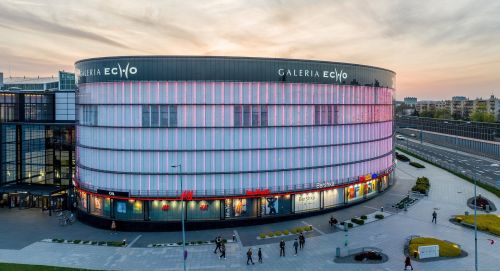
After being overshadowed by industrial and logistics (I&L) and multifamily assets during the pandemic, office investment is returning to tier-one and tier-two cities. Large transactions are back, particularly in London, Paris, and Munich, with deals now commonly exceeding USD 133 mln (GBP 100 mln).
The office sector is regaining momentum across Europe’s leading cities. Investors are increasingly drawn to prime and value-add opportunities, including refurbishments that enhance sustainability, while joint ventures are providing a hands-on approach to capturing long-term returns.
Katarína Brydone
Across EMEA, offices are the third-most-preferred asset class among investors for 2026 (15 pct), which is higher than in the U.S. (11 pct).
Marked industrial and logistics growth, with CEE attracting attention
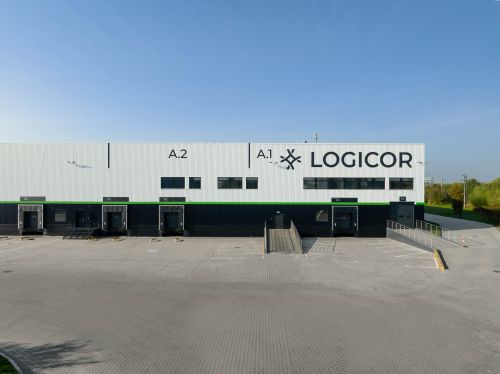
The I&L sector continues to demonstrate a strong risk-return profile. Total investment in 2024 reached EUR 40–50 bln, and growth is supported by e-commerce expansion, low penetration rates in some regions, and NATO’s planned EUR 50 bln annual infrastructure investment over the next decade.
Prime markets like Germany, the Netherlands, and the UK remain active. Central and Eastern Europe, including Czechia, is seeing increased portfolio activity. Investors are attracted to reversionary opportunities, though high valuations and limited prime asset supply may cap volumes in some core markets.
Alternative and specialist assets on a rising trend
Data centres are experiencing unprecedented fundraising levels in EMEA, driven by AI, tech, and defence sector demand. Developers face challenges from power availability and sustainability regulations, but the sector remains highly active.
Self-storage is emerging as a growth opportunity, with strong demand and limited supply in key cities creating value-add and expansion potential. Purpose-built student accommodation (PBSA) is catching up with multifamily, particularly in the UK, Iberia, Germany, and Italy, as institutional investment replaces development-led activity.
Hospitality investment is also evolving.
Traditional lease structures are giving way to risk-based management and franchise agreements, especially in London, France, Germany, and Spain. Emerging markets in Greece and the Adriatic region offer stable economies and growing tourism, making them attractive to investors seeking high-yield opportunities.
Tomáš Szilagyi senior associate director for investment at Colliers
Retail provides safe yields
Retail investment in EMEA continues to offer stable, resilient returns, with rents remaining stable across most markets despite inflationary pressures. Secondary retail assets see limited appetite, but core locations maintain long-term resilience.
Grocery/supermarkets and Central Business Districts/high street retail are the two most-preferred asset classes, together capturing almost half (48 pct) of cross-border investors’ retail asset preferences in EMEA.
Watch out for housing costs, shortages and regulation
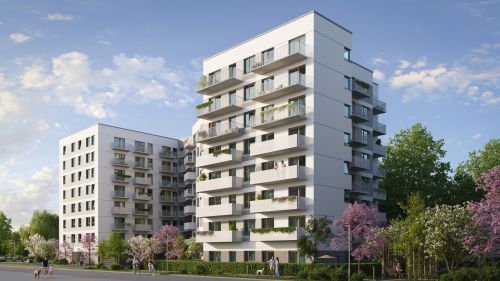
Development in EMEA is constrained by high building and operating costs, particularly in multifamily and student housing. Housing shortages persist (particularly apparent in the Czech Republic), though more ambitious policies could unlock new phases of development.
Regulatory uncertainty continues to limit supply in fast-growing sectors such as data centres and PBSA, highlighting the importance of strategic acquisition over speculative development.
Looking ahead, Colliers expects EMEA commercial real estate to continue attracting both domestic and international capital, with 2026 characterised by selective, strategic investment. Offices, industrial assets, and specialist alternatives are set to outperform, while retail and development will remain defensive but stable.
Investors who combine operational expertise, sustainability upgrades, and portfolio management will be best positioned to capture growth opportunities across the region.

The quiet revolution in Małopolska
Axi Immo
Developers across the region are increasingly favouring heat pumps and photovoltaic systems over traditional gas boilers in warehouse construction. This shift marks a growing commi ...
Modular construction becomes more prominent
Spectis
After a temporary slowdown, the modular construction market in Poland continues to expand in 2025. Although the sector faces challenges such as high material costs and investment f ...
EXPO REAL 2025: From survival mode to selective recovery
Axi Immo
This year’s EXPO REAL in Munich marked a noticeable shift in tone across industry conversations. Following a period of uncertainty and postponed investment decisions, the com ...