















Poland More students, still too few beds
Residential
Public and private student housing can accommodate only one in ten students. As Cushman & Wakefield Poland points out, the private student housing market is facing a significant, structural shortage. The expectations of the younger generation are significantly higher than they previously were.
The summer break is just about to begin, but for many students, the question of finding somewhere to live in October becomes increasingly urgent. Searching for suitable accommodation is often an annual headache for those who fail to secure a place in a public student residence hall.
According to Cushman & Wakefield, by the end of 2025, the number of students in Poland was more than 1.32 million, including around 102,000 international students studying in Poland. Although their number declined by approximately 6.5 pct year-on-year in 2025 over the past decade, it was 54 pct higher than in 2016. Additionally, in 2024, over 18,500 Erasmus students came to Poland – the highest number since the pandemic.
Poland today has all the elements that should support the development of a modern student accommodation market: a large student population, strong university centres, growing mobility of young people, and increasingly high expectations for quality accommodation. However, there is a lack of adequate supply. We are talking about a market where demand is structural, recurring, and clearly visible in the largest cities, but the student accommodation options – especially private sector options – remain limited. As a result, a significant portion of students turn to the apartment and room rental market.
Karolina Furmańska, residential & living sector manager, Cushman & Wakefield
Currently, public student residences across Poland only accommodate around 112,000 students. Private student accommodation, or PBSAs (Purpose-Built Student Accommodation), designed and managed specifically for students, offer an additional 17,300 places. This totals just over 129,000. There are 10,000 beds in a total student population of over 1.32 mln, meaning an average of approximately 10 students per bed (the exact ratio is 9.9). Poland is not alone in this shortage of student beds – Germany has a similar figure (10.7), and there are countries where the situation is even more difficult, such as Italy, where the ratio is as high as 23.6 students per bed.
The gap in the student accommodation market in Poland remains significant, even taking into account ongoing projects. Cushman & Wakefield data shows that around 2,000 beds in private dormitories are currently under construction, with a further 6,800 planned. Even after these are completed, the offerings available – both public and private – will only meet the needs of approximately 11 pct of students.
Vitalii Arkypenko, Research Analyst, Cushman & Wakefield.
Kraków has the largest number of private student beds, with over 5,000 PBSA beds available. Warsaw, with over 3,100 beds, Wrocław (approx. 2,100), Łódź (approx. 1,900), and Gdańsk (approx. 1,800), offer smaller accommodation options. Importantly, Warsaw – the largest academic centre in the country – still has one of the lowest levels of private student housing saturation relative to student population (only 1.2 pct).
For years, the topic of student accommodation was most prominent at the end of summer and just before the start of the academic year. Today, it is increasingly linked to rental availability, educational decisions, young people's mobility, and the attractiveness of academic cities. If the largest centres want to attract talent, including international ones, they must consider accommodation as part of their competitive advantage.
Ewa Derlatka-Chilewicz, head of Research, Cushman & Wakefield
Price remains one of the most important criteria when choosing a place to live, but students are increasingly prioritising their comfort. A Cushman & Wakefield Poland study on the preferences of tenants of apartments and rooms, conducted at the turn of December 2025 and January 2026, shows that quality of service, location, and the standard of the property are particularly important to students.
As many as 86 pct of students stated easy contact with the landlord was a very important factor when choosing an apartment or room, compared to 56 pct in the overall sample. Good access to public transportation was crucial for 80 pct of respondents in this group, compared to 46 pct in the overall survey. The standard of the property was rated as very important by 53 pct of students compared to 34 pct in the overall sample.
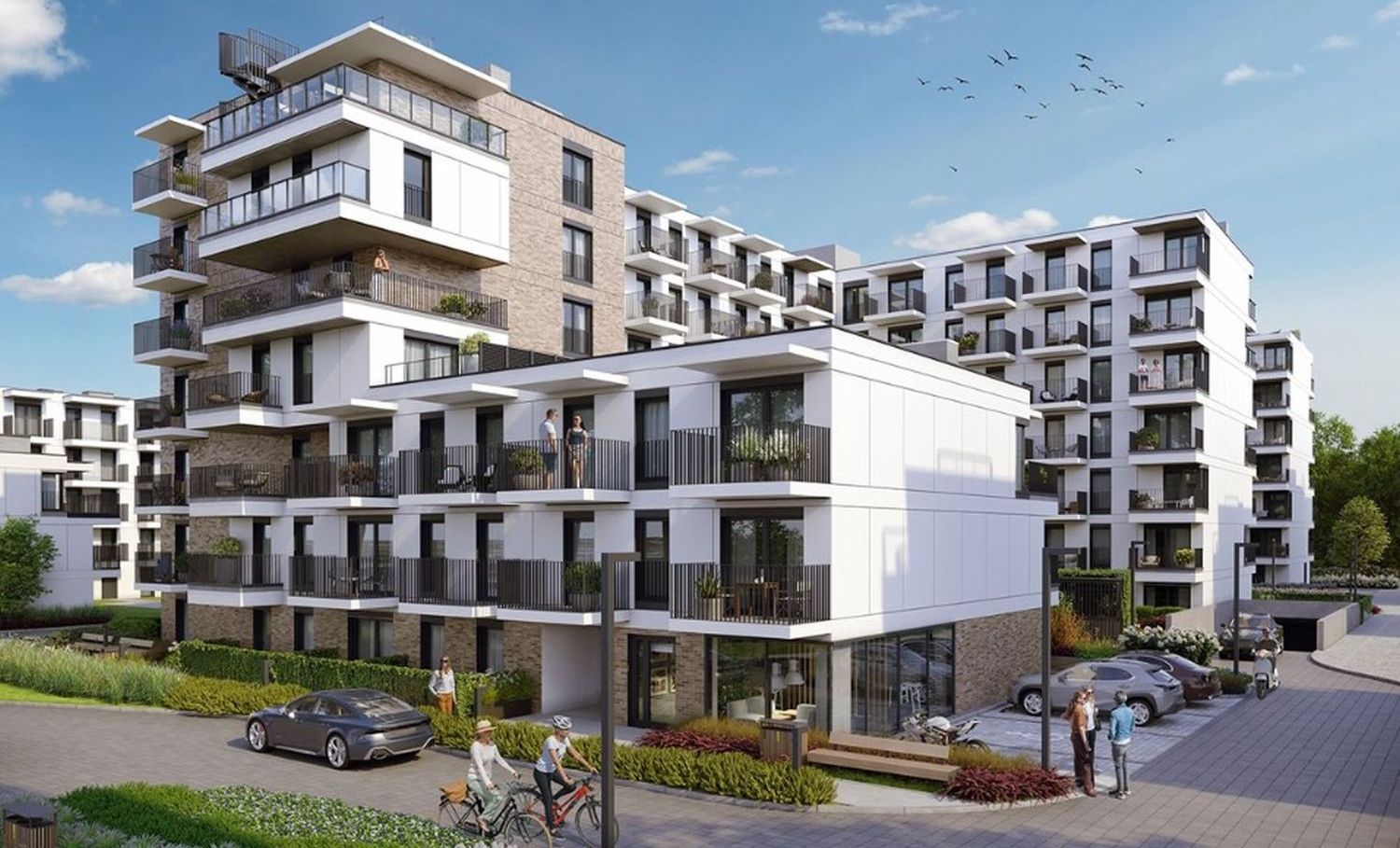
The survey results clearly show that as student expectations change, the importance of private student residence halls is growing. This segment addresses the specific needs of young tenants, offering simple and transparent contracts, predictable costs (all-inclusive), a good location, access to services, and safe, well-designed common spaces. For many students – especially international students or those moving away from home for the first time – this predictability and comfort in everyday life are crucial. From an investor's perspective, however, it's crucial that demand in this segment stems from a persistent and recurring housing need.
Ewa Derlatka-Chilewicz
Public student residences remain the most affordable form of student accommodation. Monthly fees for double and triple rooms range from PLN 350 to PLN 1,275, depending on the location, standard, and type of facility. The lowest average rates in this category were recorded in Gdańsk – approximately PLN 570 per month, Łódź – approximately PLN 635, and Warsaw – approximately PLN 680.
However, this lower cost is associated with limited availability and often more modest room and infrastructure standards. Distance from home and economic considerations also play a role. In many cases, public student housing serves as a key, yet insufficient, element of the housing system.
In the PBSA segment, rates are higher, but in many centres, they are all-inclusive, covering utilities, access to building amenities, and additional services. According to Cushman & Wakefield data, the average price of accommodation in private student housing (including all room types: studios, double/couple studios, individual rooms in units, and other formats) is approximately PLN 2,370 per month in the upcoming 2026/2027 academic year. This represents a moderate increase of 2.6 pct compared to the previous year. The changes varied by region: in most cities, increases were 1-3 pct with Gdańsk seeing increases above the national average of +10 pct, and Lublin similarly +5 pct.
Public and private student housing address different student needs. Public student housing is the cheapest option, but its supply is structurally limited. The private sector, on the other hand, attracts attention with predictable costs and high standards, becoming an important element of the modern urban housing stock. With young people's growing expectations for living space, its importance will steadily grow.
Tadeusz Bellaby, junior research analyst, Cushman & Wakefield
Warsaw has approximately 255,000 students. Kraków, Wrocław, and Poznań each account for approximately 10 pct of the national student population, and together, the four largest cities account for approximately half of all students in Poland. Poznań (187), Rzeszów (184), and Katowice (180) stand out in terms of student density per 1,000 residents.
In practice, this means that student accommodation is becoming part of the broader urban ecosystem. This applies to mobility, public transportation, urban regeneration, access to services, and pressure on local rental markets. Well-designed PBSA facilities can concentrate some of the housing demand in professionally managed buildings and create a more predictable offer for students.
A modern student residence hall operates best when it is well integrated into the city fabric: connected to public transport, services, public spaces, and the daily rhythm of the neighbourhood. Its location and relationship with service providers and neighbours are important not only for students but also for the functioning of the entire neighbourhood. A well-designed PBSA can organise rental demand, activate a part of the city, and support more sustainable use of space.
Ewa Derlatka-Chilewicz
The Polish PBSA market remains relatively young compared to more developed European markets. At the same time, its fundamentals are becoming increasingly clear: a large student population, a concentration of demand in the largest cities, growing educational mobility, and a limited supply of space.
The quality of the design will also be important. Students increasingly expect spaces that support learning, relaxation, social interactions, and everyday comfort. For owners and operators, this means thinking about PBSA in terms of user experience, operational efficiency, and ESG standards.
In the PBSA sector, design that is resilient to change will be crucial. Buildings should be energy-efficient, functionally flexible, and user-friendly. This is particularly important because we are dealing with a young group of tenants, for whom comfort, health, and sustainability are increasingly natural elements of choosing a place to live. A well-designed private student housing can respond both to the bed shortage and to changing expectations for the city and housing.
Katarzyna Lipka, head of strategic consulting and ESG advisory, Cushman & Wakefield
The coming years will reveal whether PBSA in Poland will remain a locally growing segment or become a key pillar of the living sector. Today, its potential is particularly visible in the largest academic centres, but the supply gap also affects regional cities, where the student population is very high.
Demand is evident, student needs are increasingly well-defined, and the supply gap remains very large. This creates space for investors, operators, universities, and cities to collaborate much more closely.
Karolina Furmańska

Who will win and who will lose with changes to the land market
Walter Herz
The biggest change to the land market in years is on the horizon. The spatial planning reform will mean that plots previously considered attractive may lose value, while land with ...
Sales up, supply down
JLL Polska
In the first quarter of 2026, the Polish housing market recorded a significant increase in sales. A total of 12,900 apartments were sold across the country's seven largest cities ( ...
Rent isn't everything. The real costs of leasing warehouse space
Newmark Polska
Choosing a new warehouse takes much more than simply comparing rental rates across a few or even a dozen centres. With rising energy costs and varying technical standards, the actu ...